
Asian Games and the Olympic Council of Asia: India's founding role
Why in news: The 20th Asian Games ended in Aichi-Nagoya, Japan, on 4 October 2026; India won 85 medals, including 21 gold, the Government said on 6 October.
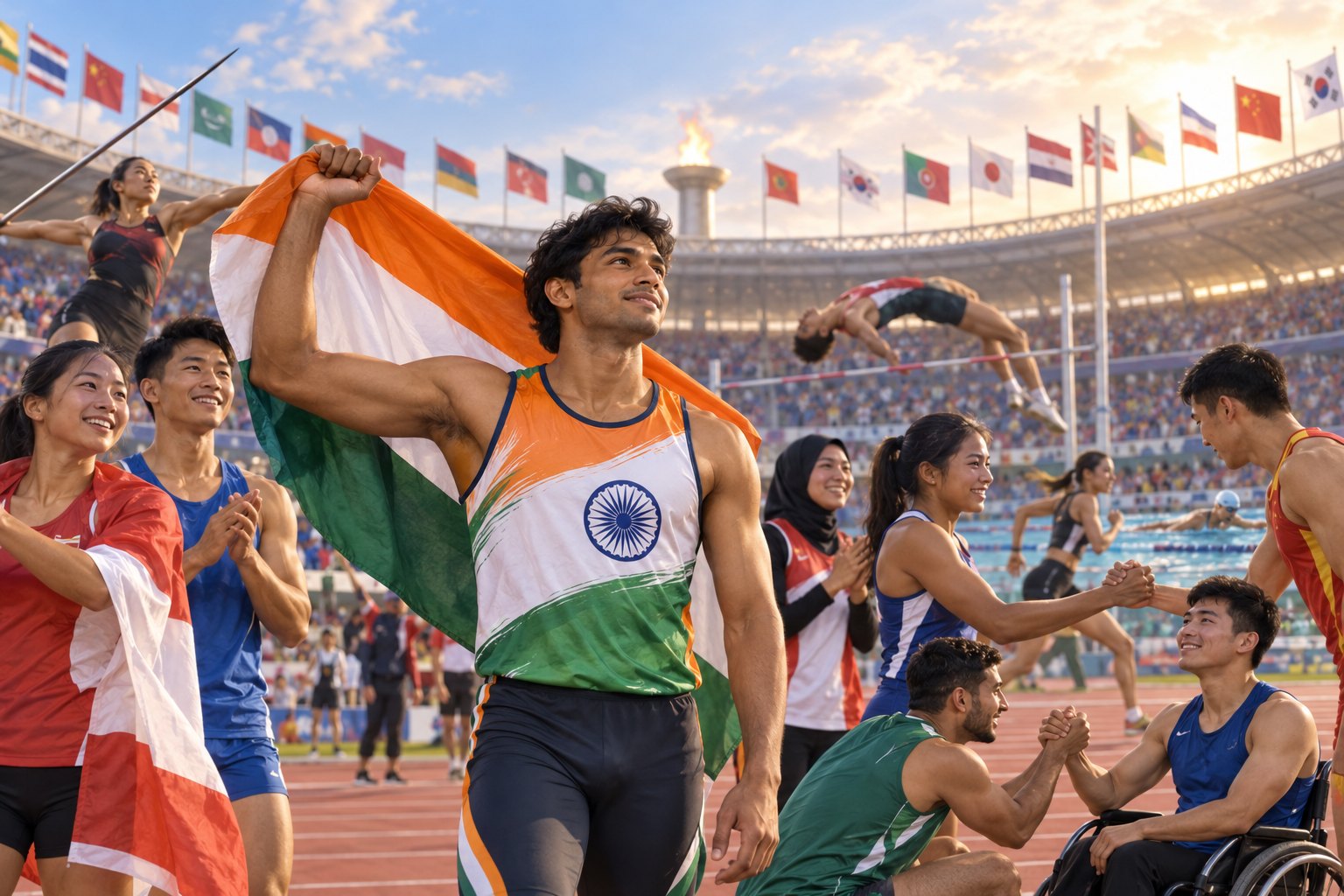
The Asian Games, held every four years, are Asia's largest multi-sport event, organised by the Olympic Council of Asia, headquartered in Kuwait City. India proposed the Games after the Second World War and hosted the first edition in New Delhi in 1951. The 20th Games closed at Aichi-Nagoya, Japan, on 4 October 2026, with India winning 85 medals.
Syllabus: Prelims · Current Affairs & IR; GS2 · Statutory & Regulatory Bodies; GS2 · Government Policies
In short
The Asian Games, held every four years under the Olympic Council of Asia, are Asia's biggest multi-sport event; India mooted them and hosted the first.
Having founded the Games, India must now spread medals beyond a few sports, settling disputes swiftly while respecting federations' autonomy.
Why it matters
For a teenager at a district Khelo India centre, the Asian Games are often the first big international stage, and strong results there can bring support under the Target Olympic Podium Scheme, a monthly stipend and foreign training. The Games also show whether money spent on sport reaches the field: the Government counts more than 300 debutants in India's 2026 squad. The larger issue is governance. Disputes over federation elections and team selection have long kept athletes in court; the National Sports Governance Act, 2025 aims to settle them faster through a specialist tribunal, while respecting the autonomy that the Olympic movement demands of sports bodies.
Prelims pointers
- Olympic Council of Asia: organises the Asian Games; headquarters Kuwait City; replaced the Asian Games Federation (founded New Delhi, 1949) in 1982; its symbol is a red sun.
- Asian Para Games: organised by the Asian Paralympic Committee; first held at Guangzhou, China, in 2010; India takes part through the Paralympic Committee of India.
- India hosted the Asian Games twice, both in New Delhi: the first Games (1951) and the ninth (1982).
- National Sports Governance Act, 2025: National Sports Board grants and can suspend recognition of sports bodies; National Sports Tribunal settles disputes; appeals lie to the Supreme Court.
- Khelo Bharat Niti, 2025: replaced the National Sports Policy, 2001; links sport with school education under the National Education Policy 2020.
- Target Olympic Podium Scheme: Ministry of Youth Affairs and Sports scheme, begun in 2014, funding foreign training, competitions, coaching and equipment for medal prospects.
- KIRTI (Khelo India Rising Talent Identification): spots talent among children aged 9 to 18 through Talent Assessment Centres.
- National Sports University, Imphal (Manipur): established in 2018; teaches sports science, technology, management and coaching.
Practise a UPSC-style question
With reference to the Asian Games, consider the following statements:
1. The Asian Games are organised every four years by the Asian Paralympic Committee.
2. The Olympic Council of Asia has its headquarters in Kuwait City.
3. The first Asian Games were held in New Delhi in 1951.
Which of the statements given above is/are correct?
- (a) 1 and 2 only
- (b) 2 and 3 only
- (c) 1 and 3 only
- (d) 1, 2 and 3
Show the answer
Answer: (b) 2 and 3 only
1 is incorrect: the Asian Games are organised by the Olympic Council of Asia; the Asian Paralympic Committee runs the separate Asian Para Games. 2 is correct: the Olympic Council of Asia has been based in Kuwait City since it was set up in 1982. 3 is correct: the first Asian Games were held in New Delhi in March 1951.
More Explainers
- State Legislative Councils: Articles 168-172 and the graduates' and teachers' seats Polity
- Whales and dolphins in Indian waters: legal protection, IUCN status and strandings Environment
- The Aligarh Movement, AMU and the Article 30 minority test Polity
- Environmental clearance by States: SEIAA, SEAC and the EIA Notification, 2006 Environment
- Software vulnerabilities: CVE, CVSS, coordinated disclosure and CERT-In's role Sci-Tech
- Drug trafficking law in India: NDPS Act, PIT-NDPS, NCB and NCORD National
- Choosing the UN Secretary-General: Article 97, UNSC veto and straw polls World & IR
- UN Convention against Torture, and why India has not ratified it Polity
- NavIC: why India's navigation constellation cannot give a standalone position Sci-Tech
- International Energy Agency: membership, 90-day oil stocks and India's status World & IR
- PM Surya Ghar: Muft Bijli Yojana and the rooftop solar subsidy Economy
- HFSS foods: FSSAI's draft limits and front-of-pack warning labels National