
Supreme Court holds Gram Sabha consent mandatory for Scheduled Area acquisition
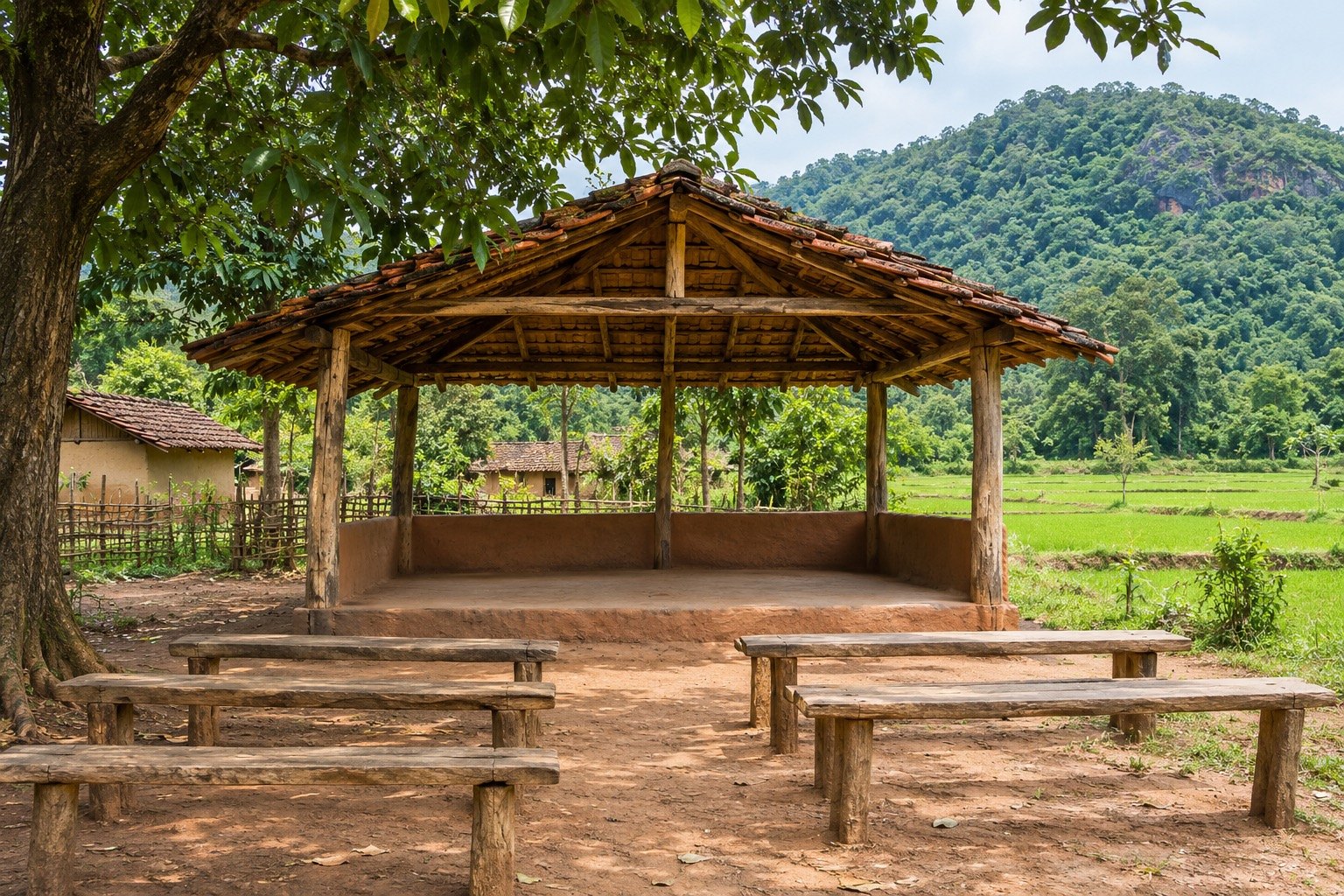
The Supreme Court on 18 November 2026 quashed Odisha's acquisition of 273.57 hectares in Sundargarh district for limestone mining by a private company. Land in a Scheduled Area cannot be taken without the village assembly's approval given beforehand, it ruled. Consent of affected families gathered later in the process, it added, cannot replace consent taken at the start.
Syllabus: GS2 · Federalism & Local Government; Prelims · Polity & Governance; GS3 · Land Reforms
Why this matters for UPSC
GS2 polity and GS3 land reforms: consent safeguards of the RFCTLARR Act in Scheduled Areas. Prelims can ask the consent bars and PESA's role; Mains, consent versus consultation.
Why it matters
A tribal family in a Scheduled Area now has a firmer say before its land is taken for a mine or a factory. If the village Gram Sabha has not agreed first, the acquisition can be struck down, as in Sundargarh. Governments cannot collect signatures after a project is under way and treat them as enough. This pushes officials to hold real consultations early, alongside the study of how a project will affect people. Companies that need land for mining face a slower but clearer path. The larger issue is who decides the use of land in tribal areas: the State, or the communities who live on it.
Prelims pointers
- The RFCTLARR Act, 2013 bars any acquisition in Scheduled Areas that breaks a land-transfer law prevailing there, including a final court order or judgment.
- Under the RFCTLARR Act, the Gram Sabha's consent in Scheduled Areas must come before any notification under this Act or any other Central or State Act.
- Where a Gram Sabha does not exist or has not been constituted, the Act turns to the Panchayats or Autonomous District Councils for consent.
- PESA, 1996 asks that the Gram Sabha or Panchayats be consulted before land acquisition in Scheduled Areas; the RFCTLARR Act asks for their prior consent.
- PESA makes Gram Sabha or Panchayat recommendations mandatory before a prospecting licence or mining lease for minor minerals in Scheduled Areas.
- The affected-family consent bars of the RFCTLARR Act apply to acquisitions for private companies and public private partnership projects, not to land for the government's own use.
Practise a UPSC-style question
With reference to consent under the Right to Fair Compensation and Transparency in Land Acquisition, Rehabilitation and Resettlement Act, 2013, consider the following statements:
1. Land acquired for private companies needs the prior consent of at least 80% of the affected families.
2. Land acquired for public private partnership projects needs the prior consent of at least 70% of the affected families.
3. The consent of affected families is sought after the Social Impact Assessment study has been completed.
Which of the statements given above is/are correct?
- (a) 1 and 2 only
- (b) 2 and 3 only
- (c) 1 and 3 only
- (d) 1, 2 and 3
Show the answer
Answer: (a) 1 and 2 only
Answer: (a) 1 and 2 only. The two consent bars are right; the timing in statement 3 is wrong.
Statement 1: correct. The 2013 Act sets a prior consent bar of 80% of affected families when the government acquires land for private companies.
Statement 2: correct. For public private partnership projects, the same Act sets the bar at 70% of affected families.
Statement 3: incorrect. The Act requires the consent process to run along with the Social Impact Assessment study, not after it ends.
Eliminate: statement 3 is wrong, since consent is gathered together with the SIA study. Out: (b), (c), (d).
Trap: Sounds right. Taking consent once the impact study is over sounds orderly, but the Act joins the two processes.
Remember: 80% for private companies, 70% for PPP projects, taken with the SIA.
More from the 21 November 2026 edition
- India's indigenous H5N1 avian influenza vaccine for chickens dedicated to nation Sci-Tech
- Supreme Court dismisses Karnataka appeal, leaving bike-taxi permit ruling standing Polity
- Project Cheetah: Botswana-born female's four wild cubs lift count to 62 Environment
- Supreme Court dismisses Tamil Nadu's Cauvery shortfall plea against Karnataka Polity
- EAC recommends Terms of Reference for mines near Great Indian Bustard area Environment
- Health Ministry releases national guidelines on wastewater surveillance for pathogens Sci-Tech
- ICJ finds Myanmar committed genocide against the Rohingya: first such ruling World & IR
- Press Council's 2026 norms ask Government to avoid NSA, UAPA against journalists Polity
- Supreme Court orders checks on alleged fake Form 7 deletions in Mustafabad Polity