
Project Cheetah: Botswana-born female's four wild cubs lift count to 62
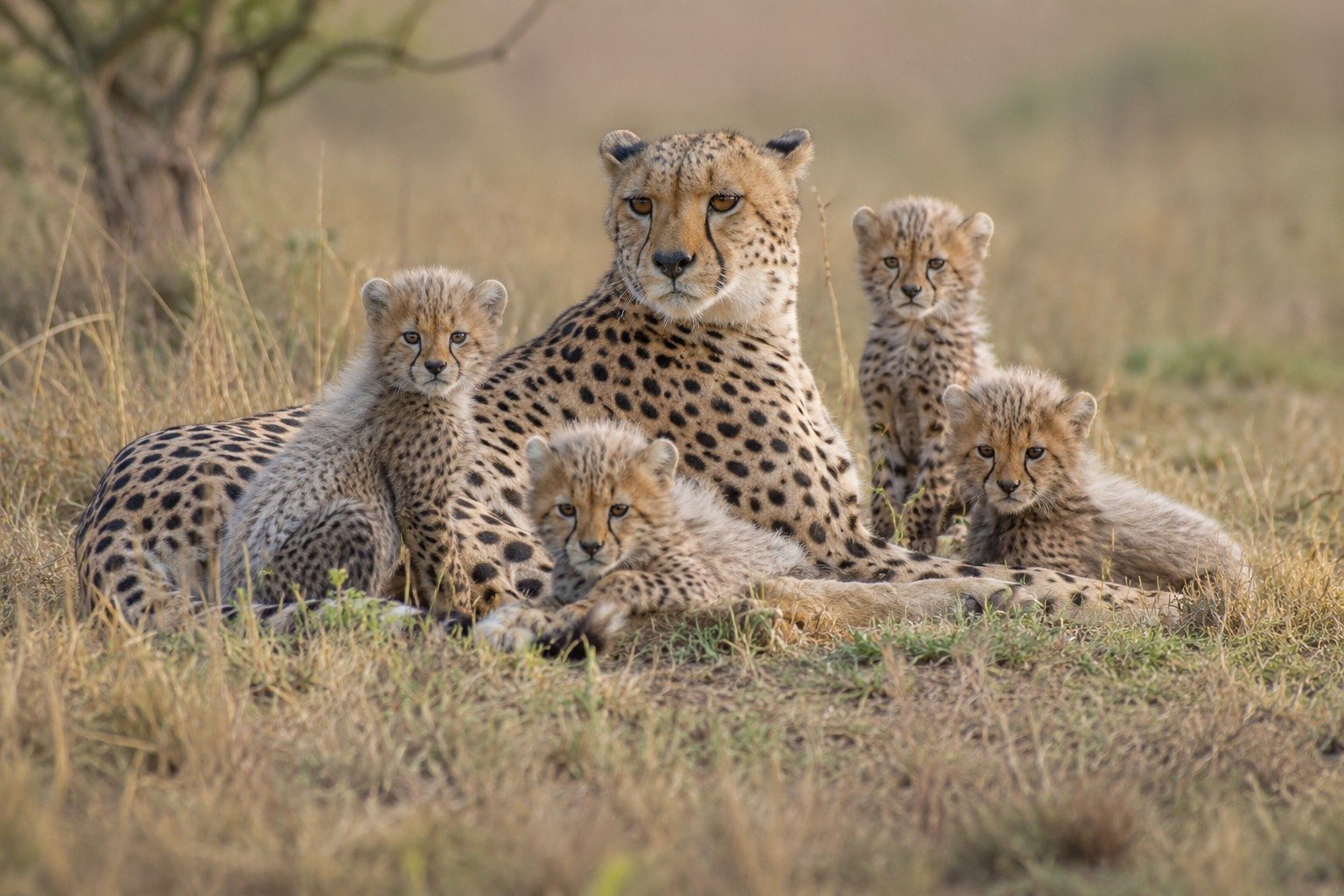
KOMG 3, a female cheetah of about two and a half years brought from Botswana, gave birth to four cubs in the wild on 20 November 2026, the Environment Ministry said. It was the second recorded wild birth since Project Cheetah began in 2022. India now has 62 cheetahs, 43 of them India-born.
Syllabus: Prelims · Current Affairs & IR; Prelims · Environment & Ecology; GS3 · Environment & Conservation
Why this matters for UPSC
GS3 environment: species reintroduction and Project Cheetah. Prelims can ask the cheetah's IUCN status, the NTCA's role and source countries; Mains, translocation as a conservation tool.
Why it matters
For the veterinarians and forest staff who track these cats, a litter born outside an enclosure is the plainest proof that a moved animal has settled. A mother that raises cubs in the open has found enough prey, suitable cover and low stress, which PIB names as the signs of a suitable habitat. A breeding female from a new source country also widens the genetic base of a small founding group, and a population that rests on a few parents is fragile. Each such birth brings the project closer to a herd that sustains itself without fresh imports, and strengthens the case for restoring India's neglected grasslands, which serve the cheetah's prey and many other species.
Prelims pointers
- The cheetah (Acinonyx jubatus) is listed as Vulnerable by the IUCN, per the NTCA.
- The Asiatic cheetah (A. j. venaticus) is Critically Endangered and confined to Iran; India's founders belong to the southern African subspecies, A. j. jubatus.
- Extinction of the species in India was declared in 1952; the last three were shot in 1947 in erstwhile Koriya state, now Chhattisgarh.
- Southern Africa's transboundary cheetah population spans Namibia, Botswana, Angola, South Africa, Mozambique and Zambia, per the NTCA.
- Kuno National Park in Madhya Pradesh was the first release site; Gandhi Sagar Wildlife Sanctuary lies about 300 km away.
- In 2020 the Supreme Court allowed a limited import of cheetahs for an experimental reintroduction, opening the way for the project.
- Phase 1 of Project Cheetah is funded within the Centrally Sponsored Scheme-Project Tiger, per PIB (December 2025).
- The International Big Cat Alliance, launched in April 2023 and headquartered in India, covers seven big cat species, the cheetah among them.
Practise a UPSC-style question
With reference to Project Cheetah, consider the following statements:
1. The project is spearheaded by the Wildlife Institute of India under the Ministry of Environment, Forest and Climate Change.
2. Its 2022 Action Plan was drawn up by the Wildlife Institute of India, guided by the NTCA.
3. The first batch of cheetahs translocated to India under the project came from Namibia.
Which of the statements given above is/are correct?
- (a) 1 and 2 only
- (b) 2 and 3 only
- (c) 1 and 3 only
- (d) 1, 2 and 3
Show the answer
Answer: (b) 2 and 3 only
Answer: (b) 2 and 3 only. The WII drafted the plan, but the NTCA, not the WII, spearheads the project.
Statement 1: incorrect. The NTCA spearheads Project Cheetah, launched under the MoEFCC in 2022; the WII provides technical assistance.
Statement 2: correct. The WII prepared the 2022 Action Plan under NTCA guidance, following IUCN guidelines for carnivore translocations.
Statement 3: correct. Eight cheetahs from Namibia arrived in September 2022; twelve from South Africa followed in February 2023.
Eliminate: statement 1 is wrong, as the NTCA leads the project. Out: (a), (c), (d).
Trap: Swapped attribution. The technical partner that wrote the plan is named as the body that leads the whole project.
Remember: Project Cheetah is led by the NTCA; the WII is its technical arm.
More from the 21 November 2026 edition
- India's indigenous H5N1 avian influenza vaccine for chickens dedicated to nation Sci-Tech
- Supreme Court dismisses Karnataka appeal, leaving bike-taxi permit ruling standing Polity
- Supreme Court dismisses Tamil Nadu's Cauvery shortfall plea against Karnataka Polity
- EAC recommends Terms of Reference for mines near Great Indian Bustard area Environment
- Health Ministry releases national guidelines on wastewater surveillance for pathogens Sci-Tech
- ICJ finds Myanmar committed genocide against the Rohingya: first such ruling World & IR
- Press Council's 2026 norms ask Government to avoid NSA, UAPA against journalists Polity
- Supreme Court holds Gram Sabha consent mandatory for Scheduled Area acquisition Polity
- Supreme Court orders checks on alleged fake Form 7 deletions in Mustafabad Polity