
Supreme Court dismisses Tamil Nadu's Cauvery shortfall plea against Karnataka
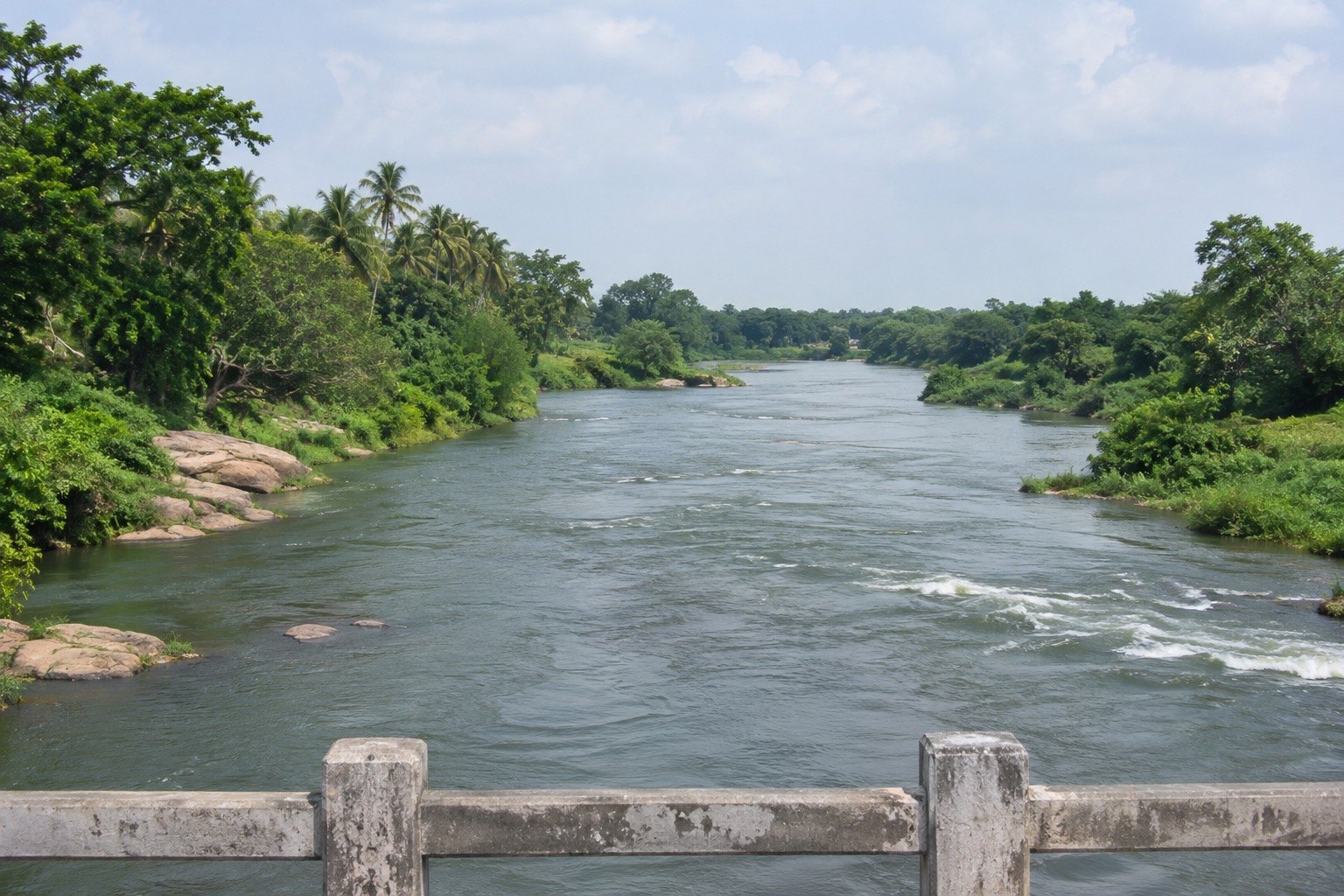
The Supreme Court on 20 November 2026 dismissed an application in which Tamil Nadu said it was owed 11.719 tmcft of Cauvery water at Billigundulu up to 6 October. Tamil Nadu wanted Karnataka directed to release the water. Karnataka resisted the plea, saying the Cauvery Water Management Authority (CWMA) had issued no order for that release.
Syllabus: GS2 · Federalism & Local Government; GS2 · Separation of Powers; Prelims · Polity & Governance
Why this matters for UPSC
GS2 polity: inter-State river water disputes, the 1956 Act and the CWMA. Prelims can ask who constitutes the CWMA and where releases are measured; Mains, dispute redressal in federalism.
Why it matters
A farmer downstream in Tamil Nadu depends on water that Karnataka lets through at Billigundulu. When rain fails, both States want the same water, and each blames the other. A standing authority that measures flows and orders releases gives that farmer a rule to rely on, instead of a fresh court fight each season. Karnataka's objection rested on the 2018 scheme, which puts such questions before a body that hears both States and works from measured flows. It is part of the larger question of how India shares rivers among States in a federal system, where each State controls water within its borders.
Prelims pointers
- The CWMA also advises the party States on water-use efficiency: micro-irrigation, changes in cropping pattern and better agronomic practices.
- The CWRC compiles weekly information from important IMD rain gauge stations so that the CWMA can assess the monsoon.
- The Cauvery Water Disputes Tribunal, set up in 1990 under the Inter-State River Water Disputes Act, 1956, covered Karnataka, Kerala, Tamil Nadu and Puducherry.
- The CWMA has a Chairman, two whole-time and two part-time Members, and four part-time Members from the party States; its headquarters is in New Delhi.
- The CWMA decides and supervises; the CWRC carries out its orders, releasing water every ten days and recording daily flows at the Billigundulu gauge.
- In a deficient month, the CWMA considers reducing the States' indents in proportion to the quantities allocated to each by the tribunal as modified in 2018.
Practise a UPSC-style question
With reference to the Inter-State River Water Disputes Act, 1956, consider the following statements:
1. A tribunal constituted under it forwards its report and decision to the Supreme Court.
2. The Central Government constitutes a tribunal under it to adjudicate a dispute over the waters of an inter-State river and its valley.
Which of the statements given above is/are correct?
- (a) 1 only
- (b) 2 only
- (c) Both 1 and 2
- (d) Neither 1 nor 2
Show the answer
Answer: (b) 2 only
Answer: (b) 2 only. The tribunal reports to the Central Government, not to the Supreme Court.
Statement 1: incorrect. The Cauvery tribunal forwarded its report and decision under section 5(2) of the Act to the Central Government on 5 February 2007.
Statement 2: correct. The Centre constituted the Cauvery Water Disputes Tribunal in 1990 under section 4 of the Act to adjudicate the Cauvery dispute.
Eliminate: statement 2 matches section 4 of the Act. Out: (a), (d).
Eliminate: statement 1 sends the report to the Supreme Court instead of the Centre. Out: (c).
Trap: Swapped attribution. The Supreme Court, which later modified the award on appeal, is put in place of the Central Government.
Remember: The Centre constitutes the tribunal and receives its decision; the Supreme Court came in on appeal.
More from the 21 November 2026 edition
- India's indigenous H5N1 avian influenza vaccine for chickens dedicated to nation Sci-Tech
- Supreme Court dismisses Karnataka appeal, leaving bike-taxi permit ruling standing Polity
- Project Cheetah: Botswana-born female's four wild cubs lift count to 62 Environment
- EAC recommends Terms of Reference for mines near Great Indian Bustard area Environment
- Health Ministry releases national guidelines on wastewater surveillance for pathogens Sci-Tech
- ICJ finds Myanmar committed genocide against the Rohingya: first such ruling World & IR
- Press Council's 2026 norms ask Government to avoid NSA, UAPA against journalists Polity
- Supreme Court holds Gram Sabha consent mandatory for Scheduled Area acquisition Polity
- Supreme Court orders checks on alleged fake Form 7 deletions in Mustafabad Polity