
India's indigenous H5N1 avian influenza vaccine for chickens dedicated to nation
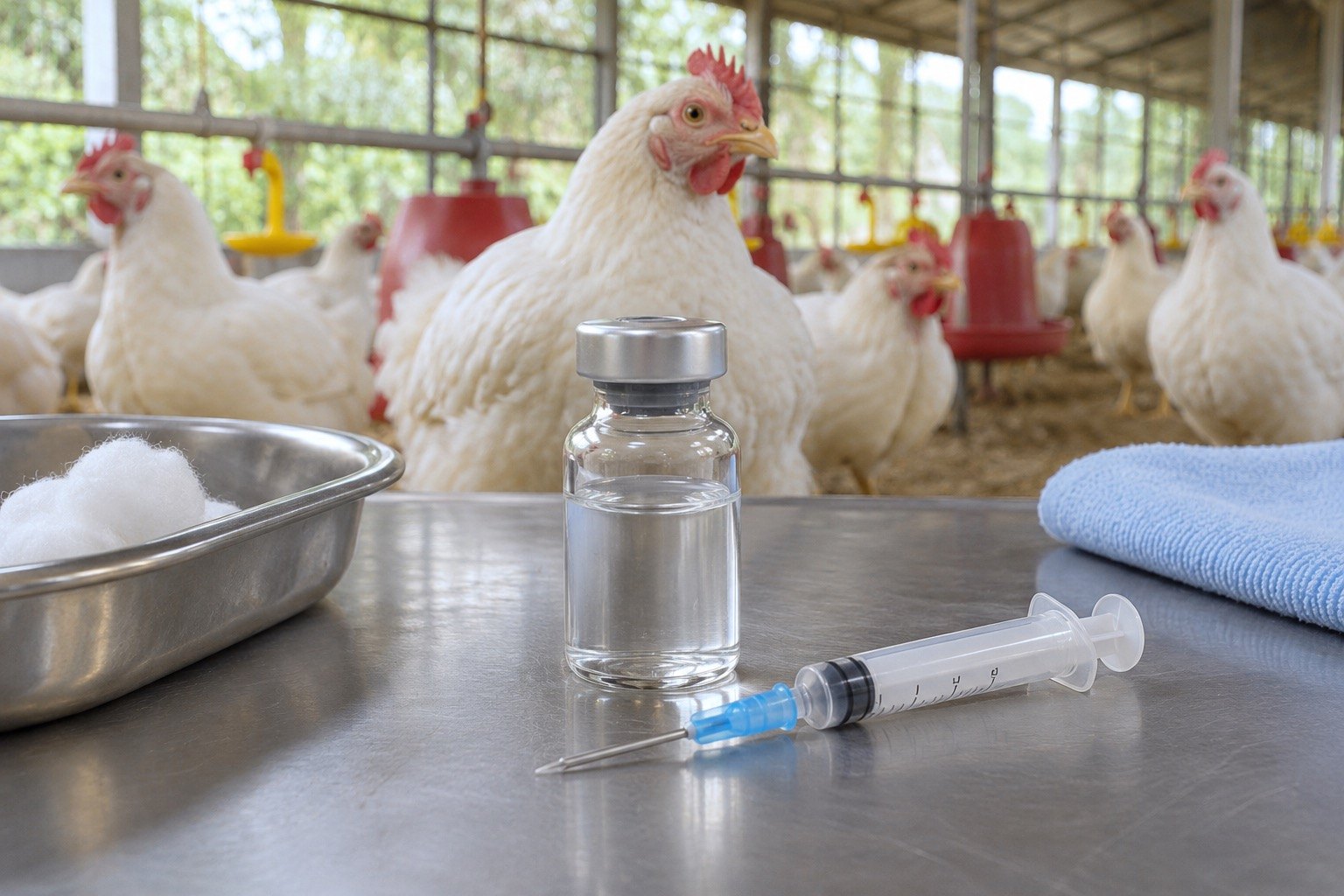
The Union Agriculture Minister dedicated an inactivated H5N1 bird flu vaccine for chickens to the nation in Bhopal on 20 November 2026. ICAR-NIHSAD, Bhopal, developed it against Clade 2.3.2.1a of the Highly Pathogenic Avian Influenza virus. The Agriculture Ministry calls it India's first indigenous vaccine of its kind. A dose costs Rs 1-2.
Syllabus: GS3 · MSP, Subsidies & Food Security; Prelims · Science & Technology; GS3 · Indian Achievements in S&T
Why this matters for UPSC
GS3 science and economics of animal rearing: avian influenza, ICAR-NIHSAD and indigenous vaccines. Prelims can ask about HPAI, WOAH reference laboratories and inactivated vaccines; Mains, vaccination versus culling.
Why it matters
A small poultry farmer hit by bird flu loses the birds, the eggs and the market at once. Control has so far meant killing the birds near an outbreak and shutting trade. A cheap vaccine matched to the strain circulating in India could, once its use is allowed, let farmers protect birds before the virus arrives. Fewer infected chickens also means fewer chances for the virus to jump to other animals and to people who handle birds. The story belongs to a larger question: how India protects animal health, farm incomes and public health together, which is the One Health idea.
Prelims pointers
- ICAR-NIHSAD, Bhopal is the WOAH Reference Laboratory for Avian Influenza in India; DAHD has designated it to confirm any case in the country.
- ICAR-NIHSAD's earlier home-grown vaccines cover African Swine Fever, Classical Swine Fever, Gumboro disease and Brucella abortus S-19 Delta.
- Look-alike: the Lumpi-ProVacInd vaccine against Lumpy Skin Disease came from scientists at Hisar and Izatnagar, not from ICAR-NIHSAD.
- Look-alike: the WHO tracks human H5N1 cases (1,003 cases, 479 deaths in 25 countries since 2003); WOAH designates reference laboratories for animal diseases.
- HPAI outbreaks can cause nearly 100 per cent mortality in infected birds; LPAI (H9N2) is the subtype with a vaccine approved for chickens in India.
- Under the 2021 avian influenza action plan, the infected zone may be widened, one km at a time, to at most 3 km if infection is scattered.
- The Poultry Disease Action Plan 2024 names segregation as one of the three principal elements of biosecurity and advises keeping poultry away from wild birds.
Practise a UPSC-style question
With reference to Highly Pathogenic Avian Influenza (HPAI) in India, consider the following statements:
1. India first detected bird flu in 2006 at Navapur in Kerala.
2. Outbreaks of HPAI can cause close to 100 per cent mortality among infected birds.
3. India's reported bird flu outbreaks since 2006 have involved the H5N1 and H5N8 subtypes.
Which of the statements given above is/are correct?
- (a) 1 and 2 only
- (b) 2 and 3 only
- (c) 1 and 3 only
- (d) 1, 2 and 3
Show the answer
Answer: (b) 2 and 3 only
Answer: (b) 2 and 3 only. Navapur lies in Maharashtra, so statement 1 fails.
Statement 1: incorrect. The first outbreak, in 2006, was reported at Navapur in Maharashtra, not Kerala.
Statement 2: correct. The Agriculture Ministry says HPAI outbreaks can kill nearly 100 per cent of infected birds.
Statement 3: correct. More than 500 combined outbreaks of H5N1 and H5N8 have been reported since 2006, per the Ministry.
Eliminate: statement 1 is wrong, so every option containing 1 goes. Out: (a), (c), (d).
Trap: Swapped attribution. The place name is right but it is pinned on the wrong State, a swap UPSC uses often with places in the news.
Remember: India's first bird flu outbreak: Navapur, Maharashtra, 2006.
More from the 21 November 2026 edition
- Supreme Court dismisses Karnataka appeal, leaving bike-taxi permit ruling standing Polity
- Project Cheetah: Botswana-born female's four wild cubs lift count to 62 Environment
- Supreme Court dismisses Tamil Nadu's Cauvery shortfall plea against Karnataka Polity
- EAC recommends Terms of Reference for mines near Great Indian Bustard area Environment
- Health Ministry releases national guidelines on wastewater surveillance for pathogens Sci-Tech
- ICJ finds Myanmar committed genocide against the Rohingya: first such ruling World & IR
- Press Council's 2026 norms ask Government to avoid NSA, UAPA against journalists Polity
- Supreme Court holds Gram Sabha consent mandatory for Scheduled Area acquisition Polity
- Supreme Court orders checks on alleged fake Form 7 deletions in Mustafabad Polity