
Supreme Court dismisses Karnataka appeal, leaving bike-taxi permit ruling standing
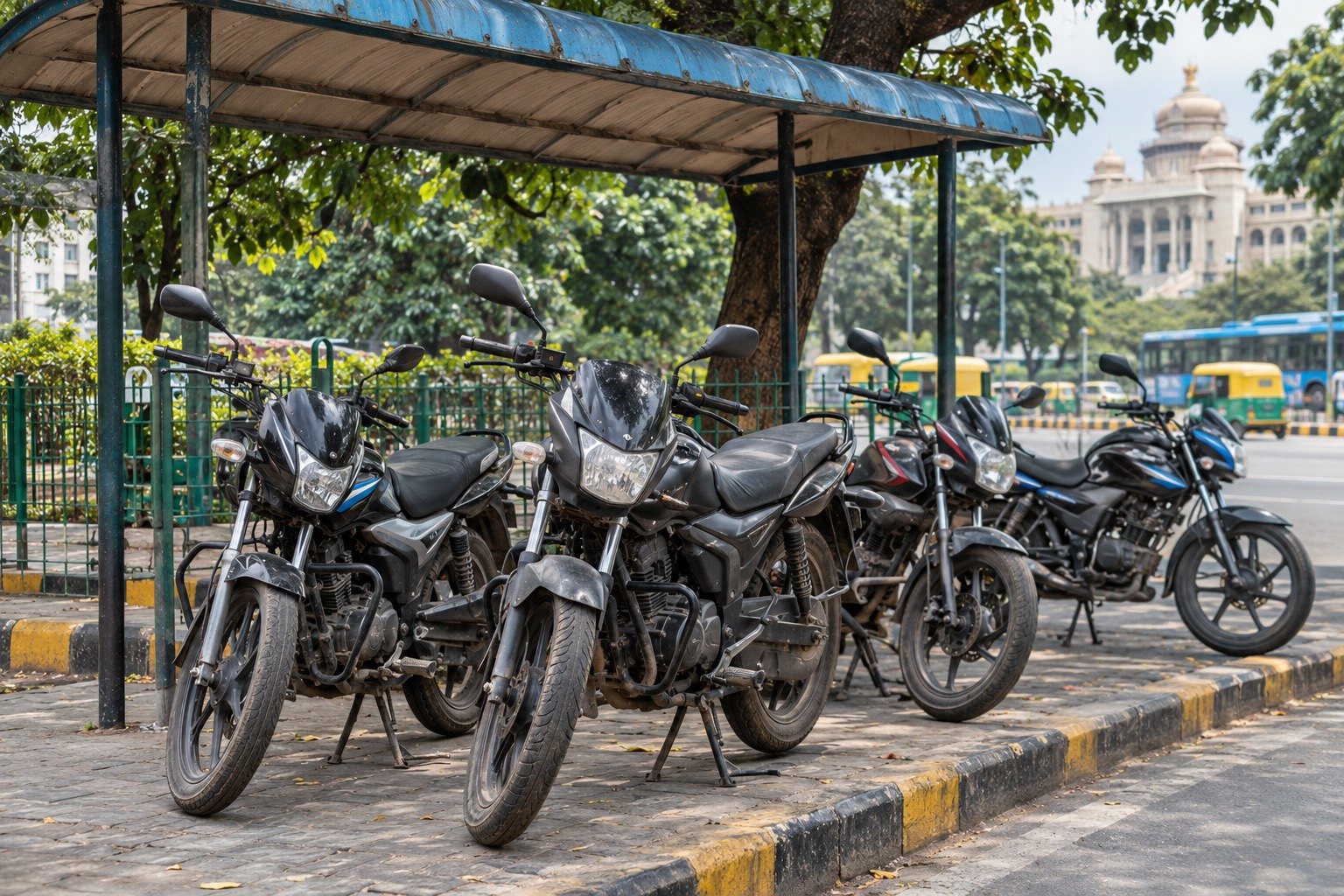
The Supreme Court on 20 November 2026 dismissed Karnataka's appeal against its High Court's January 2026 bike-taxi ruling. That ruling opened the way for permits under the Motor Vehicles Act, 1988 for motorcycles used as taxis. Aggregators such as Ola, Uber and Rapido can now offer bike-taxis there.
Syllabus: GS2 · Constitution; Prelims · Polity & Governance; GS3 · Infrastructure
Why this matters for UPSC
GS2 polity: permits under the Motor Vehicles Act, 1988 and transport authorities' discretion. Prelims can ask what a transport vehicle is; Mains, regulation versus a blanket ban.
Why it matters
A young rider in Bengaluru who carries passengers on a motorcycle through an app can now apply for a permit instead of risking a crackdown. Commuters gain a cheaper ride for short trips, and the Bench saw tracked rides as safer for women. The State still sets permit conditions, so safety rules can be written into each permit. The larger question is how a government handles a new kind of work that carries risk: by licensing it with conditions, or by stopping it. The case shows courts asking for the first path, while leaving the State room to regulate.
Prelims pointers
- Under the Motor Vehicles Act, 1988, a 'motor cycle' is a two-wheeled motor vehicle, including any detachable side-car having an extra wheel.
- Every public service vehicle is a transport vehicle, but transport vehicles also include goods carriages, educational institution buses and private service vehicles.
- The Act's public service vehicle is any motor vehicle used for carrying passengers for hire or reward; it includes maxicabs, motorcabs, contract carriages and stage carriages.
- A Regional Transport Authority may grant a contract carriage permit as sought, grant it with modifications, or refuse it; no permit covers an area left out of the application.
- The Act's 'motor vehicle' includes a trailer and a chassis with no body, but leaves out vehicles running on fixed rails and special vehicles used only in a factory.
- A stage carriage permit, subject to its conditions, also authorises use of the vehicle as a contract carriage, and may authorise its use as a goods carriage.
Practise a UPSC-style question
With reference to the Motor Vehicles Act, 1988, consider the following statements:
1. A contract carriage under the Act includes a motor cab but leaves out a maxicab.
2. A public service vehicle under the Act is any motor vehicle used or adapted to carry passengers for hire or reward.
Which of the statements given above is/are correct?
- (a) 1 only
- (b) 2 only
- (c) Both 1 and 2
- (d) Neither 1 nor 2
Show the answer
Answer: (b) 2 only
Answer: (b) 2 only. The Act's contract carriage covers both cab types, so only the second statement holds.
Statement 1: incorrect. The Motor Vehicles Act, 1988 says a contract carriage includes a maxicab and also a motor cab, even when separate fares are charged.
Statement 2: correct. The Act calls any motor vehicle used or adapted for carrying passengers for hire or reward a public service vehicle.
Eliminate: statement 1 drops the maxicab, which the definition names. Out: (a), (c).
Eliminate: statement 2 matches the definition, so the code with neither fails. Out: (d).
Trap: Wrong scope. The first statement narrows a definition that lists two kinds of cab, and reads as plausible because motor cabs are the familiar case.
Remember: Contract carriage under the 1988 Act: maxicab and motor cab both included.
More from the 21 November 2026 edition
- India's indigenous H5N1 avian influenza vaccine for chickens dedicated to nation Sci-Tech
- Project Cheetah: Botswana-born female's four wild cubs lift count to 62 Environment
- Supreme Court dismisses Tamil Nadu's Cauvery shortfall plea against Karnataka Polity
- EAC recommends Terms of Reference for mines near Great Indian Bustard area Environment
- Health Ministry releases national guidelines on wastewater surveillance for pathogens Sci-Tech
- ICJ finds Myanmar committed genocide against the Rohingya: first such ruling World & IR
- Press Council's 2026 norms ask Government to avoid NSA, UAPA against journalists Polity
- Supreme Court holds Gram Sabha consent mandatory for Scheduled Area acquisition Polity
- Supreme Court orders checks on alleged fake Form 7 deletions in Mustafabad Polity