
Health Ministry releases national guidelines on wastewater surveillance for pathogens
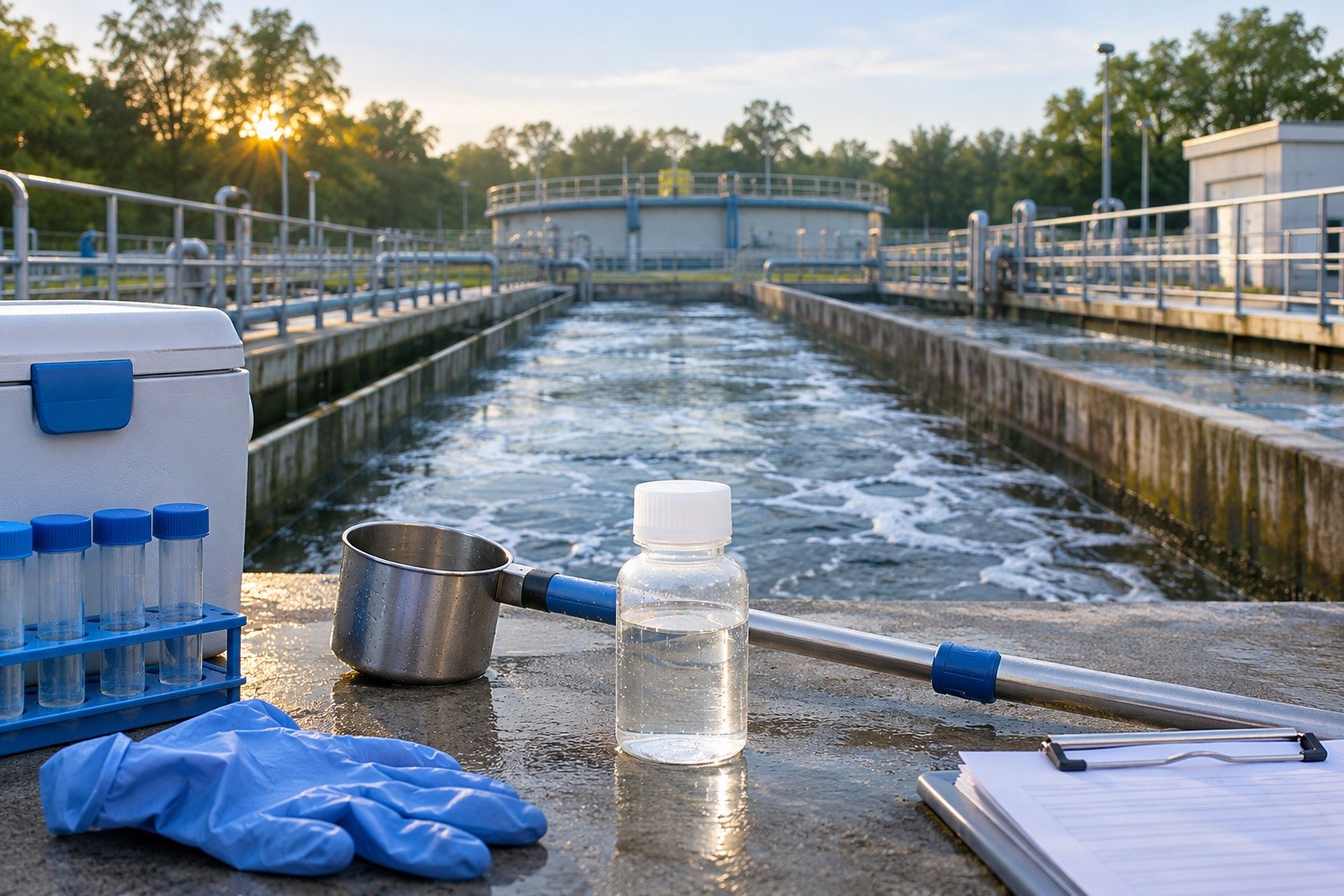
The Union Health Ministry released the National Guidelines on Wastewater Surveillance for Pathogens of Public Health Importance on 16 November 2026. The National Centre for Disease Control (NCDC) prepared them with the APSI-India consortium. They set out sewage testing for viruses such as poliovirus and mpox. Bacteria such as Vibrio cholerae and antimicrobial resistance genes are covered too.
Syllabus: Prelims · Science & Technology; GS3 · Science & Technology; GS2 · Health, Education & Human Resources
Why this matters for UPSC
GS2 health and GS3 science: disease surveillance through sewage testing. Prelims can ask about IDSP, IHIP and pathogen types; Mains, One Health preparedness.
Why it matters
A family in a crowded city ward may never get tested for a stomach bug or a mild fever, yet the virus or bacterium they carry still reaches the drain. Testing that sewage lets health officials see an outbreak building before hospitals fill up, so they can send testing teams, run a vaccination drive or check the water supply in that one area. Because sewage also reflects people who are not sick enough to visit a doctor, it gives a fuller picture of how much infection is about. It is part of a wider effort to prepare for the next pandemic, including threats not yet known, by watching the environment as well as patients.
Prelims pointers
- Wastewater surveillance gives a community-level signal, not individual data; it captures people without symptoms, while clinical surveillance mainly captures those who seek testing or treatment.
- In the priority list, poliovirus, mpox, RSV, rotavirus, adenovirus and hepatitis A and E are viruses; Vibrio cholerae and Salmonella typhi are bacteria.
- IDSP collects data in three forms: S for suspected cases (health workers), P for presumptive cases (clinicians) and L for laboratory-confirmed cases (laboratory staff).
- Under IDSP, trained Rapid Response Teams investigate a rising trend of illness, and States and UTs must file weekly outbreak reports even when there is nothing to report.
- The Director of the National Institute of One Health, Nagpur, serves as Mission Director of the National One Health Mission, under a 2024 Cabinet decision.
- Disease X denotes an unknown pathogen with pandemic potential; NCDC's guidelines present WWS as a way to spot such a threat before it shows in clinics.
Practise a UPSC-style question
With reference to wastewater surveillance of pathogens, consider the following statements:
1. It tracks infection in specific persons, so health workers can trace each infected individual from a sewage sample.
2. It analyses the nucleic acid of pathogens in sewage samples to detect and quantify them.
Which of the statements given above is/are correct?
- (a) 1 only
- (b) 2 only
- (c) Both 1 and 2
- (d) Neither 1 nor 2
Show the answer
Answer: (b) 2 only
Answer: (b) 2 only. Sewage testing reads pathogen genetic material for a whole community, not for named people.
Statement 1: incorrect. NCDC's national guidelines state that wastewater surveillance does not provide individual data; it gives a population-level signal of circulation.
Statement 2: correct. The guidelines describe the method as testing nucleic acid in sewage samples to detect, quantify and characterise pathogens.
Eliminate: statement 1 is false because a sewage sample mixes the waste of a whole catchment. Out: (a), (c).
Eliminate: statement 2 is true, as the method rests on nucleic acid testing. Out: (d).
Trap: Sounds right. Contact tracing is a familiar outbreak tool, so tying it to sewage testing feels plausible, but a sewage sample cannot point to one person.
Remember: Wastewater surveillance gives a community signal from pathogen genetic material, never individual case data.
More from the 21 November 2026 edition
- India's indigenous H5N1 avian influenza vaccine for chickens dedicated to nation Sci-Tech
- Supreme Court dismisses Karnataka appeal, leaving bike-taxi permit ruling standing Polity
- Project Cheetah: Botswana-born female's four wild cubs lift count to 62 Environment
- Supreme Court dismisses Tamil Nadu's Cauvery shortfall plea against Karnataka Polity
- EAC recommends Terms of Reference for mines near Great Indian Bustard area Environment
- ICJ finds Myanmar committed genocide against the Rohingya: first such ruling World & IR
- Press Council's 2026 norms ask Government to avoid NSA, UAPA against journalists Polity
- Supreme Court holds Gram Sabha consent mandatory for Scheduled Area acquisition Polity
- Supreme Court orders checks on alleged fake Form 7 deletions in Mustafabad Polity