
Supreme Court: a soured consensual relationship cannot be recast as rape
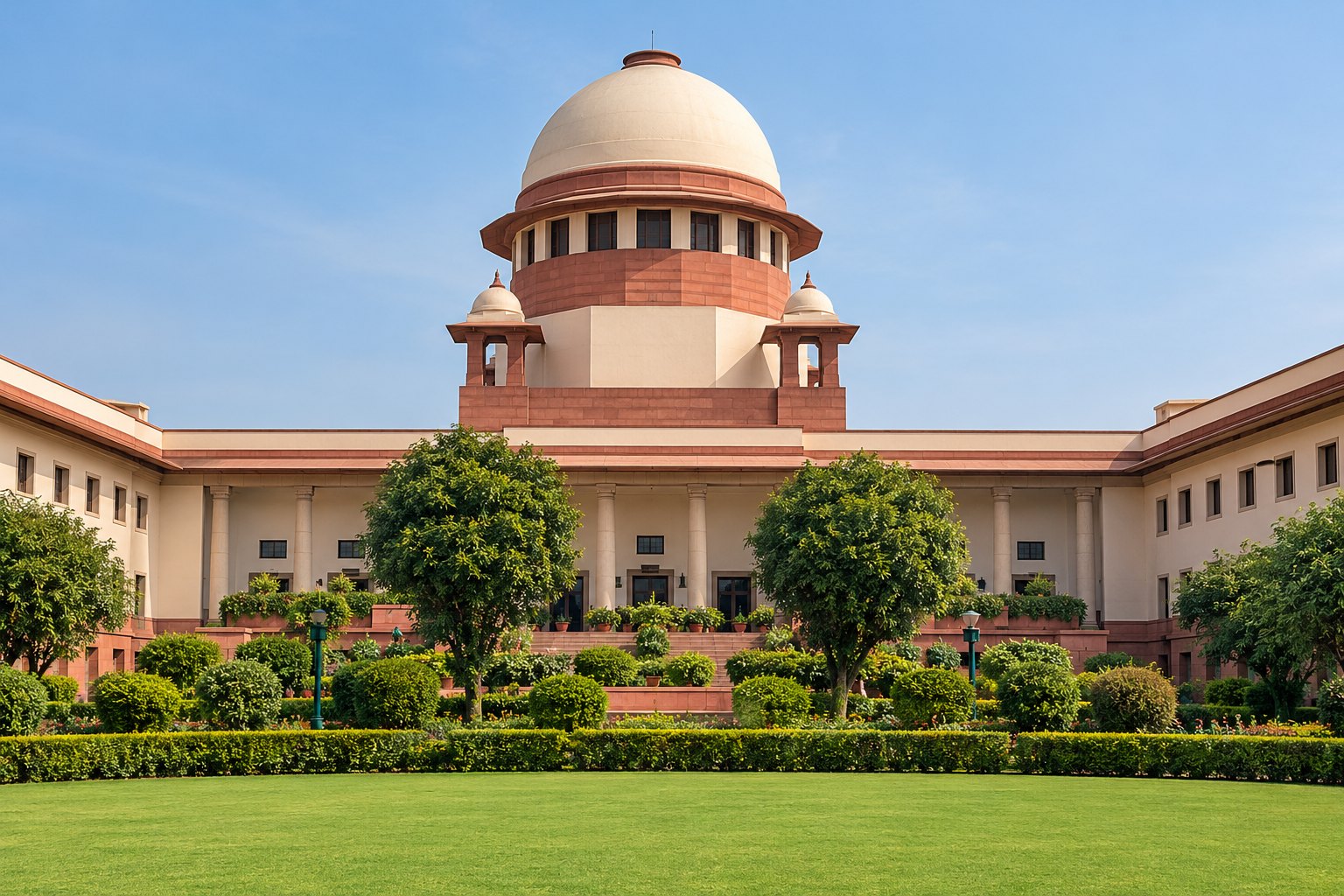
The Supreme Court on 30 October 2026 freed a Kerala man of rape and cheating charges. It held that sex within a consensual relationship does not become rape because the relationship later broke down. The bench of Justices B.V. Nagarathna and R. Mahadevan found the basic ingredients of every charge missing.
Syllabus: GS4 · Ethics & Human Values; Prelims · Polity & Governance; GS2 · Executive & Judiciary
Why this matters for UPSC
GS1 women's issues and GS2 polity: consent and rape law under the BNS. Prelims can ask what Section 63 and Section 69 of the BNS provide; Mains, misuse of rape law against under-reporting.
Why it matters
A woman who agreed to a relationship because a partner lied about being single faces the same question in court as a man accused years after a break-up. Was consent real when it was given? The ruling asks courts to weigh the whole relationship and whether consent was real when given, not how the relationship ended. That can spare an accused long prosecution and stigma where the facts show free choice. Read too widely, though, it could make it harder for women who were in fact deceived to be heard. Because the court itself warned that rape is among the most under-reported crimes, the test protects both sides only if courts apply it case by case.
Prelims pointers
- Section 63 of the BNS defines consent as an unequivocal voluntary agreement that a woman communicates by words, gestures or any verbal or non-verbal means.
- Under the BNS, a woman who does not physically resist penetration is not, for that reason alone, treated as consenting.
- Section 69 of the BNS punishes sex obtained by deceitful means or an insincere promise to marry, not amounting to rape, with up to ten years and a fine.
- Rape under Section 63 and the Section 69 offence are separate: Section 63 covers consent got by fear of death or hurt, or by impersonating a husband.
- Under the BNS, sex with a woman under eighteen is rape whether or not she consents.
- The BNS repealed the Indian Penal Code, 1860, but offences committed before the repeal can still be prosecuted and punished under the old Code.
Practise a UPSC-style question
With reference to the Bharatiya Nyaya Sanhita, 2023, consider the following statements:
1. It defines consent as an unequivocal voluntary agreement that may be shown by words, gestures or non-verbal communication.
2. A woman who does not physically resist penetration is treated as consenting on that fact alone.
3. Sex by a man with his own wife who is not under eighteen years of age is not rape under it.
Which of the statements given above is/are correct?
- (a) 1 and 2 only
- (b) 2 and 3 only
- (c) 1 and 3 only
- (d) 1, 2 and 3
Show the answer
Answer: (c) 1 and 3 only
Answer: (c) 1 and 3 only. Statements 1 and 3 restate Section 63 of the BNS; statement 2 turns its proviso around.
Statement 1: correct. Explanation 2 to Section 63 of the Bharatiya Nyaya Sanhita, 2023 defines consent as an unequivocal voluntary agreement shown by words, gestures or other communication.
Statement 2: incorrect. The proviso to that Explanation says a woman who does not physically resist penetration is not, for that reason alone, regarded as consenting.
Statement 3: correct. Exception 2 to Section 63 keeps the marital exception for a wife who is not under eighteen years of age.
Eliminate: statement 2 is surely wrong, since the BNS says the opposite of it. Out: (a), (b), (d).
Trap: Reversed direction. Statement 2 keeps the words of the proviso on physical resistance but flips its effect, so it sounds like the law while denying it.
Remember: Under the BNS, lack of physical resistance alone is never read as consent.
More from the 1 November 2026 edition
- BIMSTEC's seven members hold inaugural maritime security exercise World & IR
- Landslide in Odisha's Ganjam after Cyclone Arnab rain; NDRF joins search National
- CBD COP17 closes in Yerevan; Cali Fund design unresolved, Ecuador next host Environment
- Felling for Karjat pumped storage project paused after tribal villages protest Environment
- Bihar tender seeks cottages and helipad inside Bhimbandh Wildlife Sanctuary Environment
- Chola-era bronzes of Nataraja and Sivakami found in Nagapattinam excavation National
- CAQM orders curbs on construction and 50% office attendance in Delhi-NCR Environment
- Supreme Court directs MeitY to curb misuse of live-streamed court hearings Polity
- World Bank's India poverty brief applies 2021 PPP lines to surveys Economy
- CCS clears eight next-generation corvettes for Navy at GRSE, Goa Shipyard Defence
- ISRO's GSLV-F18 places NavIC satellite NVS-03 in its intended orbit Sci-Tech
- UN Commission of Inquiry finds genocidal acts in Gaza continued after ceasefire World & IR