
Section 163 BNSS curbs in Pasighat after Siang dam violence; RAF sent
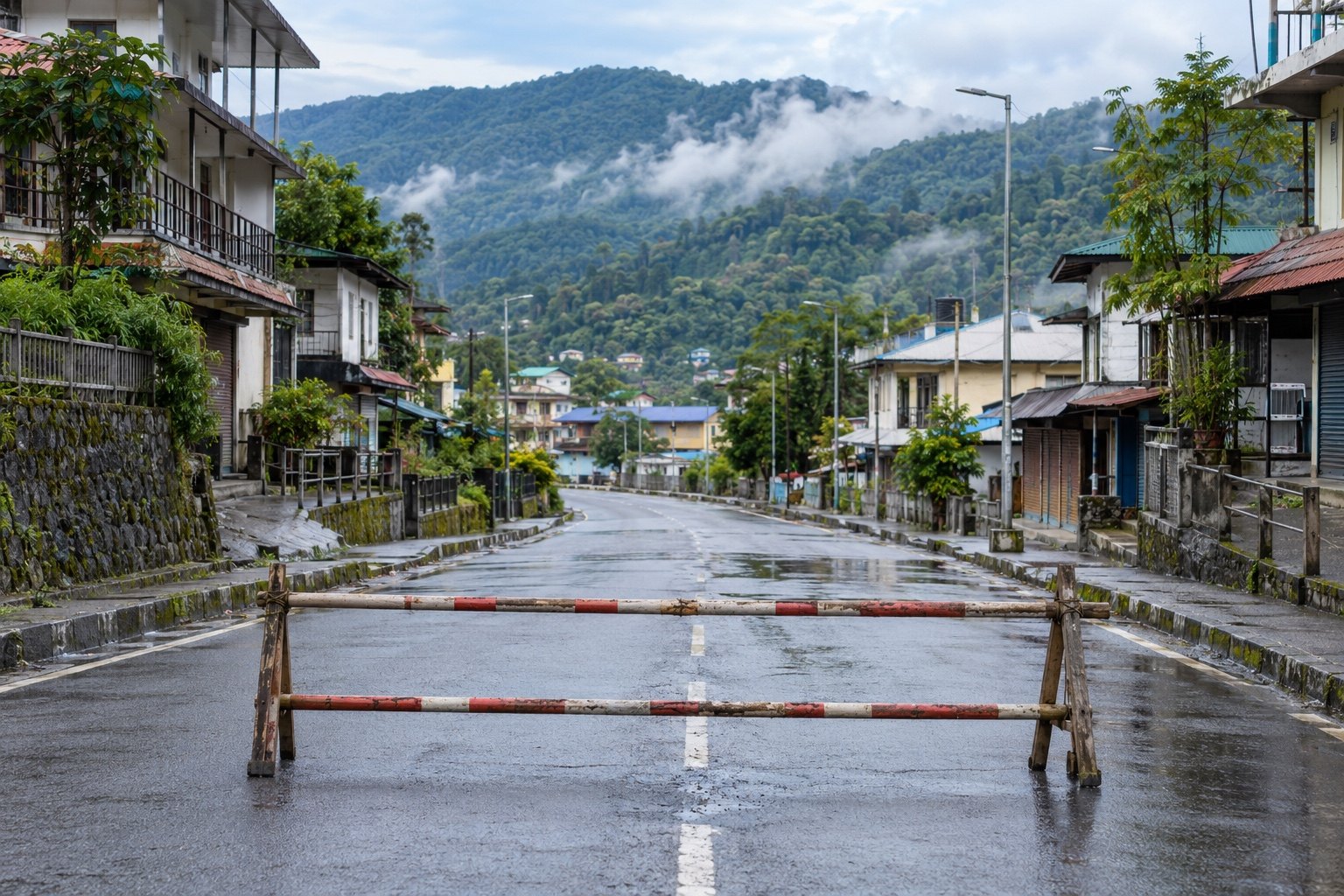
Restrictions on public gathering under section 163 of the Bharatiya Nagarik Suraksha Sanhita, 2023 continue in Pasighat, Mebo and Ruksin in Arunachal Pradesh. Protests against NHPC's proposed 11,200 MW Siang Upper Multipurpose Project turned violent in Pasighat on the night of 23-24 October. The Centre has sent about 250 personnel in two Rapid Action Force (RAF) companies.
Syllabus: GS2 · Constitution; Prelims · Polity & Governance; GS3 · Infrastructure
Why this matters for UPSC
GS2 polity: Article 19(1)(b), its limits in Article 19(3) and section 163 of the BNSS; GS3: security forces and hydropower on the Brahmaputra. Prelims can ask who may issue a section 163 order and what the Rapid Action Force is.
Why it matters
For a trader or a student in Pasighat, the order means that gathering in a group in public is restricted, peaceful or not, for as long as it stays in force. For Adi families along the Siang, the dispute is about whether homes, fields and ancestral land will one day lie under a reservoir. For people downstream in Assam, the Brahmaputra brings floods, and Central Water Commission officials said in 2021 that a project at Upper Siang would greatly benefit the State. The larger question is how a democracy builds a project it calls strategic when the people on the site object. It must neither drop national goals nor override those who stand to lose their land.
Prelims pointers
- NCRB's BNSS-CrPC section table: section 163 matches CrPC section 144; CrPC section 144A, on banning arms in processions and mass drills, has no BNSS counterpart.
- Section 163(3), BNSS: an order may bind one person, the residents of a particular area, or the public generally when frequenting or visiting a particular place.
- Section 163(4), BNSS: an order lapses in two months; the State Government may extend it by notification for up to six months, and may rescind or alter that extension.
- Anuradha Bhasin (2020): section 144 power works on apprehended, not only present, danger, but the danger must be an emergency; orders must be published for challenge.
- Constitution (Sixteenth Amendment) Act, 1963 added 'sovereignty and integrity of India' to Articles 19(2), 19(3) and 19(4); morality is a ground in Article 19(4), not 19(3).
- Rapid Action Force: raised in October 1992; a 'zero-response' force; President's Colour in 2003; each company has a women's team; trains contingents for UN peacekeeping.
- CRPF: raised as the Crown Representative's Police in 1939, renamed under the CRPF Act on 28 December 1949; India's largest Central Armed Police Force, under the Home Ministry.
- Pasighat, headquarters of East Siang district, is the oldest town in Arunachal Pradesh, established in 1911, per the district administration; the Siang flows past it into Assam.
Practise a UPSC-style question
With reference to orders under section 163 of the Bharatiya Nagarik Suraksha Sanhita, 2023, consider the following statements:
1. A Judicial Magistrate of the first class may issue such an order on a police report.
2. Such an order may be directed to the public generally when frequenting or visiting a particular place.
3. A Magistrate's order lapses after two months unless the State Government extends it by notification.
Which of the statements given above is/are correct?
- (a) 1 and 2 only
- (b) 2 and 3 only
- (c) 1 and 3 only
- (d) 1, 2 and 3
Show the answer
Answer: (b) 2 and 3 only
Answer: (b) 2 and 3 only. Section 163 gives the power to Executive, not Judicial, Magistrates; statements 2 and 3 restate the section.
Statement 1: incorrect. Section 163(1) names the District Magistrate, a Sub-divisional Magistrate or an Executive Magistrate specially empowered by the State Government, not a Judicial Magistrate.
Statement 2: correct. Section 163(3) lets the order bind one person, the residents of an area, or the public generally when frequenting or visiting a particular place.
Statement 3: correct. Section 163(4) caps a Magistrate's order at two months; its proviso lets the State Government extend it by notification for up to six months more.
Eliminate: Statement 1 is the surest: the power belongs to the executive magistracy. Out: (a), (c), (d).
Trap: Swapped attribution. A Judicial Magistrate is pinned on a preventive power that the BNSS gives to Executive Magistrates.
Remember: Section 163 = DM, SDM or specially empowered Executive Magistrate; two months, plus up to six by the State.
Explainers on this topic
More from the 26 October 2026 edition
- Operation Trident: NCB-led raids and PMLA action hit Myanmar-linked narco-hawala network National
- Oil spill off UAE shuts beaches: MARPOL, OPRC and IOPC Funds Environment
- UP orders re-check of electoral roll entries fed by computer assistants Polity
- RBI opens Bhubaneswar Data Centre for RTGS, NEFT and cybersecurity institute Economy
- Cyclone Arnab: Andhra Pradesh announces evacuations; NDRF, State forces deployed National
- Film certifier CBFC probes alleged leak from its e-Cinepramaan portal Polity
- Andhra Pradesh notifies polls in Kotia villages Odisha claims: inter-State boundary disputes Polity
- OBC creamy layer: Centre awaits SC directions to allocate 958 selectees Polity
- IITM's new lab under Mission Mausam to trace Delhi-NCR pollution sources Environment
- Keralam ex-Governor reportedly recommended PSC chief's removal: how Article 317 works Polity