
Cyclone Arnab: Andhra Pradesh announces evacuations; NDRF, State forces deployed
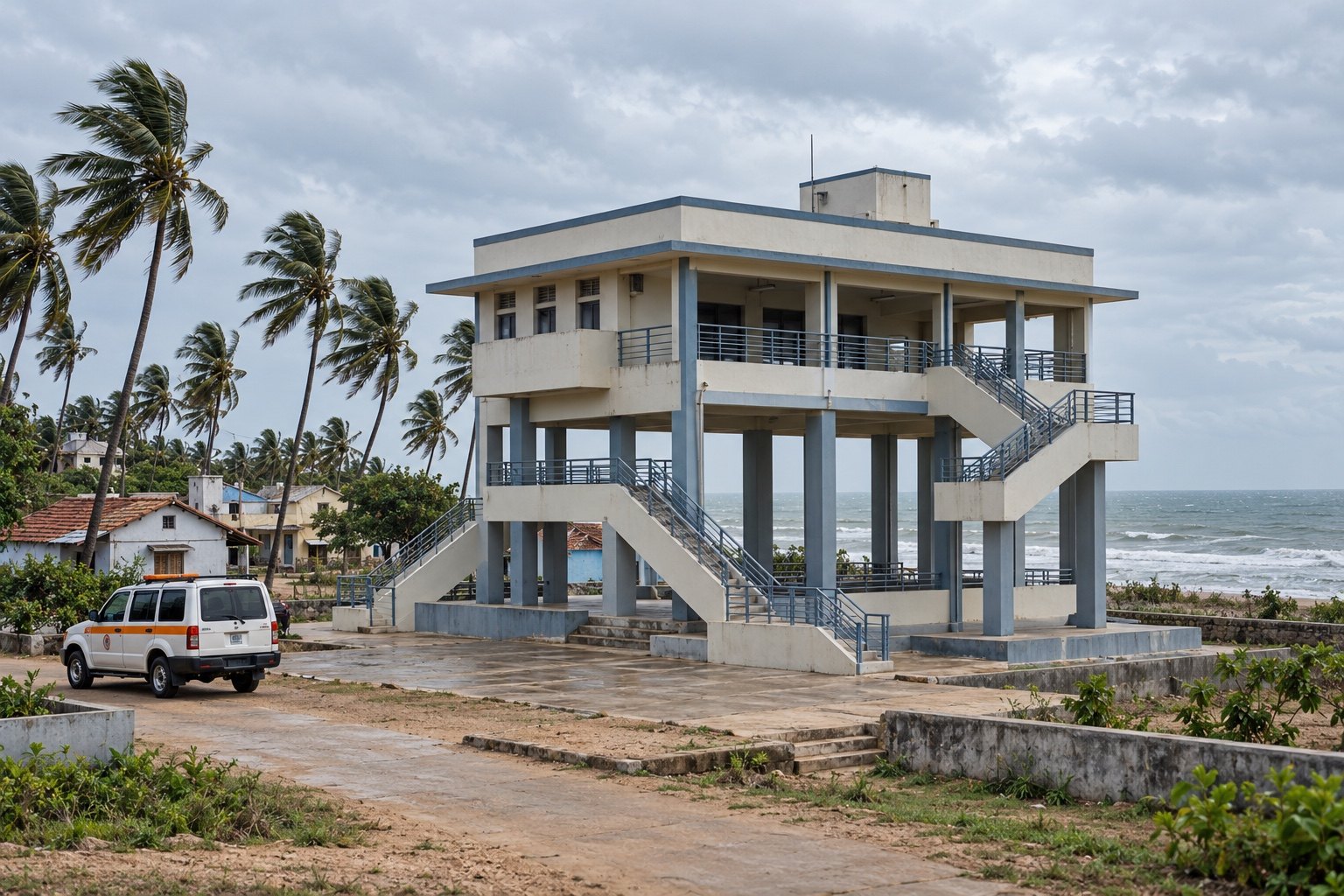
Andhra Pradesh will shift people in Cyclone Arnab's likely impact zones to shelters by 27 October 2026, with State and National Disaster Response Force battalions deployed. Odisha has told eight Ministers to supervise disaster work in eight districts. The India Meteorological Department forecasts landfall near Yanam on 28 October as a very severe cyclonic storm.
Syllabus: Prelims · Current Affairs & IR; GS2 · Statutory & Regulatory Bodies; GS1 · Geophysical Phenomena
Why this matters for UPSC
Prelims can ask who chairs the NDMA, SDMA and DDMA under the Disaster Management Act, 2005, and what section 44A added in 2025. GS3 Mains asks how preparedness and evacuation turn an IMD forecast into lives saved.
Why it matters
For a fishing family in a thatched hut on the Andhra Pradesh coast, the next two days decide a great deal. IMD's earlier impact outlook warned of major damage to huts and coastal crops and of flooded escape routes, and it advised a total halt to fishing. Early evacuation to a cyclone shelter is what keeps such families alive; those who wait can be cut off as the storm surge floods low-lying land. Daily earners lose days of income and farmers may lose standing crops. How fast a district moves people, stocks its shelters and restores power will shape the toll more than any relief that follows. The larger question is whether every coastal district can turn a forecast into timely action.
Prelims pointers
- Section 3: the Prime Minister chairs the NDMA ex officio, with up to nine other members; section 3(3A), added in 2025, hands day-to-day functions to the Vice-Chairperson.
- Section 14: the Chief Minister chairs the SDMA ex officio; section 20: the Chief Secretary chairs the State Executive Committee that assists it.
- Section 25: the Collector, District Magistrate or Deputy Commissioner chairs the DDMA; the local authority's elected representative is co-Chairperson (the zila parishad chairperson where one exists).
- Section 45: the NDRF's general superintendence, direction and control vest in the NDMA; its command lies with a Director General appointed by the Central Government.
- Section 8A (2025): the National Crisis Management Committee, chaired by the Cabinet Secretary, is the nodal body for major disasters with serious or national ramifications.
- Section 8B (2025): the High Level Committee, chaired by the Union Minister in charge of disaster management, approves assistance from the National Disaster Response Fund (section 46).
- IMD's four-stage cyclone warning: Pre-Cyclone Watch (72 hours ahead), Cyclone Alert (48 hours), Cyclone Warning (24 hours; landfall point forecast) and Post-Landfall Outlook (12 hours before landfall).
- NDMA Guidelines on Management of Cyclones (2008): about 5,700 km of India's 7,516-km coastline is cyclone-prone, across 13 coastal States and Union Territories.
Practise a UPSC-style question
With reference to the authorities under the Disaster Management Act, 2005, consider the following statements:
1. The Governor of a State is the ex officio Chairperson of the State Disaster Management Authority.
2. The Prime Minister is the ex officio Chairperson of the National Disaster Management Authority.
3. The Collector or District Magistrate is the ex officio Chairperson of the District Disaster Management Authority.
Which of the statements given above is/are correct?
- (a) 1 and 2 only
- (b) 2 and 3 only
- (c) 1 and 3 only
- (d) 1, 2 and 3
Show the answer
Answer: (b) 2 and 3 only
Answer: (b) 2 and 3 only. The Chief Minister, not the Governor, chairs a State Disaster Management Authority.
Statement 1: incorrect. Section 14 of the Act makes the Chief Minister of the State the ex officio Chairperson of the SDMA.
Statement 2: correct. Section 3 makes the Prime Minister the ex officio Chairperson of the NDMA, with up to nine other members.
Statement 3: correct. Section 25 makes the Collector, District Magistrate or Deputy Commissioner the ex officio Chairperson of the DDMA.
Eliminate: Be surest of statement 1: section 14 puts the elected Chief Minister, not the Governor, at the head of the SDMA. Out: (a), (c), (d).
Trap: Swapped attribution. The State's constitutional head is put in place of its elected head, which looks natural beside the Prime Minister's role at the Centre.
Remember: NDMA: Prime Minister (section 3); SDMA: Chief Minister (section 14); DDMA: Collector (section 25).
Explainers on this topic
More from the 26 October 2026 edition
- Operation Trident: NCB-led raids and PMLA action hit Myanmar-linked narco-hawala network National
- Oil spill off UAE shuts beaches: MARPOL, OPRC and IOPC Funds Environment
- UP orders re-check of electoral roll entries fed by computer assistants Polity
- RBI opens Bhubaneswar Data Centre for RTGS, NEFT and cybersecurity institute Economy
- Film certifier CBFC probes alleged leak from its e-Cinepramaan portal Polity
- Andhra Pradesh notifies polls in Kotia villages Odisha claims: inter-State boundary disputes Polity
- OBC creamy layer: Centre awaits SC directions to allocate 958 selectees Polity
- Section 163 BNSS curbs in Pasighat after Siang dam violence; RAF sent Polity
- IITM's new lab under Mission Mausam to trace Delhi-NCR pollution sources Environment
- Keralam ex-Governor reportedly recommended PSC chief's removal: how Article 317 works Polity