
IITM's new lab under Mission Mausam to trace Delhi-NCR pollution sources
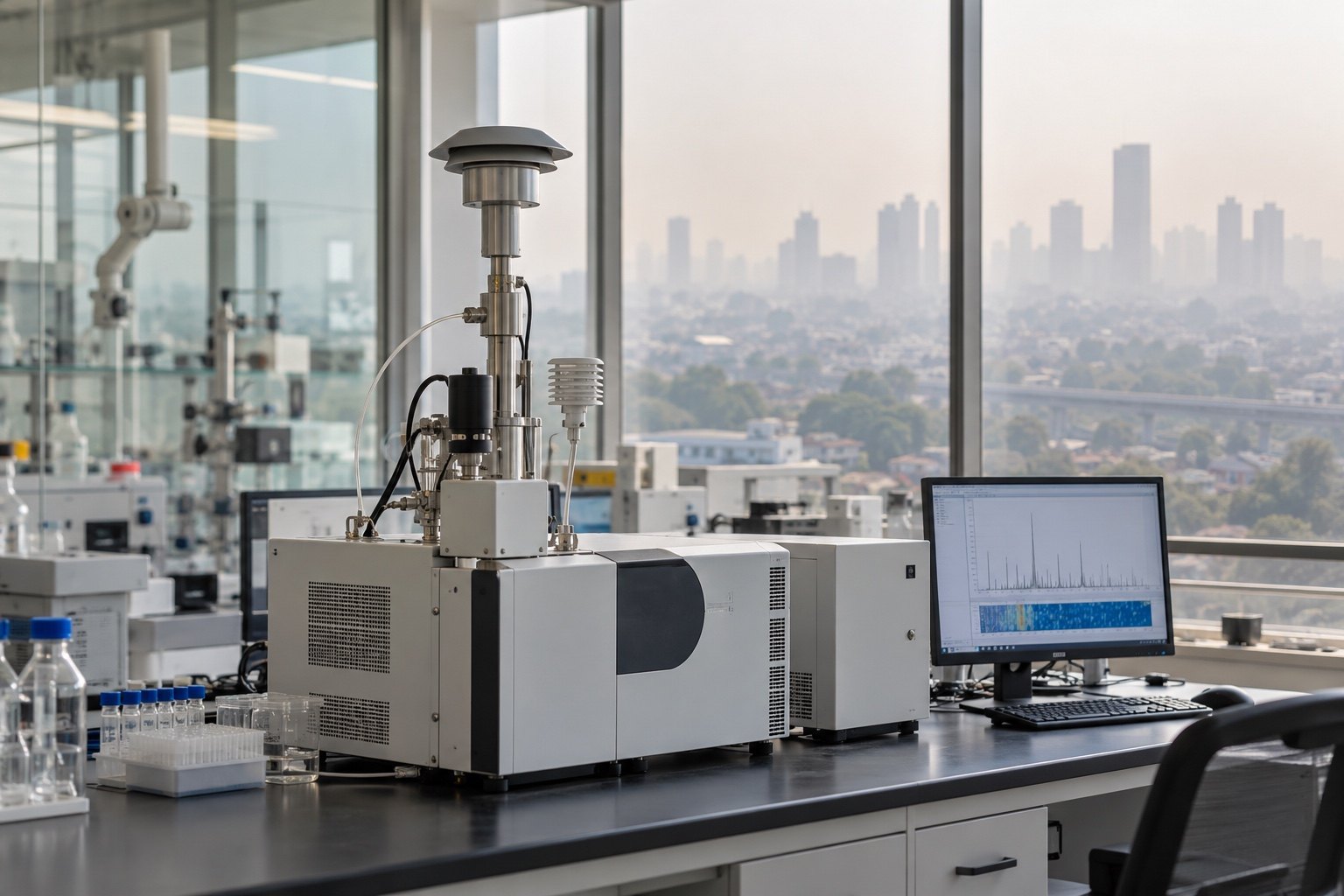
AATAL, an air-pollution laboratory at the Indian Institute of Tropical Meteorology's Delhi branch, was inaugurated on 24 October 2026. Set up under Mission Mausam, it can trace Delhi-NCR's pollution sources in real time. It also studies fine particles' chemistry and potential toxicity. Its evidence is to inform the Commission for Air Quality Management, including on Graded Response Action Plan decisions.
Syllabus: Prelims · Environment & Ecology; GS3 · Science & Technology; GS3 · Environment & Conservation
Why this matters for UPSC
Prelims (GS3 environment and science) can ask what Mission Mausam is and who implements it, what PM2.5 and source apportionment are, and what the Commission for Air Quality Management can do. GS3 Mains can ask about evidence-based air-quality management in Delhi-NCR.
Why it matters
Today a bad-air day in Delhi-NCR brings broad emergency curbs that fall on builders, transporters, factory workers and commuters across the region, whatever is actually fouling the air that day. If officials can see, hour by hour, that most of the harm is coming from road dust in some localities or from smoke carried in from crop fires, they can aim action at that source. Curbs could then cost less and work better. Knowing which particles carry metals and toxic elements also helps health agencies warn the people most at risk. The larger question is whether India can base pollution control on evidence instead of blanket bans.
Prelims pointers
- Mission Mausam: cleared by the Union Cabinet on 11 September 2024 at Rs 2,000 crore for two years; the Ministry of Earth Sciences is its chief implementer.
- Mission Mausam's main implementers: IMD, IITM and the National Centre for Medium-Range Weather Forecasting (NCMRWF), supported by INCOIS, NCPOR and NIOT.
- CAQM Act, 2021 (Act No. 29 of 2021): its 'adjoining areas' are parts of Haryana, Punjab, Rajasthan and Uttar Pradesh whose pollution sources harm NCR air.
- CAQM's directions prevail over conflicting orders of the governments of Delhi, Punjab, Haryana, Rajasthan and Uttar Pradesh, the CPCB and State Pollution Control Boards (section 3).
- CAQM members include a technical Member from the Central Pollution Control Board and one nominated by ISRO, both ex officio; its headquarters is in Delhi.
- National Ambient Air Quality Standards cover 12 pollutants, including PM10 and PM2.5; the PM2.5 standard (40 µg/m³) is stricter than PM10's (60 µg/m³).
- National Clean Air Programme (MoEFCC, January 2019): up to 40% lower PM10 concentrations, or meeting the national standard, by 2025-26; the Air Quality Index dates from 2015.
- Air Quality Early Warning System for Delhi (2018): built by IITM, IMD and NCMRWF with NCAR (US) and Finnish Meteorological Institute support; forecasts 72 hours ahead.
Practise a UPSC-style question
With reference to Mission Mausam, consider the following statements:
1. It is to be chiefly implemented by the Ministry of Environment, Forest and Climate Change.
2. The National Centre for Medium-Range Weather Forecasting, the India Meteorological Department and the Indian Institute of Tropical Meteorology are its primary implementers.
3. Its focus includes alerts for air quality and weather interventions for managing fog, hail and rain.
Which of the statements given above is/are correct?
- (a) 1 and 2 only
- (b) 2 and 3 only
- (c) 1 and 3 only
- (d) 1, 2 and 3
Show the answer
Answer: (b) 2 and 3 only
Answer: (b) 2 and 3 only. The mission belongs to the Ministry of Earth Sciences, not the environment ministry.
Statement 1: incorrect. The Cabinet release of 11 September 2024 says the Ministry of Earth Sciences will chiefly implement Mission Mausam.
Statement 2: correct. IMD, IITM and NCMRWF, three Ministry of Earth Sciences institutes, are its primary implementers, supported by INCOIS, NCPOR and NIOT.
Statement 3: correct. Its focus includes air-quality alerts, warnings of extreme weather and cyclones, and weather interventions for managing fog, hail and rain.
Eliminate: statement 1 swaps the ministry, since Mission Mausam is run by the Ministry of Earth Sciences. Out: (a), (c), (d).
Trap: Swapped attribution. Air-quality alerts make the environment ministry look plausible, but the mission is a weather and climate programme of the Ministry of Earth Sciences.
Remember: Mission Mausam: Ministry of Earth Sciences; IMD, IITM, NCMRWF; Rs 2,000 crore over two years.
More from the 26 October 2026 edition
- Operation Trident: NCB-led raids and PMLA action hit Myanmar-linked narco-hawala network National
- Oil spill off UAE shuts beaches: MARPOL, OPRC and IOPC Funds Environment
- UP orders re-check of electoral roll entries fed by computer assistants Polity
- RBI opens Bhubaneswar Data Centre for RTGS, NEFT and cybersecurity institute Economy
- Cyclone Arnab: Andhra Pradesh announces evacuations; NDRF, State forces deployed National
- Film certifier CBFC probes alleged leak from its e-Cinepramaan portal Polity
- Andhra Pradesh notifies polls in Kotia villages Odisha claims: inter-State boundary disputes Polity
- OBC creamy layer: Centre awaits SC directions to allocate 958 selectees Polity
- Section 163 BNSS curbs in Pasighat after Siang dam violence; RAF sent Polity
- Keralam ex-Governor reportedly recommended PSC chief's removal: how Article 317 works Polity