
Andhra Pradesh notifies polls in Kotia villages Odisha claims: inter-State boundary disputes
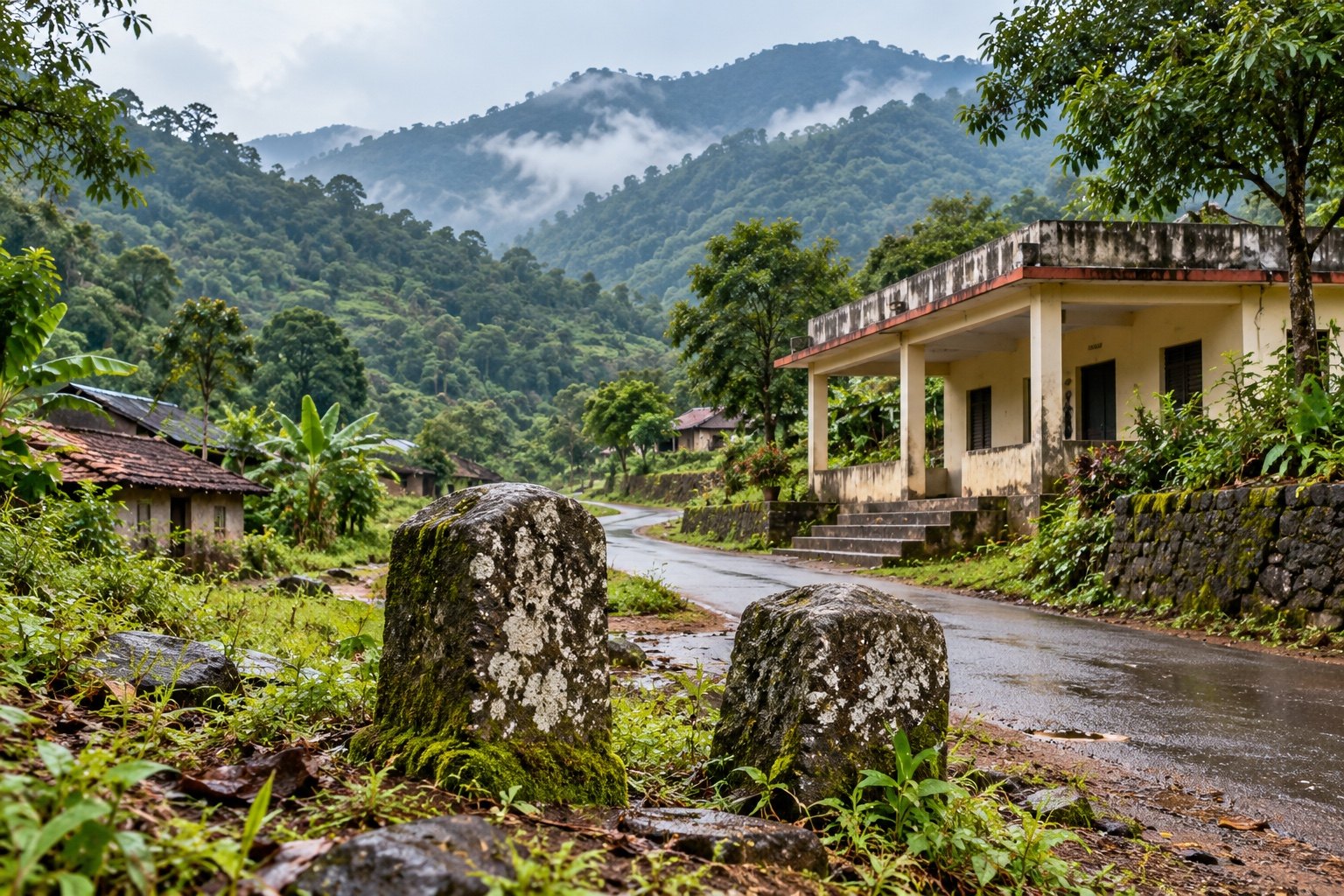
Andhra Pradesh has notified panchayat polls for 3 November in three villages of the Kotia gram panchayat that Odisha claims. Odisha's Revenue Minister says the State has moved a contempt petition in the Supreme Court against the notification. Kotia's residents draw welfare benefits from both States, and those in the disputed villages can vote in both.
Syllabus: GS2 · Federalism & Local Government; GS2 · Separation of Powers; Prelims · Polity & Governance
Why this matters for UPSC
GS2 polity and federalism. Prelims can ask what Article 131 and its proviso cover, Parliament's power under Article 3, and the Inter-State Council and Zonal Councils; Mains, how inter-State boundary disputes are settled beyond the courts.
Why it matters
For a family in Kotia, the dispute decides which State runs its village council, school and ration supply. Because people there are served, and can vote, on both sides, two governments compete to serve and count the same households. A poll held by one State in villages the other claims can deepen that split, leaving two administrations that each refuse to accept the other's authority on the ground. The larger issue is that boundary quarrels inherited from colonial-era notifications still divide States. Where the courts cannot rule, people at the border live with uncertain governance until the States agree or Parliament draws the line.
Prelims pointers
- Article 131: the Supreme Court alone hears disputes between the Centre and States, or between States, that turn on a legal right, subject to the Constitution's other provisions.
- Proviso to Article 131 (Seventh Amendment, 1956): bars disputes arising out of a pre-Constitution treaty, agreement, covenant, engagement, sanad or similar instrument still in operation.
- Article 3: Parliament may by law form States and alter their area, boundaries or names; the Bill needs the President's recommendation and the affected State Legislature's views.
- Article 4: a law under Article 2 or 3 amends the First and Fourth Schedules as needed and is not a constitutional amendment under Article 368.
- Article 263: the President may by order create a council to inquire into and advise upon disputes between States and recommend better coordination of policy.
- Article 262: Parliament may by law provide for adjudicating inter-State river water disputes and bar the Supreme Court and every other court from them.
- Zonal Councils may discuss and recommend on border disputes, linguistic minorities and inter-State transport; Odisha belongs to the Eastern Zonal Council, Andhra Pradesh to the Southern Zonal Council.
- Assam-Meghalaya agreement (29 March 2022, New Delhi): the two Chief Ministers settled 6 of 12 areas of difference, signing in the Union Home Minister's presence.
Practise a UPSC-style question
With reference to the original jurisdiction of the Supreme Court under Article 131 of the Constitution of India, consider the following statements:
1. A private citizen can file a suit under it against a State government.
2. It covers a dispute between States that involves a question of law or fact on which a legal right depends.
3. It extends to disputes arising out of pre-Constitution agreements that continue in operation after the Constitution began.
Which of the statements given above is/are correct?
- (a) 1 only
- (b) 2 only
- (c) 3 only
- (d) 1, 2 and 3
Show the answer
Answer: (b) 2 only
Answer: (b) 2 only. Article 131 is a forum for disputes between governments, and its proviso shuts out pre-Constitution instruments.
Statement 1: incorrect. Article 131 covers disputes between the Government of India and States, or between States; a private citizen is not among the parties it lists.
Statement 2: correct. Article 131 applies if and in so far as the dispute involves a question of law or fact on which the existence or extent of a legal right depends.
Statement 3: incorrect. The proviso to Article 131 excludes disputes arising out of a treaty, agreement, sanad or similar instrument made before the Constitution and still in operation.
Eliminate: Statement 3 is the surest: the proviso excludes such disputes, which is why Orissa's 1968 boundary suit was dismissed in 2006. Out: (c), (d).
Eliminate: Statement 1 is incorrect because Article 131 names governments, not citizens, as the parties. Out: (a).
Trap: Wrong scope. Statement 1 widens a forum for governments to private citizens, and statement 3 drops the proviso's exclusion of old instruments.
Remember: Article 131: Centre-State and inter-State disputes on a legal right; its proviso bars pre-Constitution instruments.
More from the 26 October 2026 edition
- Operation Trident: NCB-led raids and PMLA action hit Myanmar-linked narco-hawala network National
- Oil spill off UAE shuts beaches: MARPOL, OPRC and IOPC Funds Environment
- UP orders re-check of electoral roll entries fed by computer assistants Polity
- RBI opens Bhubaneswar Data Centre for RTGS, NEFT and cybersecurity institute Economy
- Cyclone Arnab: Andhra Pradesh announces evacuations; NDRF, State forces deployed National
- Film certifier CBFC probes alleged leak from its e-Cinepramaan portal Polity
- OBC creamy layer: Centre awaits SC directions to allocate 958 selectees Polity
- Section 163 BNSS curbs in Pasighat after Siang dam violence; RAF sent Polity
- IITM's new lab under Mission Mausam to trace Delhi-NCR pollution sources Environment
- Keralam ex-Governor reportedly recommended PSC chief's removal: how Article 317 works Polity