
DoT orders Calling Name Presentation on 4G and above from 1 November
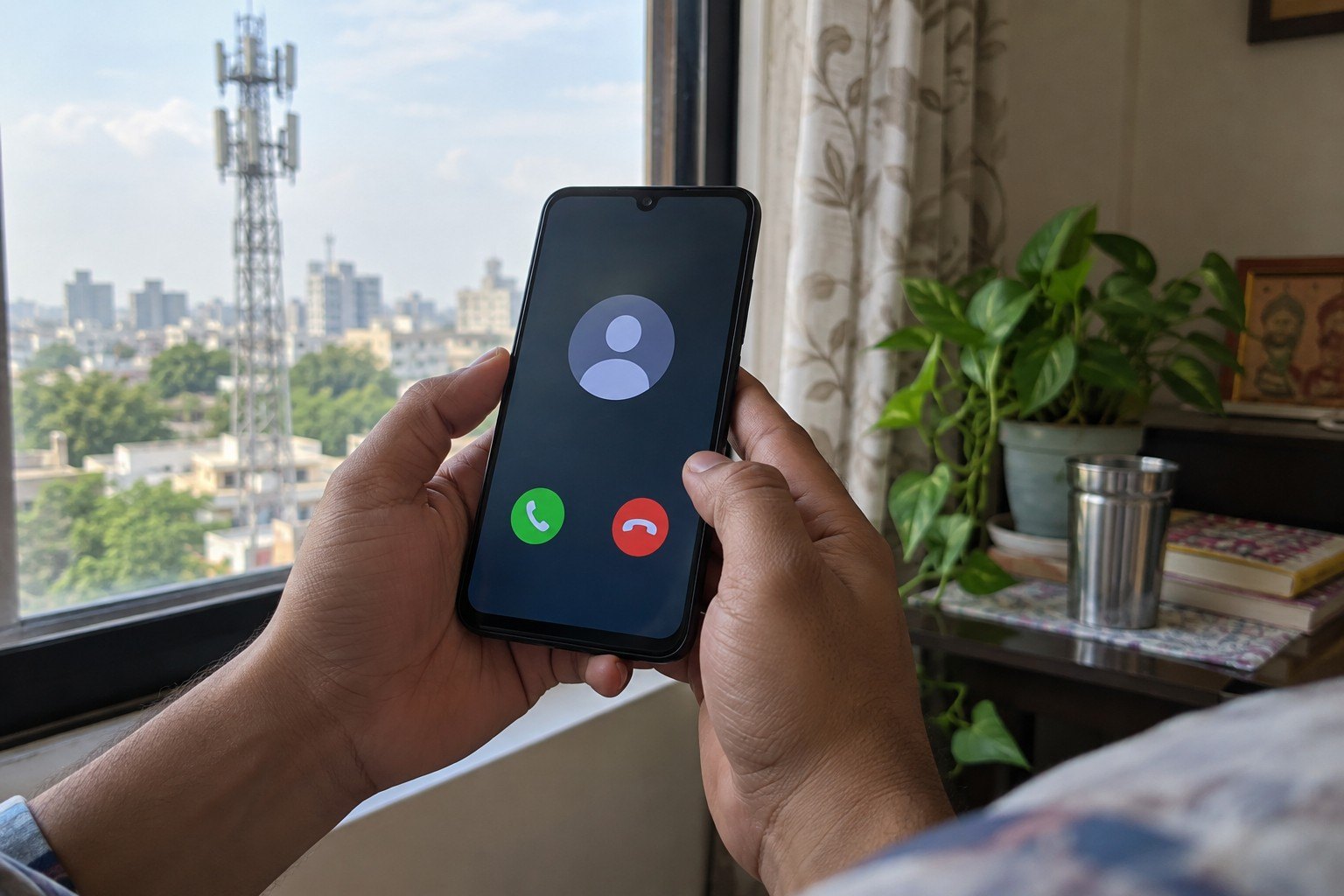
In a circular dated 13 October 2026, the Department of Telecommunications instructed all access-service providers to introduce Calling Name Presentation (CNAP) on 4G and higher-generation networks from 1 November 2026, for every user without a separate request. An unsaved domestic caller will appear under the name in their operator's subscriber records. 2G, 3G and landlines will be considered separately.
Syllabus: GS2 · Statutory & Regulatory Bodies; GS2 · Government Policies; GS3 · Science & Technology
Why this matters for UPSC
GS2 governance and GS3 communication networks: Prelims can ask what Calling Name Presentation and Calling Line Identification are, and whether TRAI's recommendations bind the government; Mains, about protecting users from fraud calls without eroding the right to privacy.
Why it matters
A retired teacher who ignores every unknown number, because most turn out to be sales pitches, can miss a genuine call from a hospital or a bank. From November, on 4G and 5G networks, her phone should show the name the caller gave the operator when taking the connection, instead of a label from a crowd-sourced app. DoT expects this to help people pick genuine calls and curb unwanted spam. There is a cost: a caller's name now reaches everyone they ring unless they hold CLIR, and a wrong or outdated name in an operator's records will show until a complaint corrects it. The wider question is how far identity records should be used to make calls trustworthy without eroding privacy.
Prelims pointers
- TRAI Act, 1997, section 11: TRAI's recommendations, made on its own or at the licensor's request, do not bind the Central Government, which takes the final decision.
- Standards bodies: the International Telecommunication Union, a UN specialised agency based in Geneva, defines CLIP and calling name identification presentation; the European Telecommunication Standards Institute specifies CNAP.
- Rule 48 of the 2026 Authorisation Rules also obliges operators to deploy tools that detect and block calls with false, tampered or spoofed CLI.
- CLIR under the 2026 Authorisation Rules: allowed only per the Central Government's standard operating procedure, never for business connections; CLI must still travel end-to-end.
- Trade Marks Registry: set up in 1940; administers the Trade Marks Act, 1999; works under the Controller General of Patents, Designs and Trade Marks, Ministry of Commerce and Industry.
- Spam controls: customers can block commercial calls and SMS through a Do Not Disturb (DND) preference; registered telemarketers make commercial calls from the 140-level number series.
- Right to privacy: protected as part of Article 21 and Part III of the Constitution, held by a nine-judge Bench in K.S. Puttaswamy v Union of India (2017).
Practise a UPSC-style question
With reference to the Calling Name Presentation (CNAP) service that the Department of Telecommunications has ordered, consider the following statements:
1. For an unsaved domestic number, the name shown is taken from the subscriber records of the called user's operator.
2. It is to be introduced on wireless terrestrial networks built on 4G and higher-generation technologies.
3. The names of callers who have availed Calling Line Identification Restriction will not be presented.
How many of the above statements are correct?
- (a) Only one
- (b) Only two
- (c) All three
- (d) None
Show the answer
Answer: (b) Only two
Answer: (b) Only two. The name comes from the calling user's operator, not the called user's; the other two are as ordered.
Statement 1: incorrect. The calling (originating) operator keeps the name database; the terminating operator only retrieves the name from it.
Statement 2: correct. The 13 October 2026 circular covers 4G and higher-generation wireless networks; 2G, 3G and landlines will be considered separately.
Statement 3: correct. The circular says the names of users who have availed CLIR will not be presented.
Eliminate: Judge statement 2 first: the order names 4G and higher networks, so it is correct. Out: (d).
Eliminate: Judge statement 1: the name sits with the caller's own operator, so it is incorrect. Out: (c).
Eliminate: Judge statement 3: CLIR users stay hidden, so it is correct. Out: (a).
Trap: Swapped attribution. The database is pinned on the called user's operator, which only fetches the name.
Remember: CNAP: the caller's own operator holds the name; the receiving operator fetches and shows it.
Explainers on this topic
More from the 15 October 2026 edition
- IMF Fiscal Monitor urges better tax design as sovereign yields rise Economy
- India asks OHCHR at UN Third Committee for PoK rights report World & IR
- Article 243E: Allahabad HC orders UP panchayat polls within three months Polity
- India leads IBSAMAR IX naval exercise with Brazil, South Africa Defence
- Cholera spreads across 21 DR Congo provinces, WHO warns Sci-Tech
- NITI Aayog paper proposes 9.5% social discount rate for public projects Economy
- Supreme Court: professional course fees fixed before admission, not midstream Polity
- UN Security Council renews Haiti sanctions regime for a year World & IR
- Privacy: Supreme Court quashes police notice to X for journalist's data Polity
- Draft rules propose BS-VII emission norms for new cars from April 2029 Environment
- Keralam Bill proposes registering elder-care centres, recognising living wills National
- NITI Aayog framework ties State data-centre approvals to water, power Economy