
Keralam Bill proposes registering elder-care centres, recognising living wills
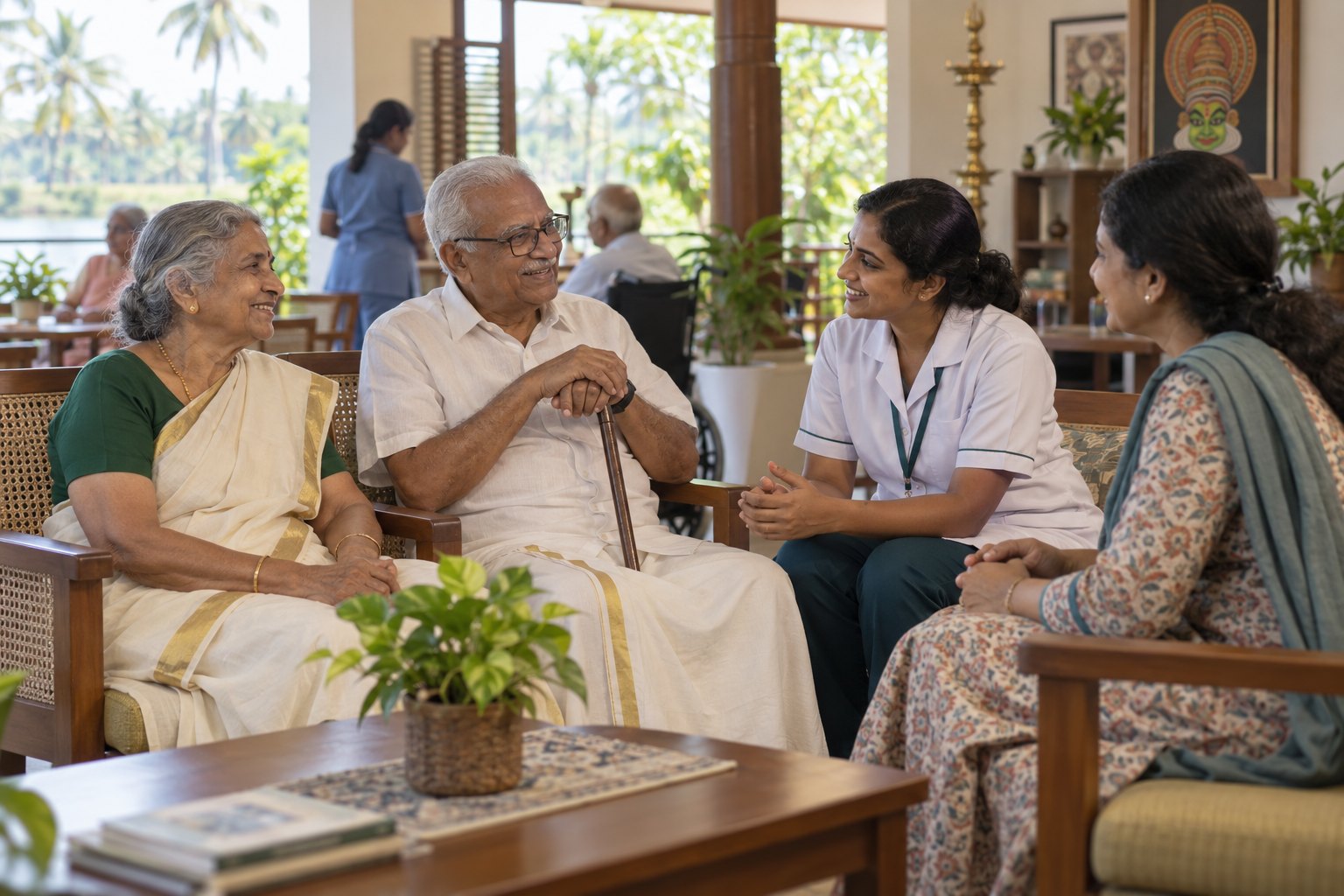
The Keralam government presented the Keralam Senior Citizens (Care and Protection of Rights) Bill, 2026, in the Legislative Assembly on 13 October. If passed, it would make registration compulsory for elder-care centres and caregivers, recognise living wills, and punish abuse, abandonment or seizure of a resident's property with up to three years in jail.
Syllabus: GS2 · Federalism & Local Government; GS1 · Women, Population & Urbanisation; GS2 · Government Policies
Why this matters for UPSC
GS2, welfare of vulnerable sections and federal law-making: Prelims can ask about Article 41, the Maintenance and Welfare of Parents and Senior Citizens Act, 2007 and living wills under Article 21; Mains, about caring for an ageing population.
Why it matters
Take an elderly widow living alone who hires a home nurse. Today she has little way to check whether that caregiver is trained or has a police record. Under the Bill she could look the caregiver up on a public register, and a care home that took her property or abandoned her would face jail. A living will would let her decide, while she still can, whether she wants intensive care or feeding tubes if she later cannot speak for herself, sparing her family a painful guess. As more Indians live longer and children move away, the Bill asks whether States should license the care economy, not only pay pensions.
Prelims pointers
- Article 41 (Directive Principles): the State shall, within its economic capacity, provide for public assistance in unemployment, old age, sickness and disablement.
- Seventh Schedule: social security (entry 23) and old age pensions (entry 24) are Concurrent List subjects; relief of the disabled and unemployable is State List entry 9.
- Article 200: the Governor may assent to a State Bill, withhold assent, reserve it for the President, or return a non-Money Bill for reconsideration.
- Maintenance and Welfare of Parents and Senior Citizens Act, 2007: a Maintenance Tribunal is headed by an officer not below Sub-Divisional Officer; no lawyer may represent parties before it.
- Section 23 of the 2007 Act: a property gift made on condition of care can be declared void by the Tribunal if the recipient fails to provide it.
- Section 24 of the 2007 Act: abandoning a senior citizen is punishable with up to three months in jail, a Rs 5,000 fine, or both.
- Common Cause v Union of India (2018): a five-judge Constitution Bench held that an adult with mental capacity may refuse medical treatment, including life support.
- National Social Assistance Programme: launched on 15 August 1995 and run by the Ministry of Rural Development; its old age pension (IGNOAPS) begins at 60 years.
Practise a UPSC-style question
With reference to the Maintenance and Welfare of Parents and Senior Citizens Act, 2007, consider the following statements:
1. A senior citizen under the Act is a citizen of India who has attained the age of sixty years.
2. A Maintenance Tribunal under the Act is presided over by a judicial officer of the rank of District Judge.
3. A Tribunal may declare void a property gift if the recipient fails to provide the basic amenities promised to the senior.
Which of the statements given above are correct?
- (a) 1 and 2 only
- (b) 2 and 3 only
- (c) 1 and 3 only
- (d) 1, 2 and 3
Show the answer
Answer: (c) 1 and 3 only
Answer: (c) 1 and 3 only. The Act's definition and its property clause are right; the Tribunal is not headed by a judge.
Statement 1: correct. Section 2(h) defines a senior citizen as a citizen of India aged sixty years or above.
Statement 2: incorrect. Section 7 has the Tribunal presided over by an officer not below the rank of Sub-Divisional Officer of the State, an executive officer.
Statement 3: correct. Section 23 lets the Tribunal declare such a transfer void, at the senior's option, when the promised care is not given.
Eliminate: Statement 2 is the surest: the Act keeps these Tribunals with revenue officers, not judges. Out: (a), (b), (d).
Trap: Swapped attribution. The Tribunal decides maintenance like a court, so a student may credit it to a District Judge instead of a Sub-Divisional Officer.
Remember: 2007 Act: senior = 60+; Tribunal under an SDO; appeal to an officer not below District Magistrate.
More from the 15 October 2026 edition
- IMF Fiscal Monitor urges better tax design as sovereign yields rise Economy
- DoT orders Calling Name Presentation on 4G and above from 1 November National
- India asks OHCHR at UN Third Committee for PoK rights report World & IR
- Article 243E: Allahabad HC orders UP panchayat polls within three months Polity
- India leads IBSAMAR IX naval exercise with Brazil, South Africa Defence
- Cholera spreads across 21 DR Congo provinces, WHO warns Sci-Tech
- NITI Aayog paper proposes 9.5% social discount rate for public projects Economy
- Supreme Court: professional course fees fixed before admission, not midstream Polity
- UN Security Council renews Haiti sanctions regime for a year World & IR
- Privacy: Supreme Court quashes police notice to X for journalist's data Polity
- Draft rules propose BS-VII emission norms for new cars from April 2029 Environment
- NITI Aayog framework ties State data-centre approvals to water, power Economy