
Ravi Canal carries 400 cusecs; J&K seeks Rs 534 crore
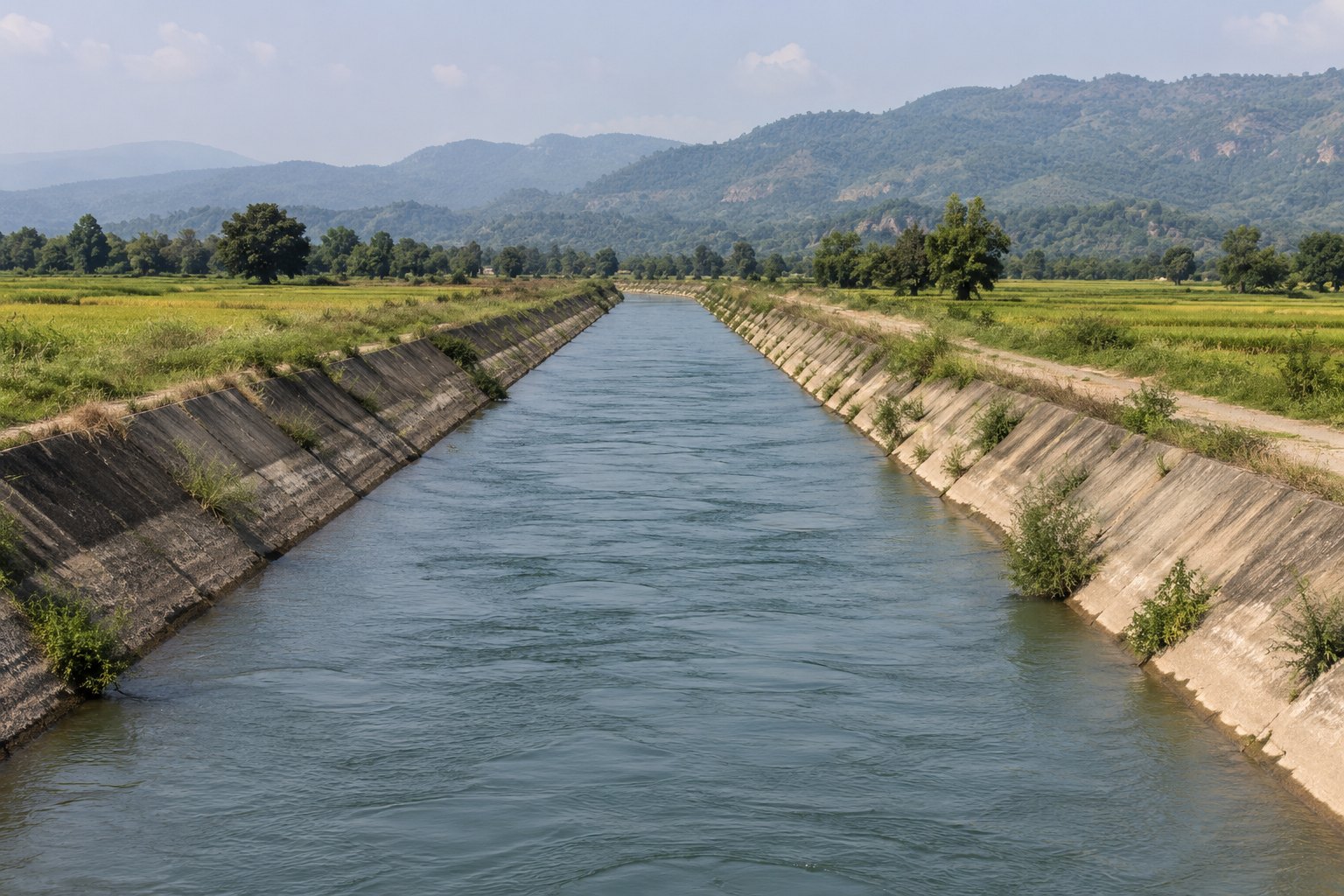
The Ravi Canal in Jammu and Kashmir carries only 400 cusecs against its designed 1,150, officials have found, months after the Shahpur Kandi Dam on the Ravi river began supplying it on May 4, 2026. The J&K government has asked the Central Water Commission for Rs 534 crore to restore it, an official said. Repairs may take two years.
Syllabus: GS2 · Federalism & Local Government; Prelims · Geography; GS3 · Agriculture & Irrigation
Why it matters
Farmers along the Ravi Canal in Kathua and Samba waited 44 years for the dam, and some still do not get water every day. In the Ramgarh area, canal water comes only two days a week. The canal now brings about a third of the 1,150 cusecs that is J&K's share, so most of the Ravi water that the dam makes available cannot reach the fields. The Ravi and Tawi canals together can irrigate 75,652 hectares of dry land, yet only half of that is being used. The larger lesson is simple: a dam is only as useful as the canals below it, and a canal allowed to decay wastes the money spent on the dam.
Prelims pointers
- Indus Waters Treaty, 1960: signed by India and Pakistan at Karachi after negotiations assisted by the World Bank.
- Eastern Rivers under the treaty: Ravi, Beas and Sutlej, allocated to India. Western Rivers: Indus, Jhelum and Chenab, allocated to Pakistan.
- Ravi river: rises west of the Rohtang Pass in the Kullu hills of Himachal Pradesh, flows through the Chamba valley and joins the Chenab in Pakistan.
- Ranjit Sagar Dam, also called the Thein Dam, stands on the Ravi upstream of the Shahpur Kandi Dam.
- Central Water Commission: set up in 1945; an attached office of the Ministry of Jal Shakti, headquartered in New Delhi. It is not a statutory body.
- Warabandi: canal water is rotated among farmers, each getting a fixed turn in proportion to landholding.
- Seventh Schedule: water supplies, irrigation and canals are Entry 17 of the State List, subject to Entry 56 of the Union List on inter-State rivers.
- Tawi river: flows through Jammu city and is a tributary of the Chenab, not of the Ravi.
Practise a UPSC-style question
With reference to the Indus Waters Treaty, 1960, consider the following statements:
1. The Ravi, the Beas and the Sutlej were allocated to India as the Eastern Rivers.
2. The treaty was signed at Karachi after negotiations assisted by the Asian Development Bank.
3. The Indus, the Jhelum and the Chenab are the Western Rivers named in the treaty.
Which of the statements given above is/are correct?
- (a) 1 and 2 only
- (b) 2 and 3 only
- (c) 1 and 3 only
- (d) 1, 2 and 3
Show the answer
Answer: (c) 1 and 3 only
1 is correct: the treaty allocated the Ravi, the Beas and the Sutlej, the Eastern Rivers, to India. 2 is incorrect: the treaty was signed at Karachi in 1960, but the negotiations were assisted by the World Bank, not the Asian Development Bank. 3 is correct: the Indus, the Jhelum and the Chenab are the Western Rivers, allocated to Pakistan.
More from the 9 October 2026 edition
- Article 21 speedy trial: victims may move High Court, Supreme Court rules Polity
- UNESCO GEM report puts rural India's upper-secondary gender parity at 0.59 National
- London Convention and Protocol parties adopt marine geoengineering assessment frameworks Environment
- Indian Railways electrifies 99.7% of broad gauge; 191 route km remain Economy
- Coral bleaching in 2024 hit Lakshadweep's reefs hardest, study finds Environment
- Gold imports by banks lose GST exemption, attract 3% IGST Economy
- Coal stock at domestic-coal power plants falls 66% in six months Economy
- Mines Ministry launches auction of two Andaman Sea offshore mineral blocks Economy
- Centre launches ₹23,731-crore GOBARdhan scheme for compressed biogas Economy
- Andhra Pradesh declares early Kharif drought in 388 mandals, 21 districts Environment
- BNSS does not define detention; Article 22 safeguards apply on arrest Polity
- MeitY urges social media platforms to curb manipulated, out-of-context content Polity