
Coal stock at domestic-coal power plants falls 66% in six months
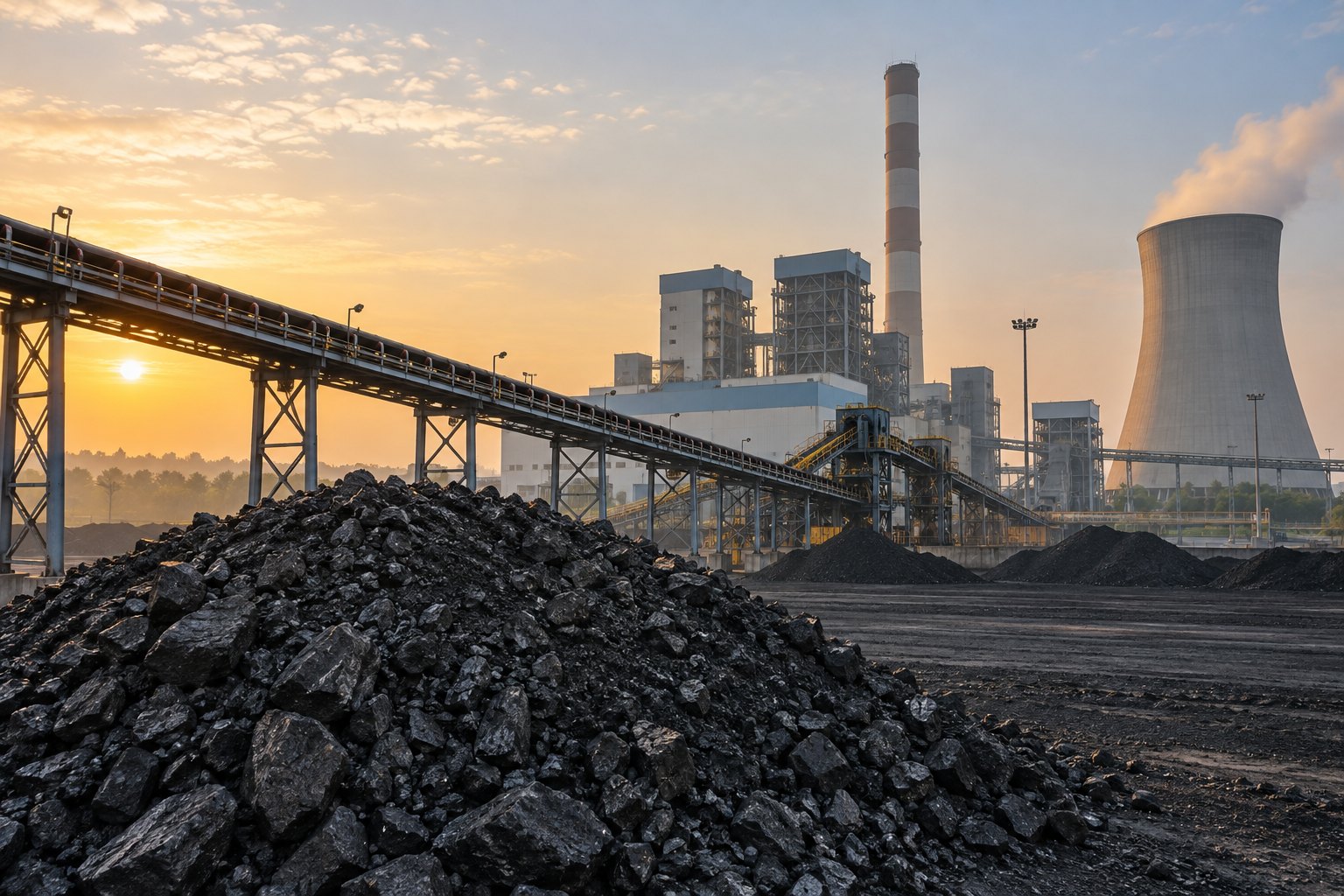
Coal stock at India's power plants that run on domestic coal fell 66% in six months, from 54.98 million tonnes on April 1, 2026 to 18.69 million tonnes on September 30, Central Electricity Authority (CEA) daily reports show. That is 34% of the normative stock. Plants with critical stock rose from 14 to 75.
Syllabus: GS2 · Statutory & Regulatory Bodies; GS3 · Infrastructure; GS1 · Resources & Industry Location
Why it matters
A family or a factory feels a coal shortage as power cuts or costlier electricity. A plant holding only a few days of coal may have to cut generation if railway rakes are delayed. Power distribution companies (DISCOMs) would then have to buy power from elsewhere, often at a higher price, or cut supply. On September 30, 75 plants held less than a quarter of their norm, so the cushion against such delays is thin. Officials said low hydropower output in a rain-deficient year pushed more of the load onto coal, and that the stock must be rebuilt by March, before next summer. There is also a push to add Battery Energy Storage Systems (BESS), which store daytime solar power for use after sunset, over the next six months.
Prelims pointers
- Central Electricity Authority (CEA): statutory body under Section 70 of the Electricity Act, 2003; first set up under the Electricity (Supply) Act, 1948; headquarters in Delhi.
- CEA functions (Section 73): advises the Centre on national electricity policy, specifies technical, safety and Grid Standards, collects and publishes data; it also prepares the National Electricity Plan.
- Central Electricity Regulatory Commission (CERC): regulates tariff of Central Government generating companies and inter-State transmission, and specifies the Grid Code; CEA specifies the Grid Standards.
- Electricity is entry 38 of the Concurrent List in the Seventh Schedule, so both Parliament and State legislatures can make laws on it.
- Electricity Act, 2003: a captive generating plant is one set up mainly for the owner's own use; under Section 11 the appropriate Government may direct generating companies in extraordinary circumstances.
- Coal grades: non-coking (thermal) coal has 17 grades, G-1 to G-17, by Gross Calorific Value; coking coal, used for steel, is graded by ash content.
- Most Indian coal lies in Gondwana rocks of the Damodar, Son, Mahanadi and Godavari valleys; many power plants are far from these coalfields, so coal travels by rail.
- Coal Controller's Organisation, under the Ministry of Coal, is the Government's main source of coal statistics; coal stock at power plants is reported daily by CEA.
Practise a UPSC-style question
With reference to the Central Electricity Authority, consider the following statements:
1. It was constituted for the first time under the Electricity Act, 2003.
2. It prepares the National Electricity Plan in accordance with the National Electricity Policy.
Which of the statements given above is/are correct?
- (a) 1 only
- (b) 2 only
- (c) Both 1 and 2
- (d) Neither 1 nor 2
Show the answer
Answer: (b) 2 only
1 is incorrect: the Central Electricity Authority was first set up under the Electricity (Supply) Act, 1948; Section 70 of the Electricity Act, 2003 continued the same body. 2 is correct: under the Electricity Act, 2003 the Authority prepares the National Electricity Plan in line with the National Electricity Policy, which the Central Government frames.
More from the 9 October 2026 edition
- Article 21 speedy trial: victims may move High Court, Supreme Court rules Polity
- UNESCO GEM report puts rural India's upper-secondary gender parity at 0.59 National
- London Convention and Protocol parties adopt marine geoengineering assessment frameworks Environment
- Ravi Canal carries 400 cusecs; J&K seeks Rs 534 crore National
- Indian Railways electrifies 99.7% of broad gauge; 191 route km remain Economy
- Coral bleaching in 2024 hit Lakshadweep's reefs hardest, study finds Environment
- Gold imports by banks lose GST exemption, attract 3% IGST Economy
- Mines Ministry launches auction of two Andaman Sea offshore mineral blocks Economy
- Centre launches ₹23,731-crore GOBARdhan scheme for compressed biogas Economy
- Andhra Pradesh declares early Kharif drought in 388 mandals, 21 districts Environment
- BNSS does not define detention; Article 22 safeguards apply on arrest Polity
- MeitY urges social media platforms to curb manipulated, out-of-context content Polity