
Mines Ministry launches auction of two Andaman Sea offshore mineral blocks
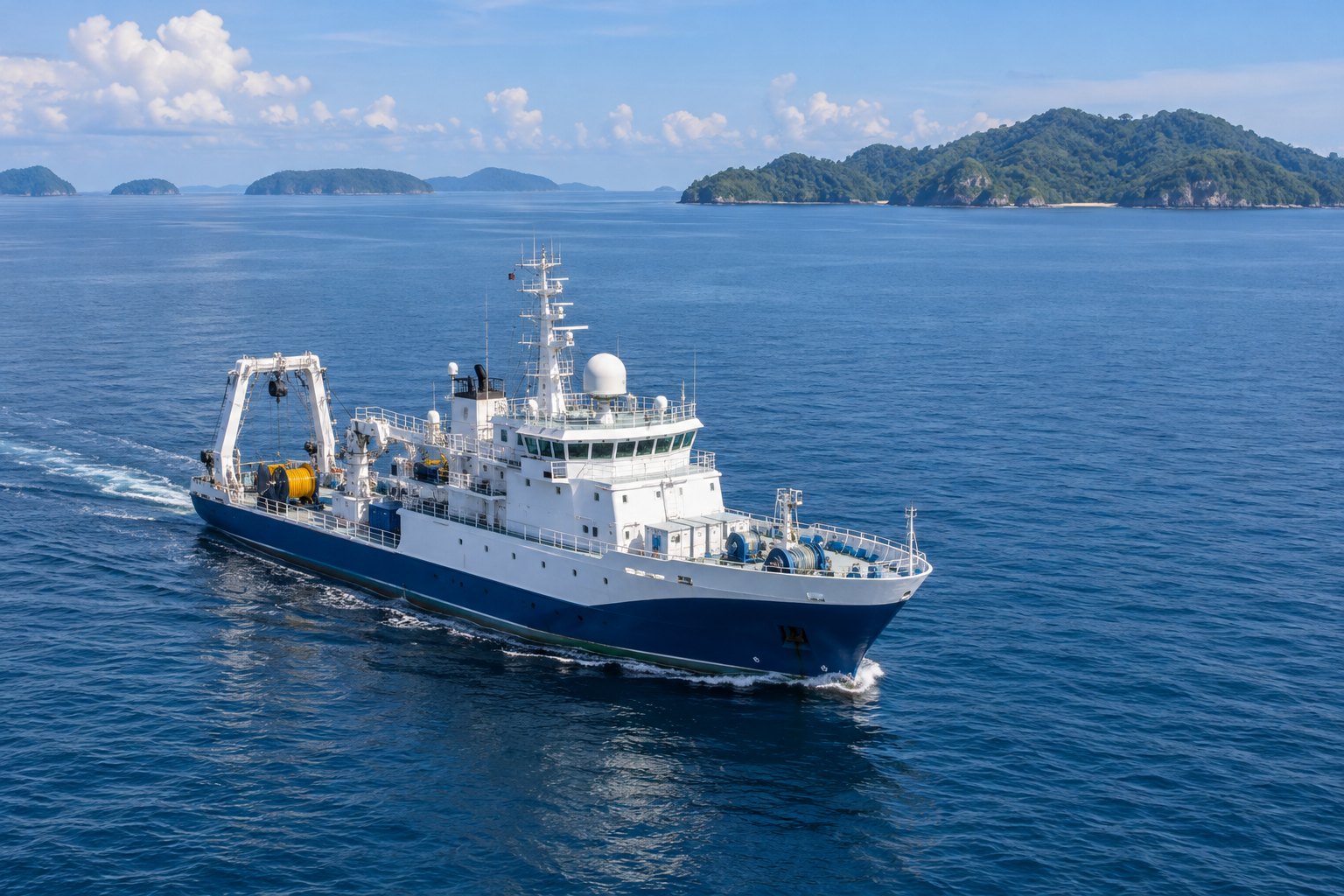
The Ministry of Mines on October 1, 2026 launched the auction of two offshore mineral blocks in the Andaman Sea, Sewell Rise-01 and West Sewell Ridge-01, for composite licences. Together they cover over 1,632 sq km and hold polymetallic nodules and crusts bearing cobalt, nickel, manganese, copper and rare earth elements. Bids close on December 28, 2026.
Syllabus: Prelims · Geography; GS2 · Government Policies; GS1 · Resources & Industry Location
Why it matters
Anyone who uses a mobile phone or drives an electric vehicle depends on metals such as cobalt, nickel, copper and rare earth elements; wind turbines need copper and rare earth elements too. The two seabed blocks hold these metals, and the Mines Secretary called offshore minerals a new frontier for India's mineral sector. Mining the sea floor has a cost too. Seabed animals such as corals and sponges grow slowly and take long to recover once disturbed, and seamounts, where such crusts often form, attract the fish that commercial fisheries depend on. So the law allows no production without an approved plan carrying an Environment Impact Assessment. The auction only selects a bidder: exploration alone can take three to five years.
Prelims pointers
- Article 297: lands, minerals and other things of value under the ocean within India's territorial waters, continental shelf and exclusive economic zone vest in the Union.
- Territorial Waters, Continental Shelf, Exclusive Economic Zone and Other Maritime Zones Act, 1976: Parliament's law fixing the limits of India's maritime zones, as Article 297 provides.
- Exclusive economic zone (UNCLOS): up to 200 nautical miles from the baselines; the coastal state has sovereign rights over living and non-living resources; others keep navigation and overflight freedoms.
- Continental shelf (UNCLOS): the submerged prolongation of a state's land territory to the outer edge of the continental margin, or to 200 nautical miles.
- International Seabed Authority: regulates mineral exploration and exploitation in 'the Area', the seabed beyond national jurisdiction, under UNCLOS.
- Polymetallic nodules grow around a nucleus such as a rock or bone fragment on seabed sediments; cobalt-rich crusts form on the bare rock of seamounts and ridges.
- Rare earth elements: 17 elements, namely scandium, yttrium and the 15 lanthanides; monazite and bastnasite are among their principal ores.
- Great Nicobar Island is the southernmost of the Nicobar Islands; Indira Point on it is India's southernmost point. The Ten Degree Channel separates the Andaman and Nicobar groups.
Practise a UPSC-style question
With reference to the Constitution of India, consider the following statements:
1. Minerals underlying the ocean within the territorial waters of India vest in the adjoining coastal State.
2. Resources of the exclusive economic zone of India vest in the Union.
3. The limits of the territorial waters and the exclusive economic zone of India are specified by or under a law made by Parliament.
Which of the statements given above is/are correct?
- (a) 1 and 2 only
- (b) 2 and 3 only
- (c) 1 and 3 only
- (d) 1, 2 and 3
Show the answer
Answer: (b) 2 and 3 only
1 is incorrect: Article 297 vests minerals under the territorial waters in the Union, not in the coastal State. 2 is correct: Article 297 also vests all other resources of the exclusive economic zone in the Union. 3 is correct: Article 297 leaves these limits to a law of Parliament, which is the Territorial Waters, Continental Shelf, Exclusive Economic Zone and Other Maritime Zones Act, 1976.
More from the 9 October 2026 edition
- Article 21 speedy trial: victims may move High Court, Supreme Court rules Polity
- UNESCO GEM report puts rural India's upper-secondary gender parity at 0.59 National
- London Convention and Protocol parties adopt marine geoengineering assessment frameworks Environment
- Ravi Canal carries 400 cusecs; J&K seeks Rs 534 crore National
- Indian Railways electrifies 99.7% of broad gauge; 191 route km remain Economy
- Coral bleaching in 2024 hit Lakshadweep's reefs hardest, study finds Environment
- Gold imports by banks lose GST exemption, attract 3% IGST Economy
- Coal stock at domestic-coal power plants falls 66% in six months Economy
- Centre launches ₹23,731-crore GOBARdhan scheme for compressed biogas Economy
- Andhra Pradesh declares early Kharif drought in 388 mandals, 21 districts Environment
- BNSS does not define detention; Article 22 safeguards apply on arrest Polity
- MeitY urges social media platforms to curb manipulated, out-of-context content Polity