
Bangladesh expert calls Ganga Water Treaty flawed ahead of December expiry
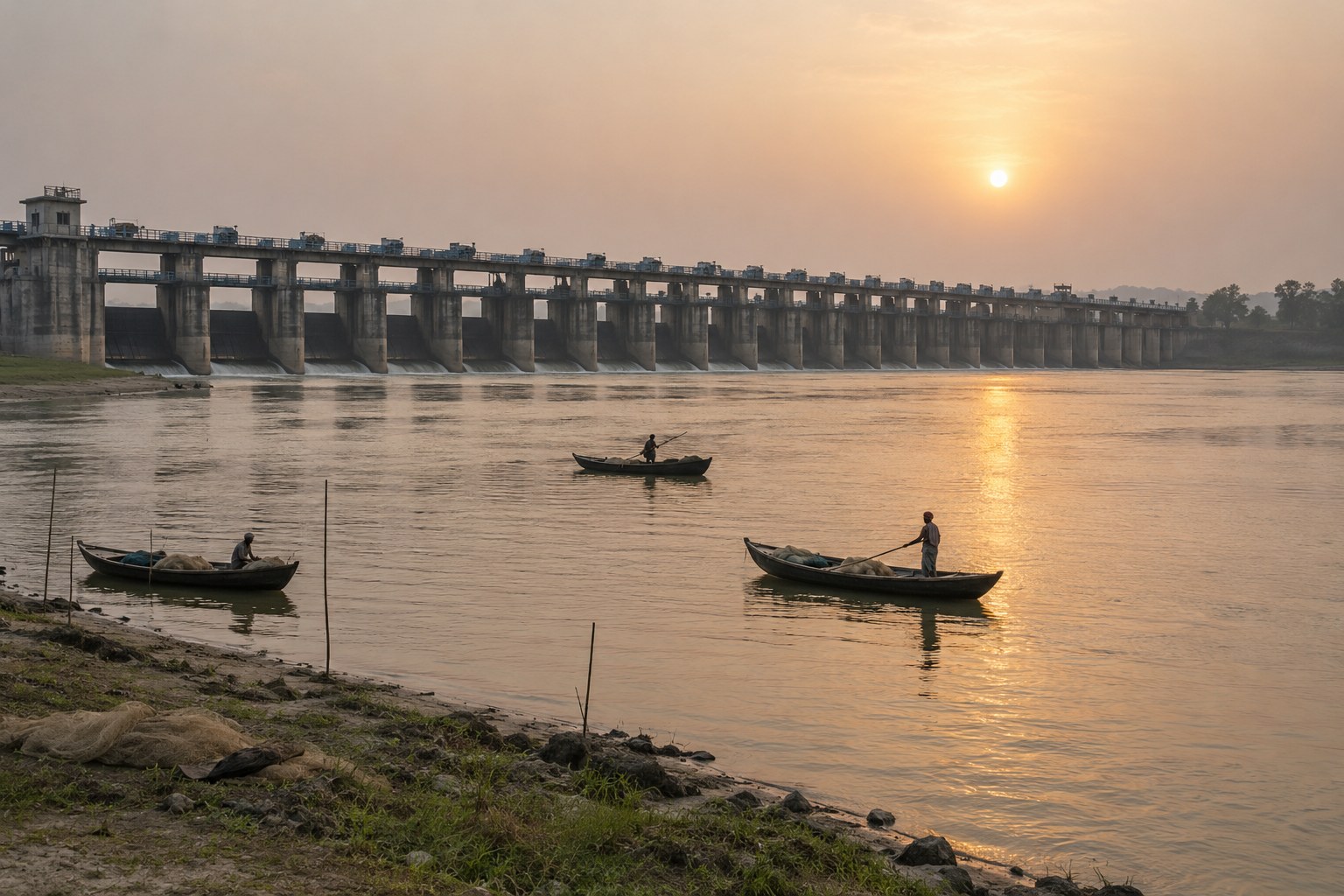
The 1996 India-Bangladesh Ganga Water Treaty, which expires in December, is flawed and should be replaced by a three-year interim pact, former Bangladesh river commission chairman Manjur A. Chowdhury said on October 6. He wants a later trilateral treaty including Nepal, with guarantee, ecological-flow and climate change provisions.
Syllabus: Prelims · Geography; GS2 · India & its Neighbourhood; GS2 · Groupings & Agreements
Why it matters
The treaty that sets how India and Bangladesh share the Ganga's water expires in December unless renewed, and important technical talks on its future are still to be held. Bangladeshi experts want more than a simple split of the water: a guaranteed share, care for the river's own health, attention to climate change, a way to settle disputes and a place for Nepal, whose rivers, Chowdhury notes, feed the Ganga in the lean months. In India, a JD(U) MP has asked the government not to renew it, saying it had negatively impacted Bihar. The coming months will shape how a shared river is managed and test how India weighs its states' concerns against ties with a neighbour.
Prelims pointers
- Ganga Water Treaty (1996): a 30-year pact sharing the Ganga's dry-season flow at the Farakka Barrage, West Bengal, from January 1 to May 31; renewable by mutual consent.
- Farakka Barrage diverts Ganga water into the Bhagirathi–Hooghly through a feeder canal, mainly to flush silt and keep Kolkata Port navigable.
- The Ganga is known as the Padma in Bangladesh.
- Ghaghara, Gandaki and Koshi: Himalayan rivers flowing from Nepal that join the Ganga as left-bank tributaries.
- Ecological (environmental) flow: the minimum flow a river needs to sustain its ecosystem; Chowdhury says the treaty has no such considerations.
- Guarantee clause: assures a minimum water share whatever the flow. Arbitration clause: sends disputes to a neutral third party. Bangladeshi experts say the treaty lacks both.
- India's Jal Shakti Ministry has led inter-ministerial consultations on the treaty's future, according to EAM S. Jaishankar's August 28 letter to MP Sanjay Jha.
Practise a UPSC-style question
With reference to the India-Bangladesh Ganga Water Treaty of 1996, consider the following statements:
1. It shares the Ganga's dry-season flow measured at the Farakka Barrage in Bihar.
2. Its sharing arrangement applies to the lean season from January 1 to May 31 each year.
3. It was signed for three decades and can be renewed by mutual consent.
Which of the statements given above is/are correct?
- (a) 1 and 2 only
- (b) 2 and 3 only
- (c) 1 and 3 only
- (d) 1, 2 and 3
Show the answer
Answer: (b) 2 and 3 only
1 is incorrect: the Farakka Barrage is in West Bengal, not Bihar. 2 is correct: the treaty shares the flow at Farakka from January 1 to May 31 each year. 3 is correct: it runs for 30 years and expires in December 2026 unless both sides agree to renew it.
Explainers on this topic
More from the 7 October 2026 edition
- NCAHP notifies autonomous boards, central assessment committee for allied health National
- India, EU formally launch Green Shipping Corridor industry coalition Environment
- First self-stabilising thorium-229 nuclear clock runs in Vienna Sci-Tech
- Defence Ministry eases industry access to DRDO and military test ranges Defence
- MoSPI releases 2026–2030 roadmap for environmental-economic accounting Environment
- Farm workers moving to cities land in low-productivity informal jobs: study Economy
- India readies NSAM 2.0 after 3D-printing push trains 1.54 lakh people Sci-Tech
- Navy's first Fleet Support Ship, FSS-1, launched at Visakhapatnam Defence
- Projectile strikes ship in Strait of Hormuz, injuring 11 Indian crew World & IR
- India, Switzerland sign mobility pacts, widen defence and nuclear cooperation World & IR
- MoSPI plans to widen monthly services index to 78.4% of services GVA Economy
- Seven-judge SC bench closes legislative privilege case, keeps free-speech questions open Polity