
Seven-judge SC bench closes legislative privilege case, keeps free-speech questions open
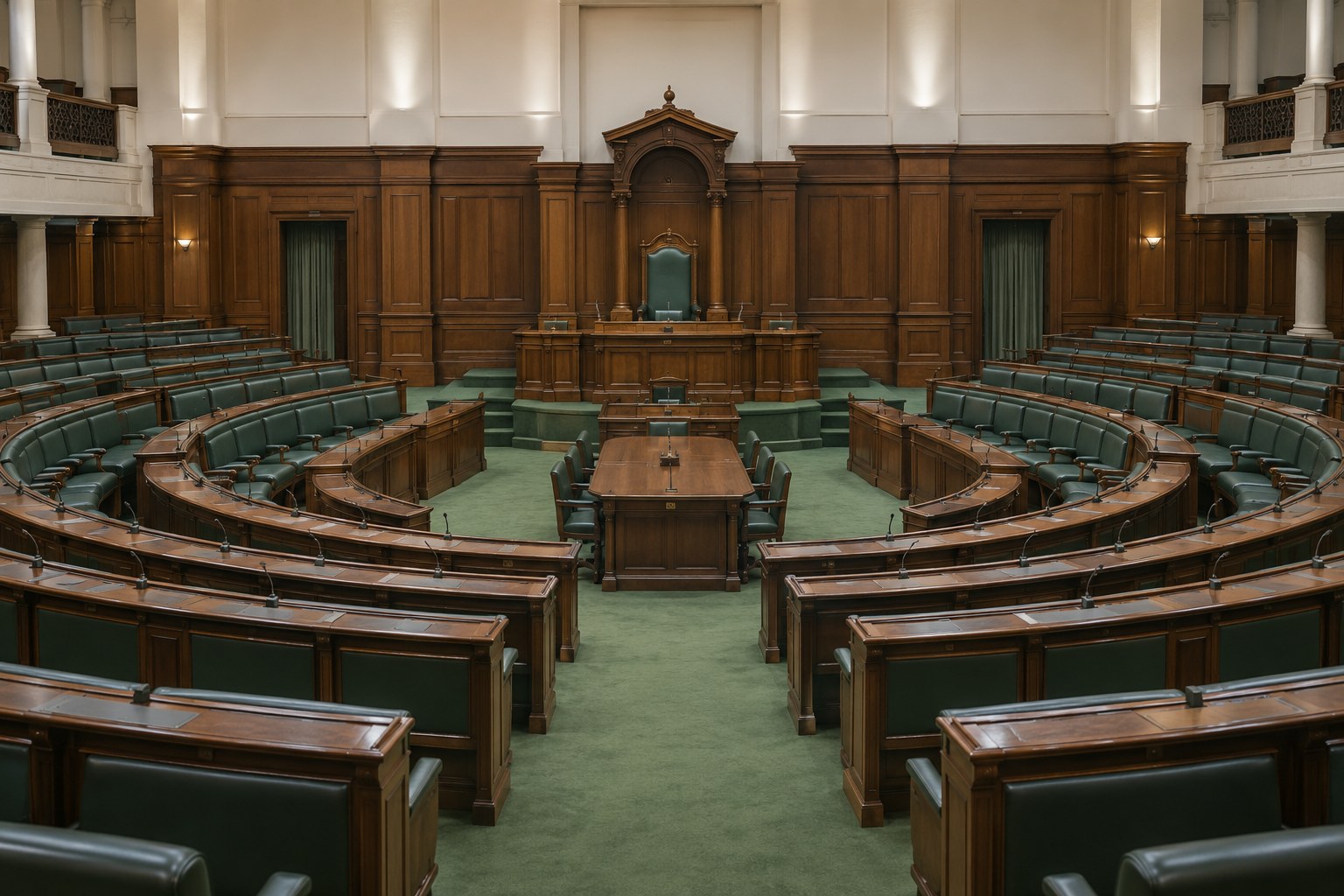
A seven-judge Supreme Court bench led by CJI Surya Kant on October 6 closed as infructuous the 2003 case on whether legislative privilege under Article 194(3) overrides free speech. The Tamil Nadu Assembly had withdrawn, in July 2004, its resolution sentencing five journalists of The Hindu and Murasoli's editor to 15 days' imprisonment. The questions of law remain open.
Syllabus: GS2 · Constitution; GS2 · Separation of Powers; Prelims · Polity & Governance
Why it matters
A reporter covering a state Assembly, or a comedian mocking a politician, can still be punished by the House itself for breach of privilege. Privileges exist so that Houses can work without obstruction; this case was meant to settle how far that power reaches against people outside the House, and which gives way when it clashes with free speech. With the case closed, that answer waits for another dispute, and the two older rulings stand side by side. Comedian Kunal Kamra, who faces privilege proceedings in the Maharashtra Legislature over a satirical performance, had sought to be heard here; the questions he raised remain unsettled.
Prelims pointers
- Article 194(3) covers state legislatures' privileges and Article 105(3) Parliament's; until a law defines them, they are those held before the 44th Amendment (1978) took effect.
- Articles 105(2) and 194(2): no member is liable to proceedings in any court for anything said or any vote given in the House or a committee.
- Article 19(1)(a) guarantees citizens freedom of speech and expression, which the Supreme Court has held includes press freedom; Article 14 guarantees equality, Article 21 life and personal liberty.
- Part III of the Constitution, Articles 12 to 35, contains the Fundamental Rights; Keshav Singh said Searchlight set no universal rule that they always yield to privilege.
- Keshav Singh's case was a presidential reference under Article 143, the Supreme Court's advisory jurisdiction.
- Article 145(3): at least five judges must sit to decide a substantial question of law on interpreting the Constitution, or to hear an Article 143 reference.
- Amarinder Singh (2010): privilege cannot punish conduct unrelated to the House's functioning; the Court struck down the Punjab Assembly's expulsion of the former Chief Minister.
- Gunupati Keshavram Reddy (1952): the Court freed Homi Mistry, held on a UP Assembly privilege charge, as he was not produced before a magistrate within 24 hours.
Practise a UPSC-style question
With reference to legislative privileges under the Constitution of India, consider the following statements:
1. Article 194(3) sets out the powers and privileges of the Houses of Parliament and their members.
2. No member of Parliament is liable to proceedings in any court for anything said or any vote given in the House.
3. Until defined by law, a House's privileges are those it held just before the 44th Amendment came into force.
Which of the statements given above is/are correct?
- (a) 1 and 2 only
- (b) 2 and 3 only
- (c) 1 and 3 only
- (d) 1, 2 and 3
Show the answer
Answer: (b) 2 and 3 only
1 is incorrect: Article 194(3) deals with the privileges of state legislatures; those of Parliament are in Article 105(3). 2 is correct: Article 105(2) protects members from court proceedings for anything said or any vote given in Parliament or its committees, and Article 194(2) does the same for state legislators. 3 is correct: under Articles 105(3) and 194(3), until a law defines them, privileges remain those held immediately before the 44th Amendment (1978) took effect.
More from the 7 October 2026 edition
- NCAHP notifies autonomous boards, central assessment committee for allied health National
- India, EU formally launch Green Shipping Corridor industry coalition Environment
- First self-stabilising thorium-229 nuclear clock runs in Vienna Sci-Tech
- Defence Ministry eases industry access to DRDO and military test ranges Defence
- MoSPI releases 2026–2030 roadmap for environmental-economic accounting Environment
- Farm workers moving to cities land in low-productivity informal jobs: study Economy
- India readies NSAM 2.0 after 3D-printing push trains 1.54 lakh people Sci-Tech
- Navy's first Fleet Support Ship, FSS-1, launched at Visakhapatnam Defence
- Projectile strikes ship in Strait of Hormuz, injuring 11 Indian crew World & IR
- India, Switzerland sign mobility pacts, widen defence and nuclear cooperation World & IR
- MoSPI plans to widen monthly services index to 78.4% of services GVA Economy
- India seeks equal focus on adaptation at Pre-COP31 in Fiji Environment