
Right to livelihood and forced evictions under Articles 19 and 21
Why in news: On 12 October 2026 an interim Allahabad High Court order said evicting six Ayodhya lessee shopkeepers without rehabilitation or compensation violated Articles 19 and 21.
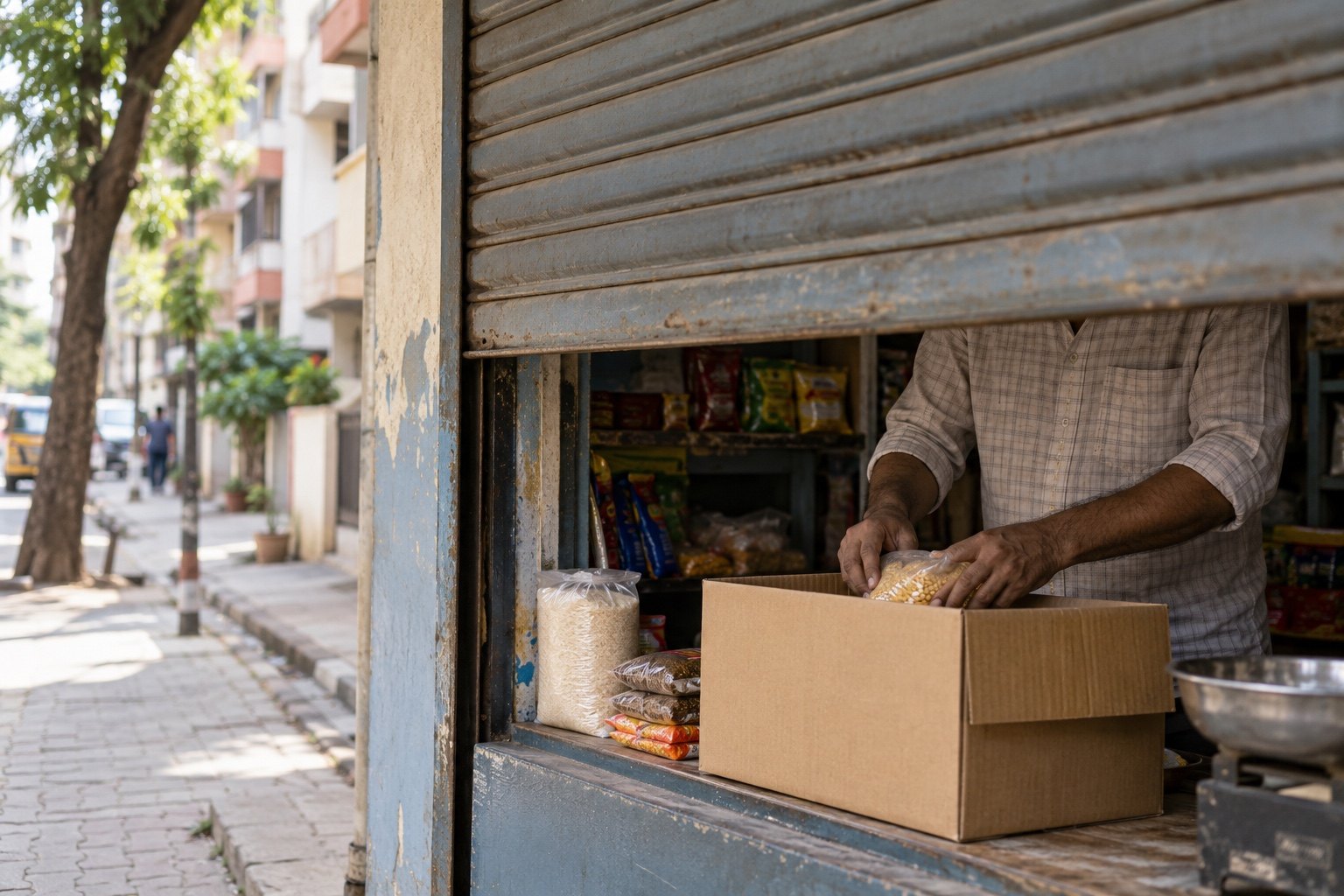
The Supreme Court held in Olga Tellis (1985) that the right to livelihood is part of the right to life under Article 21. The State may take away livelihood only by fair, just and reasonable procedure. Article 19(1)(g) also protects a citizen's trade or business. The Allahabad High Court has cited Articles 19 and 21 for six evicted Ayodhya shopkeepers.
Syllabus: GS2 · Constitution; Prelims · Polity & Governance; GS2 · Government Policies
Why this matters for UPSC
GS2 Polity: fundamental rights and their judicial expansion. Prelims can ask what Article 21, Article 19(1)(g), Article 19(6) and Article 300A provide and what Olga Tellis held; Mains, how projects should treat the people they displace.
In short
The right to livelihood is the Supreme Court's reading of Article 21: the State may take away a person's means of living only through a fair, just and reasonable procedure.
Development and livelihood can coexist only if every eviction follows fair procedure and a written rehabilitation duty reaching lessees and informal occupants.
Why it matters
A tenant shopkeeper, a street vendor or a slum family usually loses more than a roof when evicted: the shop, or the home near work, is the income. Reading livelihood into the right to life means the State cannot simply bulldoze such a place. It must give notice, hear the people affected and act reasonably, and courts can ask what it plans for them. Hospitals, roads and metro lines still get built, because the right is not a right to stay forever. The larger question is who bears the cost of public projects: the public that gains from them, or the few families who lose their living to them.
Prelims pointers
- Article 21 protects every person, citizen or not; the freedoms of Article 19 belong to citizens alone.
- Article 19(6): reasonable restrictions on 19(1)(g) in the interests of the general public, plus laws on professional qualifications and State trade monopolies.
- 44th Amendment Act, 1978 (in force 20 June 1979): omitted Article 19(1)(f) and Article 31, and inserted Article 300A in Part XII.
- Olga Tellis used Articles 39(a) and 41 of the Directive Principles to read livelihood into Article 21; the State cannot be compelled to provide work.
- Olga Tellis also held there is no estoppel against the Constitution: a concession in court cannot waive a fundamental right.
- RFCTLARR Act, 2013, section 3(c): an 'affected family' includes landless labourers, tenants, sharecroppers and artisans whose livelihood depends on the acquired land.
- RFCTLARR Act, 2013, section 2(1): applies when the appropriate Government acquires land for its own use or a public purpose, health-care projects included.
- Article 300A sits outside Part III, so its breach is pursued in a High Court under Article 226, not under Article 32.
Practise a UPSC-style question
With reference to Olga Tellis v Bombay Municipal Corporation (1985), consider the following statements:
1. The Supreme Court held that the right to livelihood is a part of the right to life under Article 21.
2. The Supreme Court held that pavement dwellers have a fundamental right to build huts on public pavements.
3. The judgment was delivered by a seven-judge bench of the Supreme Court.
Which of the statements given above is/are correct?
- (a) 1 only
- (b) 2 only
- (c) 3 only
- (d) 1, 2 and 3
Show the answer
Answer: (a) 1 only
Answer: (a) 1 only. Only the livelihood holding is right; the court denied a right to occupy pavements and sat as five judges.
Statement 1: correct. The court reasoned that a person cannot survive without a way to earn, so livelihood is an integral part of the Article 21 right to life.
Statement 2: incorrect. The court held that building a hut on a public pavement without authority is trespass; it upheld removal after a fair procedure.
Statement 3: incorrect. A five-judge bench led by Chief Justice Y.V. Chandrachud decided the case.
Eliminate: Statement 2 is incorrect, since the court called pavement dwellings trespass. Out: (b), (d).
Eliminate: Statement 3 is incorrect, since the bench had five judges. Out: (c).
Trap: Half-true statement. Statement 2 sounds like the petitioners' claim, which the court rejected even while protecting their livelihood through fair procedure.
Remember: Olga Tellis gives a right to fair procedure before eviction, not a right to stay on public land.
More Explainers
- Who is an accredited journalist? PIB rules, Press Council, PRP Act Polity
- Financial Stability and Development Council: who sits on it, what it does Economy
- NATO: its 32 members, Articles 4 and 5, and the eastern flank World & IR
- Special Executive Magistrates under BNSS section 15: appointment and powers Polity
- Indo-Pacific Oceans Initiative (IPOI): India's seven-pillar plan for the Indo-Pacific World & IR
- Gig and platform workers under the Code on Social Security, 2020 Economy
- Bureau of Indian Standards Act, 2016: Standard Mark, QCOs and hallmarking Economy
- Kittur revolt of 1824: early resistance to the East India Company National
- Polio eradication: wild and vaccine-derived poliovirus, OPV and IPV, India's certification Sci-Tech
- International law and the UN Charter: sources, force and the ICJ World & IR
- Himalayan earthquakes and India's seismic zone map Environment
- Amur falcon: migration, protection and community conservation Environment