
NATO: its 32 members, Articles 4 and 5, and the eastern flank
Why in news: Estonia, a NATO member bordering Russia, is moving troops towards its border under a 2026 'active defence' strategy (The Hindu, 23 October 2026).
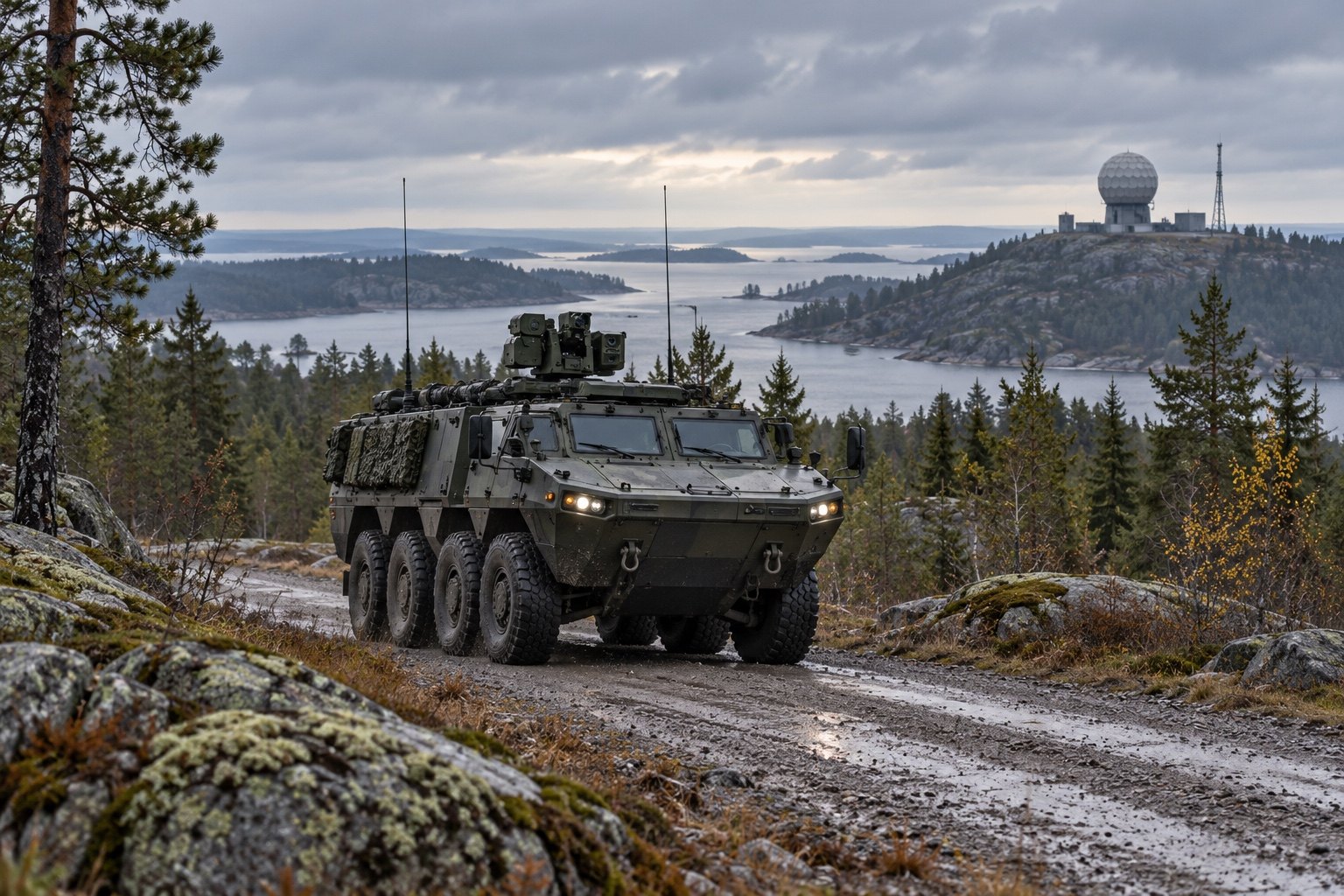
The North Atlantic Treaty Organization (NATO) is a 32-member alliance founded by the North Atlantic Treaty, signed on 4 April 1949. Its Article 4 provides for consultations among Allies and Article 5 for collective defence. Rising Russia-NATO tension around Estonia, a Baltic member bordering Russia, has put the alliance's eastern flank in focus.
Syllabus: Prelims · Current Affairs & IR; Prelims · Geography; GS2 · Foreign Policies & the Diaspora
Why this matters for UPSC
GS2 international relations asks about important international institutions, their structure and mandate. Prelims can ask NATO's members, the North Atlantic Treaty's Articles 4, 5 and 6 and Estonia's map; Mains, about collective defence, grey-zone pressure and Russia-NATO rivalry.
In short
NATO, a collective-defence alliance of 32 states, rests on the North Atlantic Treaty of 1949; its core, Article 5, treats an attack on one as an attack on all.
NATO's deterrence holds only while Article 5 stays credible against grey-zone pressure and enlargement is balanced against the risk of miscalculation with Russia.
Why it matters
For a small country next to a large neighbour, an alliance is a promise that it will not fight alone. Estonia has about 1.36 million people and no fighter jets of its own. Its safety rests on Allies' aircraft and on foreign troops already on its soil, who would be involved from the first day of any attack. Article 5's credibility is what keeps that promise believable. Pressure that stays below open war, such as cyber attacks, sabotage and false information, tests the alliance where its rules are least clear. The rivalry also decides how much room countries outside both camps keep in dealing with each side.
Prelims pointers
- Founding members (12): Belgium, Canada, Denmark, France, Iceland, Italy, Luxembourg, the Netherlands, Norway, Portugal, the United Kingdom and the United States.
- Enlargement years: Greece and Türkiye 1952, West Germany 1955, Spain 1982, Czechia, Hungary and Poland 1999, Albania and Croatia 2009, Montenegro 2017, North Macedonia 2020.
- Non-members in the Partnership for Peace: Austria, Ireland, Switzerland and Malta signed its Framework Document but have not joined NATO.
- Article 13: a member may leave one year after giving notice to the US Government, once the treaty has been in force for twenty years.
- Depositary: instruments of ratification and accession are deposited with the Government of the United States; English and French texts are equally authentic.
- France left NATO's integrated military structure in 1966 and announced full participation at the 2009 Strasbourg/Kehl Summit, staying out of the Nuclear Planning Group.
- Forward Land Forces: nine battlegroups in Bulgaria, Estonia, Finland, Hungary, Latvia, Lithuania, Poland, Romania and Slovakia; the UK is Estonia's framework nation.
- Estonia: capital Tallinn; EU member since 1 May 2004, euro area 2011, Schengen 2007; about 45,336 sq km; borders the Baltic Sea to the west and Russia to the east.
Practise a UPSC-style question
With reference to the North Atlantic Treaty, 1949, consider the following statements:
1. Article 6 limits the collective-defence pledge to the North Atlantic area north of the Tropic of Capricorn.
2. Article 4 provides for consultations whenever a member believes any member's territorial integrity or security is threatened.
3. Article 10 allows the members to invite another European State to accede by unanimous agreement.
Which of the statements given above is/are correct?
- (a) 1 and 2 only
- (b) 2 and 3 only
- (c) 1 and 3 only
- (d) 1, 2 and 3
Show the answer
Answer: (b) 2 and 3 only
Answer: (b) 2 and 3 only. Article 6 uses the Tropic of Cancer, not Capricorn.
Statement 1: incorrect. Article 6 confines Article 5 to the North Atlantic area north of the Tropic of Cancer, per NATO's Article 5 page.
Statement 2: correct. Article 4 says the Parties will consult whenever, in the opinion of any of them, a Party's territorial integrity, political independence or security is threatened.
Statement 3: correct. Article 10 lets the Parties, by unanimous agreement, invite any other European State able to further the treaty's principles.
Eliminate: Be sure of statement 1 first: the line is the Tropic of Cancer, so it is incorrect. Out: (a), (c), (d).
Trap: Look-alike names. The Tropic of Capricorn is swapped for the Tropic of Cancer, two names a student can mix up under time pressure.
Remember: Article 4 consult, Article 5 defend, Article 6 north of the Tropic of Cancer, Article 10 unanimous invitation.
More Explainers
- Who is an accredited journalist? PIB rules, Press Council, PRP Act Polity
- Financial Stability and Development Council: who sits on it, what it does Economy
- Special Executive Magistrates under BNSS section 15: appointment and powers Polity
- Indo-Pacific Oceans Initiative (IPOI): India's seven-pillar plan for the Indo-Pacific World & IR
- Gig and platform workers under the Code on Social Security, 2020 Economy
- Bureau of Indian Standards Act, 2016: Standard Mark, QCOs and hallmarking Economy
- Kittur revolt of 1824: early resistance to the East India Company National
- Polio eradication: wild and vaccine-derived poliovirus, OPV and IPV, India's certification Sci-Tech
- International law and the UN Charter: sources, force and the ICJ World & IR
- Himalayan earthquakes and India's seismic zone map Environment
- Amur falcon: migration, protection and community conservation Environment
- India AI Governance Guidelines, existing laws and the proposed AI law Sci-Tech