
Polio eradication: wild and vaccine-derived poliovirus, OPV and IPV, India's certification
Why in news: GPEI's update of 21 October 2026, ahead of World Polio Day on 24 October, reported WHO SAGE's advice on a three-dose IPV schedule.
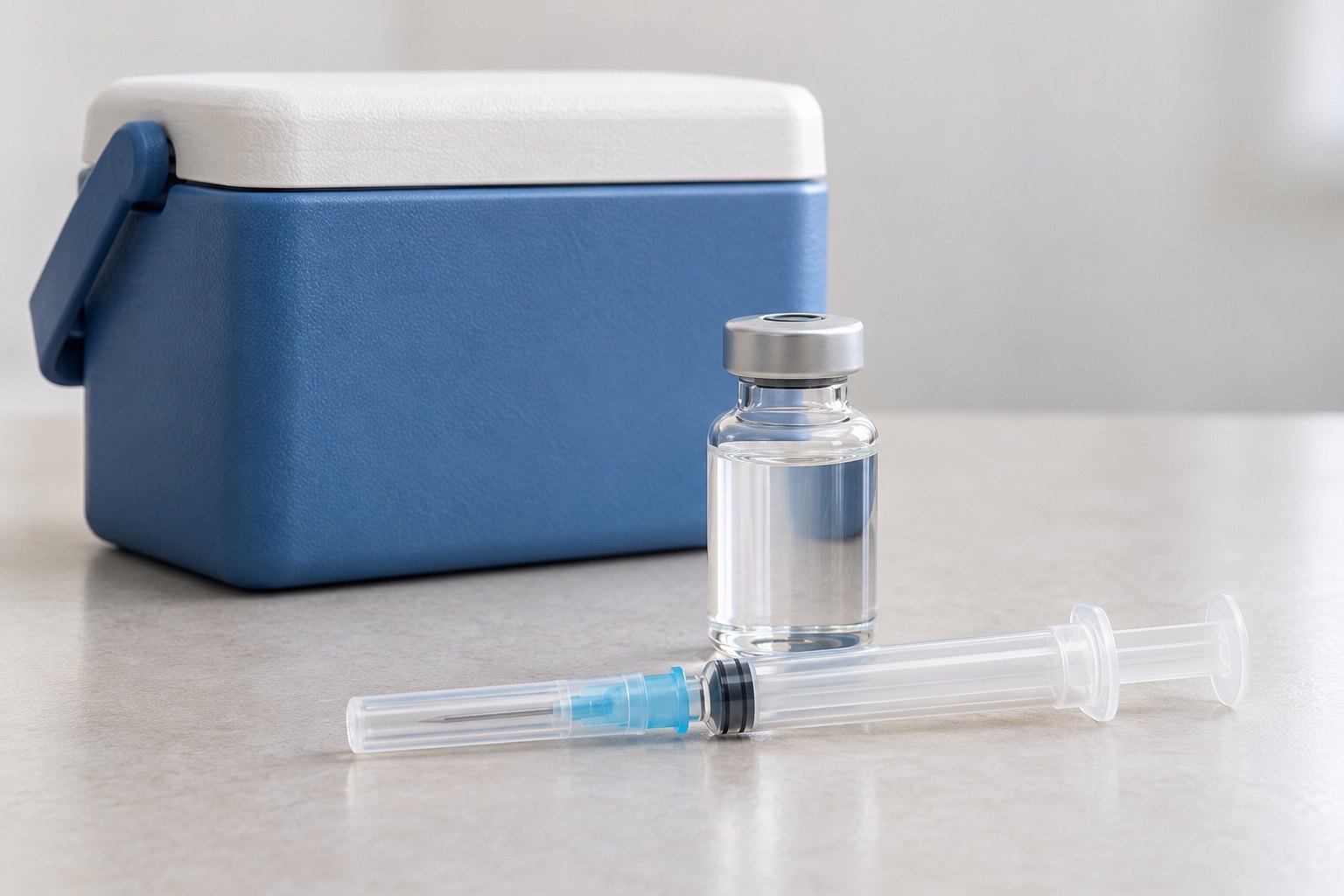
Polio is a highly infectious viral disease that the Global Polio Eradication Initiative has fought since 1988. Two of the three wild poliovirus types are gone, but strains derived from oral vaccine are now the commonest form. India, polio-free since its last case in 2011, keeps vaccinating. On 21 October, GPEI reported new WHO advice on three IPV doses.
Syllabus: Prelims · Science & Technology; GS3 · Science & Technology; GS2 · Health, Education & Human Resources
Why this matters for UPSC
Polio sits in GS2 health and GS3 science and technology. Prelims asks the wild poliovirus types, OPV against IPV, cVDPV, GPEI's partners and the PHEIC; Mains asks how India's Pulse Polio programme and immunisation systems won.
In short
Polio eradication is the global effort, led by GPEI since 1988, to end all paralysis from wild and vaccine-derived poliovirus, using oral and injectable vaccines and close surveillance.
Polio's last mile is vaccine policy as much as virus: India must keep immunity and surveillance high until the world can safely retire OPV.
Why it matters
A child who catches polio can be paralysed for life within hours, and nothing can cure it. Two drops of vaccine, given again and again, prevent it. As long as the virus survives anywhere, a child in any country can be reached by it, so India keeps vaccinating at its borders and in campaigns years after its last case. The same vaccine that ended wild polio in most countries can, where too few children are immunised, turn into a paralysing strain. Ending polio therefore means immunising nearly every child and then retiring the oral vaccine altogether, the second human disease after smallpox to be eradicated.
Prelims pointers
- IPV: developed by Jonas Salk in 1955; OPV: developed by Albert Sabin in 1961, and it became most national programmes' vaccine of choice.
- Trivalent OPV covers types 1, 2 and 3; bivalent OPV covers types 1 and 3; monovalent OPV covers one type.
- VAPP is paralysis caused by OPV's weakened virus, about once in 2.7 million doses; cVDPV arises when vaccine virus circulates long in under-immunised communities.
- GPEI partners: WHO, Rotary International, US CDC, UNICEF, Gates Foundation and Gavi; Rotary's PolioPlus began in 1985, and Gavi joined in March 2019.
- WHO regions certified polio-free: Americas 1994, Western Pacific 2000, Europe 2002, South-East Asia 2014; Africa was certified wild poliovirus-free in 2020.
- Smallpox, eradicated in 1980, is the only human disease eradicated so far; polio would be the second.
- India's immunisation began as the Expanded Programme on Immunization in 1978, renamed the Universal Immunization Programme in 1985; it now covers 12 diseases.
Practise a UPSC-style question
With reference to poliovirus, consider the following statements:
1. Of the three wild poliovirus types, types 2 and 3 have been declared globally eradicated.
2. Wild poliovirus type 1 remains endemic in Afghanistan and Nigeria.
3. Circulating vaccine-derived poliovirus is now the most prevalent form of polio.
Which of the statements given above are correct?
- (a) 1 and 2 only
- (b) 2 and 3 only
- (c) 1 and 3 only
- (d) 1, 2 and 3
Show the answer
Answer: (c) 1 and 3 only
Answer: (c) 1 and 3 only. Types 2 and 3 are eradicated and cVDPV now leads, but type 1 is endemic in Pakistan, not Nigeria.
Statement 1: correct. Wild type 2 was declared eradicated in September 2015 and wild type 3 in October 2019.
Statement 2: incorrect. Wild type 1 is endemic in Afghanistan and Pakistan; Nigeria's last wild type 3 case came in 2012.
Statement 3: correct. GPEI calls circulating vaccine-derived poliovirus (cVDPV) the most prevalent form of polio today.
Eliminate: statement 2 swaps Pakistan for Nigeria. Out: (a), (b), (d).
Trap: Swapped attribution. Nigeria was once an endemic country, so naming it beside Afghanistan sounds right.
Remember: Afghanistan and Pakistan are the last two wild polio endemic countries.
More Explainers
- Who is an accredited journalist? PIB rules, Press Council, PRP Act Polity
- Financial Stability and Development Council: who sits on it, what it does Economy
- NATO: its 32 members, Articles 4 and 5, and the eastern flank World & IR
- Special Executive Magistrates under BNSS section 15: appointment and powers Polity
- Indo-Pacific Oceans Initiative (IPOI): India's seven-pillar plan for the Indo-Pacific World & IR
- Gig and platform workers under the Code on Social Security, 2020 Economy
- Bureau of Indian Standards Act, 2016: Standard Mark, QCOs and hallmarking Economy
- Kittur revolt of 1824: early resistance to the East India Company National
- International law and the UN Charter: sources, force and the ICJ World & IR
- Himalayan earthquakes and India's seismic zone map Environment
- Amur falcon: migration, protection and community conservation Environment
- India AI Governance Guidelines, existing laws and the proposed AI law Sci-Tech