
Who is an accredited journalist? PIB rules, Press Council, PRP Act
Why in news: On 23 October 2026 the Centre was reported to be considering criteria, such as income and following, to tell digital journalists from influencers.
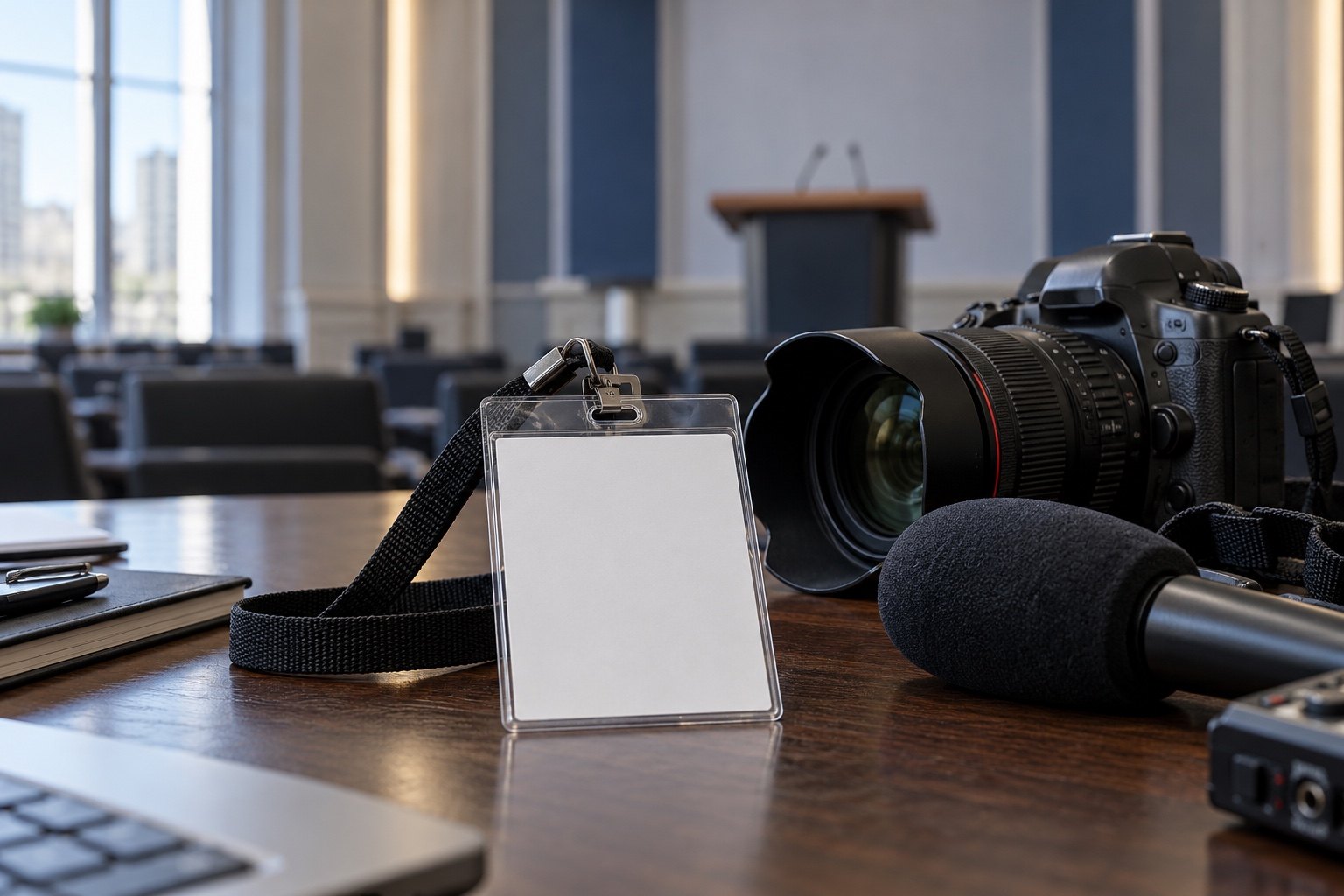
Press accreditation is the Press Information Bureau's recognition of a professional journalist, giving access to designated official sources at the Centre. The Central Media Accreditation Guidelines, 2022 cover working, freelance and veteran journalists, camerapersons and technicians living in Delhi-NCR. The Centre is now considering criteria to separate bona fide digital journalists from social-media influencers.
Syllabus: Prelims · Polity & Governance; GS2 · Statutory & Regulatory Bodies; GS2 · Governance & e-Governance
Why this matters for UPSC
GS2 covers statutory bodies like the Press Council of India and press freedom under Article 19(1)(a). Prelims can ask CMAG 2022 eligibility and the PRP Act, 2023; Mains, regulating digital media.
In short
Press accreditation is the Press Information Bureau's recognition of a professional journalist, giving access to official sources; it adds access but never adds to the citizen's free-speech right.
Accreditation must stay a gate to official access, never to free speech: digital-age criteria should be objective, published and reviewable.
Why it matters
An accreditation card decides whether a reporter can walk into ministries and briefings and get official material first-hand. Without it, a journalist keeps every right of a citizen but loses that extra access. Today many people report from protest sites with only a phone and a social-media channel, and some carry their own identity cards. If the Centre writes tests based on income or audience size, independent digital reporters could gain recognition, or could be shut out if the tests are narrow. The larger issue is how a democracy protects a free press while keeping official privileges for those who actually practise journalism.
Prelims pointers
- Press Council of India: Section 13(1) of the Press Council Act, 1978 sets its objects, preserving press freedom and improving standards of newspapers and news agencies.
- Press Council functions under Section 13(2) include a code of conduct for journalists and reviewing foreign assistance received by newspapers and news agencies.
- Press and Registration of Periodicals Act, 2023: repealed the Press and Registration of Books Act, 1867; books and scientific, technical or academic journals need no registration.
- Press Registrar General of India (PRGI), the erstwhile Registrar of Newspapers for India, registers periodicals online through the Press Sewa Portal and may suspend or cancel registration.
- OSH Code, 2020: one code replacing 13 central labour laws; it widened the working journalist definition from print to electronic and digital media.
- Article 19(2): reasonable restrictions on speech for sovereignty and integrity, security of the State, friendly relations, public order, decency or morality, contempt, defamation, incitement.
- CMAC: chaired by the Principal Director General, PIB, with up to 25 members nominated by the Government of India for a two-year term.
Practise a UPSC-style question
With reference to press accreditation under the Central Media Accreditation Guidelines, 2022, consider the following statements:
1. Accreditation is granted for a period of one calendar year.
2. Accreditation is granted only to persons residing in the Delhi-National Capital Region.
3. The Central Media Accreditation Committee is chaired by the Union Home Secretary.
Which of the statements given above is/are correct?
- (a) 1 and 2 only
- (b) 2 and 3 only
- (c) 1 and 3 only
- (d) 1, 2 and 3
Show the answer
Answer: (a) 1 and 2 only
Answer: (a) 1 and 2 only. The card runs for a calendar year and only Delhi-NCR residents qualify; the committee is headed from PIB.
Statement 1: correct. CMAG 2022 grants accreditation for one calendar year, renewable online every year.
Statement 2: correct. CMAG 2022 limits accreditation to persons residing in the Delhi-National Capital Region.
Statement 3: incorrect. The Central Media Accreditation Committee is chaired by the Principal Director General, PIB, not the Home Secretary.
Eliminate: statement 3 is surely incorrect, since PIB runs accreditation. Out: (b), (c), (d).
Trap: Swapped attribution. The Ministry of Home Affairs does take part, through its concurrence after police verification, so the Home Secretary sounds right as chair.
Remember: CMAC chair is the Principal DG, PIB; MHA only concurs after police verification.
More Explainers
- Financial Stability and Development Council: who sits on it, what it does Economy
- NATO: its 32 members, Articles 4 and 5, and the eastern flank World & IR
- Special Executive Magistrates under BNSS section 15: appointment and powers Polity
- Indo-Pacific Oceans Initiative (IPOI): India's seven-pillar plan for the Indo-Pacific World & IR
- Gig and platform workers under the Code on Social Security, 2020 Economy
- Bureau of Indian Standards Act, 2016: Standard Mark, QCOs and hallmarking Economy
- Kittur revolt of 1824: early resistance to the East India Company National
- Polio eradication: wild and vaccine-derived poliovirus, OPV and IPV, India's certification Sci-Tech
- International law and the UN Charter: sources, force and the ICJ World & IR
- Himalayan earthquakes and India's seismic zone map Environment
- Amur falcon: migration, protection and community conservation Environment
- India AI Governance Guidelines, existing laws and the proposed AI law Sci-Tech