
Radiation fog over north India and how it differs from smog
Why in news: IMD Chandigarh expected dense fog in isolated pockets of Punjab, Haryana and Chandigarh for 19-22 November 2026, weeks before the usual season.
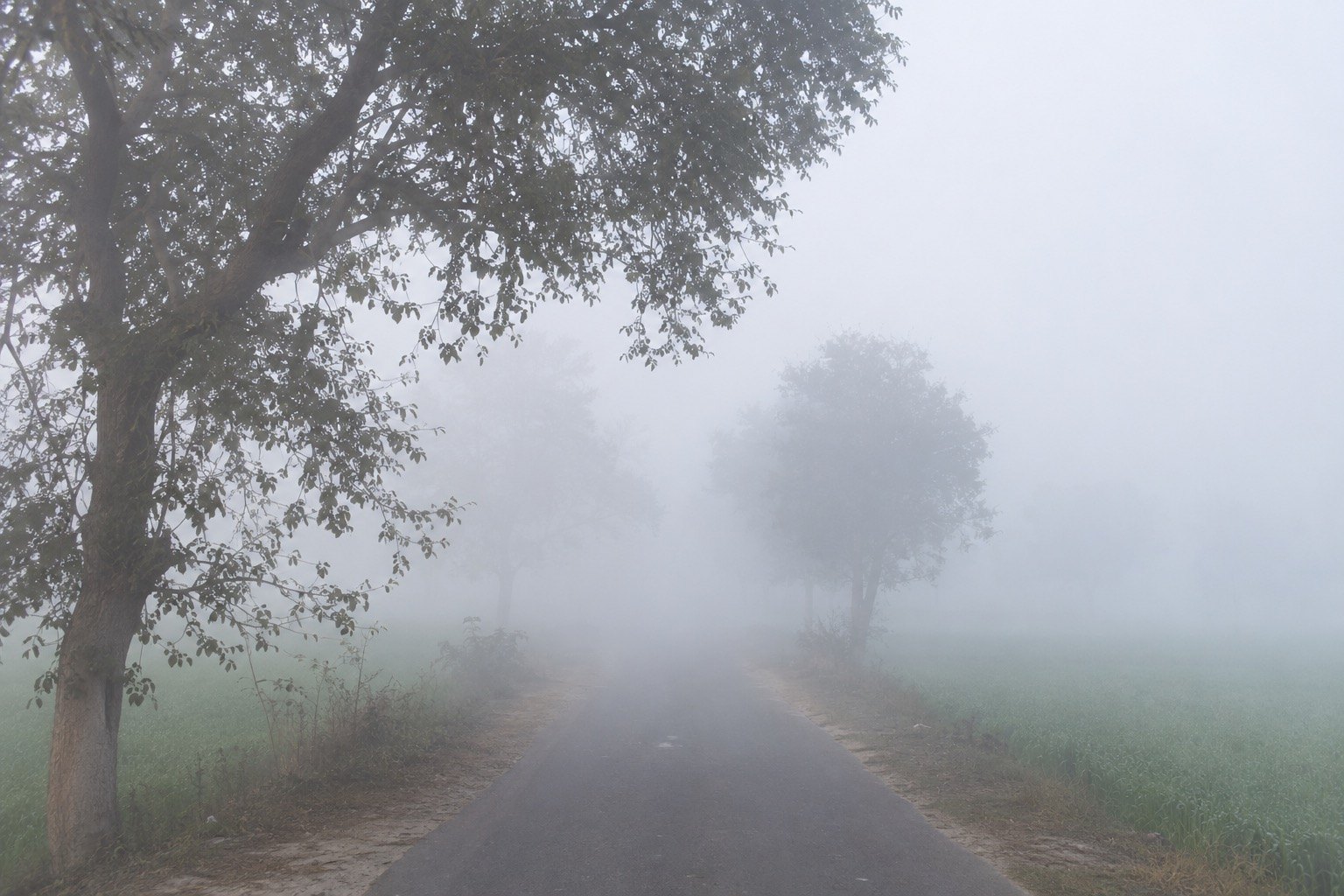
Fog is a suspension of water droplets near the ground that cuts visibility below 1,000 metres, by the India Meteorological Department's (IMD) definition. Over north India it forms most often on calm winter nights, when moist air cools to its dew point. IMD Chandigarh forecast dense fog in Punjab, Haryana and Chandigarh for 19-22 November 2026, weeks early.
Syllabus: Prelims · Geography; GS1 · World Physical Geography; GS3 · Environment & Conservation
Why this matters for UPSC
GS1 geography: fog, temperature inversion and western disturbances over the Indo-Gangetic plains. Prelims can ask IMD's visibility classes and fog-smog differences; Mains, fog's causes and costs.
In short
Fog is a suspension of water droplets in the air next to the ground that cuts visibility below 1,000 metres; over north India it forms mainly on calm winter nights.
Fog over the plains is natural, but pollution can worsen it; sharper forecasts and cleaner winter air together reduce its toll on travel and health.
Why it matters
A driver on a north Indian highway at dawn, or a passenger waiting for a delayed flight, feels fog first. Thick fog cuts the distance anyone can see, so airports handle fewer landings and take-offs, trains slow down and road collisions become likelier. River ferries on the Ganga and Brahmaputra stop or slow. Fog that holds pollutants lodges in the lungs, troubling people with asthma or bronchitis, and irritates the eyes. When a fog layer lingers for most of the day, it blocks sunlight and keeps days unusually cold, which hits the old and children hardest. Because fog and smog share the same calm air, cleaner winter air also makes fog less harmful to breathe.
Prelims pointers
- IMD's 2021 forecasting SOP calls the north Indian plains one of the most fog-prone areas in the world.
- Beyond the Indo-Gangetic plains, fog occurs on some winter nights in the north-eastern States and along the Odisha and West Bengal coasts; hill stations get hill fog.
- The plains of Maharashtra and Gujarat, central India and most of the southern peninsula rarely get dense fog because the air holds less humidity.
- Western disturbances originate over the Mediterranean or Caspian Sea and travel across Iran, Afghanistan and Pakistan before entering the Indian subcontinent.
- A western disturbance carries its moisture in the upper atmosphere, unlike tropical storms, which carry it in the lower layers.
- Fog cools mainly by radiation and most at its top; other low clouds cool mainly through vertical motion of air and most at their base.
- By physical process, IMD's SOP classes fog in India as radiation, radiation-advection, advection, steam, cloud-base lowering and precipitation fog.
Practise a UPSC-style question
With reference to radiation fog, consider the following statements:
1. It forms most commonly over land through night-time radiative cooling under light wind conditions.
2. Mid- and upper-level clouds during the day can help it persist by cutting the sunlight reaching the ground.
3. It usually dissipates a few hours after sunrise as solar heating warms the surface.
Which of the statements given above is/are correct?
- (a) 1 and 2 only
- (b) 2 and 3 only
- (c) 1 and 3 only
- (d) 1, 2 and 3
Show the answer
Answer: (d) 1, 2 and 3
Answer: (d) 1, 2 and 3. All three describe how radiation fog forms, lasts and clears.
Statement 1: correct. IMD's 2021 forecasting SOP names nocturnal radiative cooling under light winds as the most common way fog forms over land.
Statement 2: correct. Such clouds reduce solar radiation at the surface, stop it warming and keep humidity high in the lower fog layer.
Statement 3: correct. Ground heated by the sun warms the air above it within a few hours of sunrise, the process called fog burn-off.
Eliminate: statement 1 is the textbook mechanism and stands in every option but (b). Out: (b).
Eliminate: statement 2 is correct too, as daytime clouds keep the ground cool. Out: (c).
Eliminate: statement 3 is correct as well, since sunlight burns the fog off. Out: (a).
Trap: Sounds right. Statement 2 seems wrong because clouds usually block night cooling, yet daytime clouds above an existing fog layer help it survive by keeping the ground cool.
Remember: Radiation fog needs a cooling ground and light winds; the sun burns it off after sunrise.
More Explainers
- New START's end: strategic arms control and the NPT's disarmament duty World & IR
- Gyan Bharatam Mission and the National Mission for Manuscripts National
- The Ahom kingdom and the Battle of Saraighat National
- How a State is renamed: Articles 3 and 4 Polity
- Submarine cables to India's islands: CANI, KLI and a second route Sci-Tech
- Mercury in cosmetics and the Minamata Convention on Mercury Environment
- How a High Court gets a permanent bench Polity
- Tholpavakoothu: Kerala's leather shadow-puppet theatre Miscellany
- BioE3 Policy and the Biotechnology Research and Innovation Council (BRIC) Sci-Tech
- Alchi Chokhor, Ladakh: the Buddhist monastic complex and its protection National
- The four Labour Codes: what they merged and what they changed Economy
- National HPV Vaccination Campaign and cervical cancer prevention National