
How a High Court gets a permanent bench
Why in news: On 21 November 2026, the Himachal Pradesh Assembly resolved to seek a permanent High Court bench at Dharamshala.
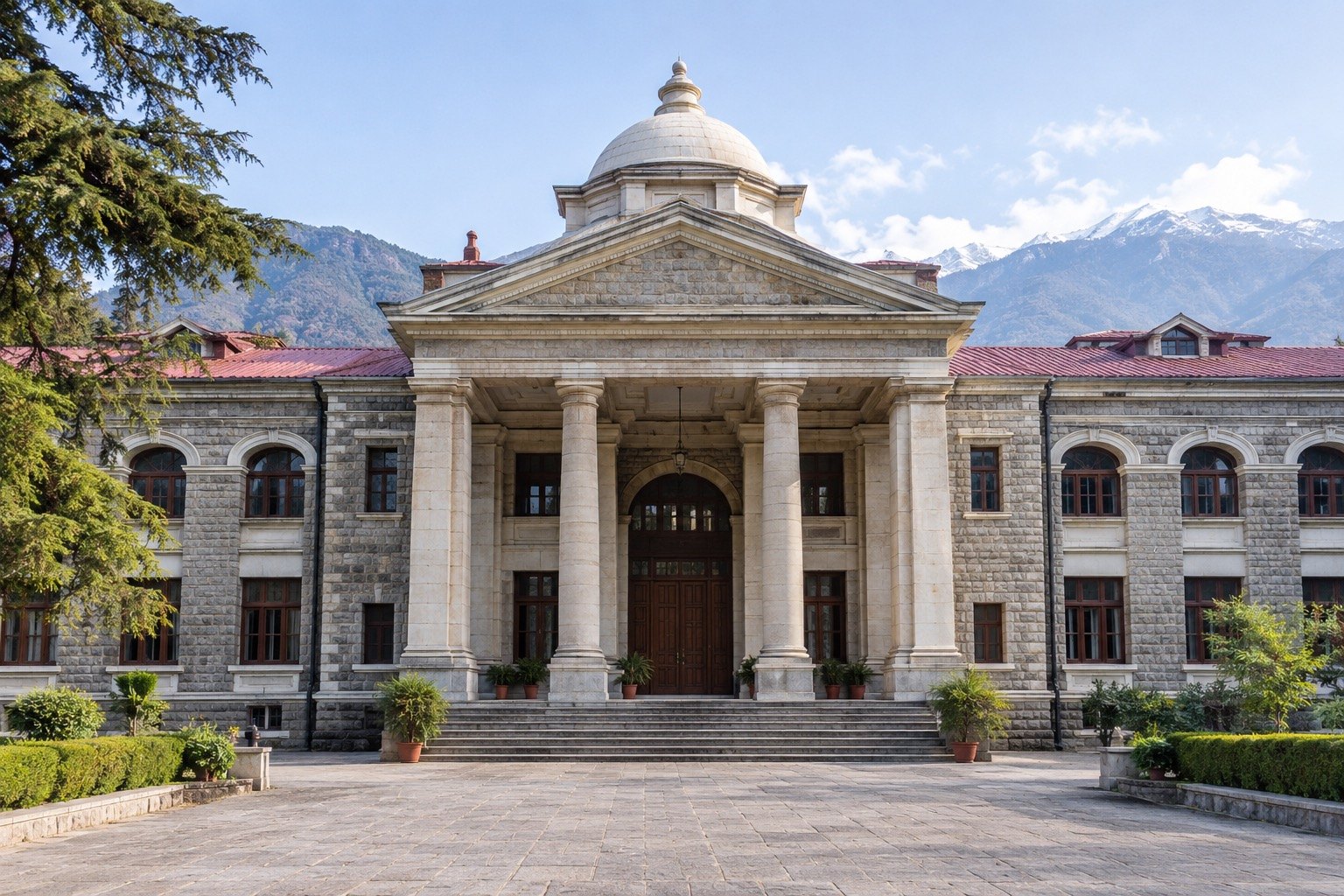
A High Court can sit in more than one city. Under the States Reorganisation Act, 1956, the President may order a standing bench of a new State's High Court outside its principal seat, once the Governor and that court's Chief Justice are consulted. Himachal Pradesh's Assembly unanimously asked for such a bench at Dharamshala on 21 November 2026.
Syllabus: GS2 · Constitution; Prelims · Polity & Governance; GS2 · Executive & Judiciary
Why this matters for UPSC
GS2 polity: High Courts, Article 214 and the States Reorganisation Act, 1956. Prelims can ask who orders a bench; Mains, access to justice.
In short
Article 214 gives each State a High Court. The States Reorganisation Act, 1956 lets the President add permanent benches to a new State's High Court, away from its principal seat.
Benches bring justice nearer to distant litigants, but each should rest on a funded State proposal and judicial consent, keeping the principal seat strong.
Why it matters
A litigant in Kangra who must travel to Shimla for each hearing loses days and money on long hill roads. A bench closer home would shorten that journey, and local lawyers could appear without leaving their districts. The bill falls first on the State, which has to provide courtrooms, homes for judges and digital systems before the Union moves. The wider issue is access to justice: a court that sits far away is harder to reach for poorer people. Yet the principal seat's standing also matters, which is why the High Court's own Chief Justice must agree before a bench opens.
Prelims pointers
- A permanent bench is ordered by the President under a 1956 Act, whereas a common High Court for two or more States needs a law of Parliament.
- Where a State's High Court serves a Union territory, the State Legislature cannot increase, restrict or abolish that jurisdiction (Article 230).
- Permanent bench versus other sittings: the President creates a bench by notified order; the Chief Justice, with the Governor's approval, picks other sitting places.
- For a common High Court, Articles 219 and 229 read 'the State' as the State where the court has its principal seat.
- A High Court's administrative expenses, including its staff's salaries and pensions, are charged on the Consolidated Fund of the State.
Practise a UPSC-style question
With reference to permanent benches of a High Court under the States Reorganisation Act, 1956, consider the following statements:
1. The President provides for a permanent bench by a notified order.
2. Before ordering a bench, the President must consult the Governor and the Chief Justice of India.
3. A permanent bench may sit at one or more places within the State other than the principal seat.
Which of the statements given above is/are correct?
- (a) 1 and 2 only
- (b) 2 and 3 only
- (c) 1 and 3 only
- (d) 1, 2 and 3
Show the answer
Answer: (c) 1 and 3 only
Answer: (c) 1 and 3 only. The President orders the bench after consulting the Governor and the High Court's own Chief Justice.
Statement 1: correct. The States Reorganisation Act, 1956 lets the President set up a permanent bench of a High Court by notified order.
Statement 2: incorrect. The Act names the Governor of the State and the Chief Justice of that High Court as the two consultees, not the Chief Justice of India.
Statement 3: correct. The Act allows one or more benches at places within the State away from the principal seat.
Eliminate: statement 2 is wrong, since the consultee is the High Court's Chief Justice. Out: (a), (b), (d).
Trap: Look-alike names. The Chief Justice of India is swapped in for the Chief Justice of the High Court, a title that sounds just as plausible.
Remember: President's notified order, after consulting the Governor and the High Court's Chief Justice.
More Explainers
- New START's end: strategic arms control and the NPT's disarmament duty World & IR
- Gyan Bharatam Mission and the National Mission for Manuscripts National
- The Ahom kingdom and the Battle of Saraighat National
- How a State is renamed: Articles 3 and 4 Polity
- Radiation fog over north India and how it differs from smog Environment
- Submarine cables to India's islands: CANI, KLI and a second route Sci-Tech
- Mercury in cosmetics and the Minamata Convention on Mercury Environment
- Tholpavakoothu: Kerala's leather shadow-puppet theatre Miscellany
- BioE3 Policy and the Biotechnology Research and Innovation Council (BRIC) Sci-Tech
- Alchi Chokhor, Ladakh: the Buddhist monastic complex and its protection National
- The four Labour Codes: what they merged and what they changed Economy
- National HPV Vaccination Campaign and cervical cancer prevention National