
How a State is renamed: Articles 3 and 4
Why in news: On 23 November 2026, West Bengal's Cabinet decided to move an Assembly resolution asking the Centre to rename the State Paschim Banga, in English too.
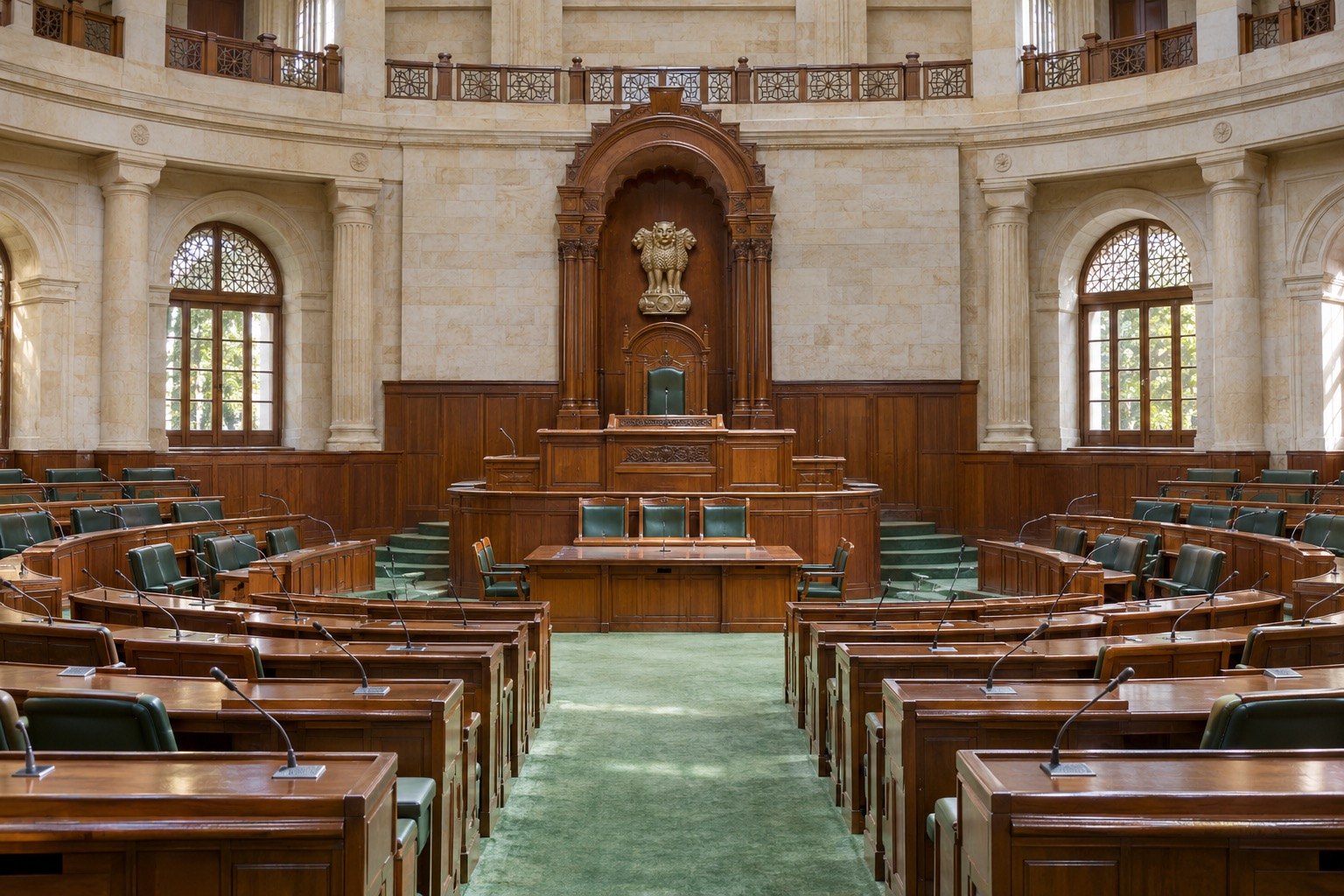
Renaming a State takes an Act of Parliament under Article 3 of the Constitution. The President must recommend the Bill and refer it first to the State Legislature for comment. Article 4 keeps such Acts outside Article 368. On 23 November 2026, West Bengal's Cabinet decided to seek the name Paschim Banga for the State.
Syllabus: GS2 · Constitution; GS2 · Federalism & Local Government; Prelims · Polity & Governance
Why this matters for UPSC
GS2 polity: Articles 3 and 4 and Parliament's power over the names and areas of States. Prelims can ask who recommends the Bill and whether State views bind; Mains, the federal balance.
In short
Article 3 lets Parliament alter a State's name by law, and Article 4 keeps that law outside Article 368: the Union decides, while the State is heard.
The design trades State consent for national flexibility; a time-bound Union reply to Assembly requests would keep that flexibility without leaving States waiting for years.
Why it matters
A student filling an exam form, a clerk updating land records and a judge hearing a case all use the State's official name. When the name changes, every law, record and pending case has to follow it. That is why the Orissa and Kerala Acts let governments adapt old laws and let courts read them in the new name. The larger issue is the federal balance. A State can ask for a new name, but the Union decides whether a Bill ever reaches Parliament, and the State's Legislature is heard, not obeyed. West Bengal's long wait shows that a request can stall for years when the Union does not act on it.
Prelims pointers
- In Article 3, 'State' includes a Union territory for forming and altering units, but not in the proviso, so no reference for views arises for a Union territory.
- Explanation II to Article 3 lets Parliament form a new State or Union territory by uniting part of a State or Union territory to another.
- Look-alike: renaming a village, town or railway station needs a 'No Objection' from the Ministry of Home Affairs under administrative guidelines; renaming a State needs a law of Parliament.
- Article 4 covers laws under Article 2 as well as Article 3: both kinds amend the First and Fourth Schedules as needed and fall outside Article 368.
- Renaming Acts carry consequential clauses: governments may adapt old laws within one year, courts may construe unadapted laws, and pending cases continue under the new name.
- A renaming Act starts on an appointed day the Central Government notifies: the Kerala Act is dated 14 August 2026, Keralam took effect on 25 August 2026.
Practise a UPSC-style question
With reference to the procedure under Article 3 of the Constitution of India for altering the name of a State, consider the following statements:
1. A Bill for the purpose may be introduced in Parliament on the recommendation of the Governor of the State concerned.
2. The President refers such a Bill to the State Legislature for its views within a period that the President may extend.
3. The views expressed by the State Legislature on such a Bill are binding on Parliament.
Which of the statements given above is/are correct?
- (a) 1 only
- (b) 2 only
- (c) 3 only
- (d) 1, 2 and 3
Show the answer
Answer: (b) 2 only
Answer: (b) 2 only. The President, not the Governor, recommends the Bill, and Article 3 asks the State only for its views.
Statement 1: incorrect. The proviso to Article 3 bars introducing such a Bill in either House except on the recommendation of the President; the Governor is not named in it.
Statement 2: correct. The President refers the Bill to the State Legislature for its views within the period set in the reference, or a further period the President allows.
Statement 3: incorrect. Article 3 asks the Legislature only to express its views; nothing in its text makes those views binding on Parliament.
Eliminate: statement 1 swaps the President for the Governor, so options with 1 go. Out: (a), (d).
Eliminate: statement 3 turns views into consent. Out: (c).
Trap: Swapped attribution. Statement 1 pins the President's power of recommendation on the Governor, a familiar figure in State matters, to catch a student who guesses from the State's role.
Remember: President recommends, State Legislature gives views, Parliament decides.
More Explainers
- New START's end: strategic arms control and the NPT's disarmament duty World & IR
- Gyan Bharatam Mission and the National Mission for Manuscripts National
- The Ahom kingdom and the Battle of Saraighat National
- Radiation fog over north India and how it differs from smog Environment
- Submarine cables to India's islands: CANI, KLI and a second route Sci-Tech
- Mercury in cosmetics and the Minamata Convention on Mercury Environment
- How a High Court gets a permanent bench Polity
- Tholpavakoothu: Kerala's leather shadow-puppet theatre Miscellany
- BioE3 Policy and the Biotechnology Research and Innovation Council (BRIC) Sci-Tech
- Alchi Chokhor, Ladakh: the Buddhist monastic complex and its protection National
- The four Labour Codes: what they merged and what they changed Economy
- National HPV Vaccination Campaign and cervical cancer prevention National