
National HPV Vaccination Campaign and cervical cancer prevention
Why in news: On 21 November 2026, PIB said more than one crore HPV vaccine doses had been given in under nine months of the campaign.
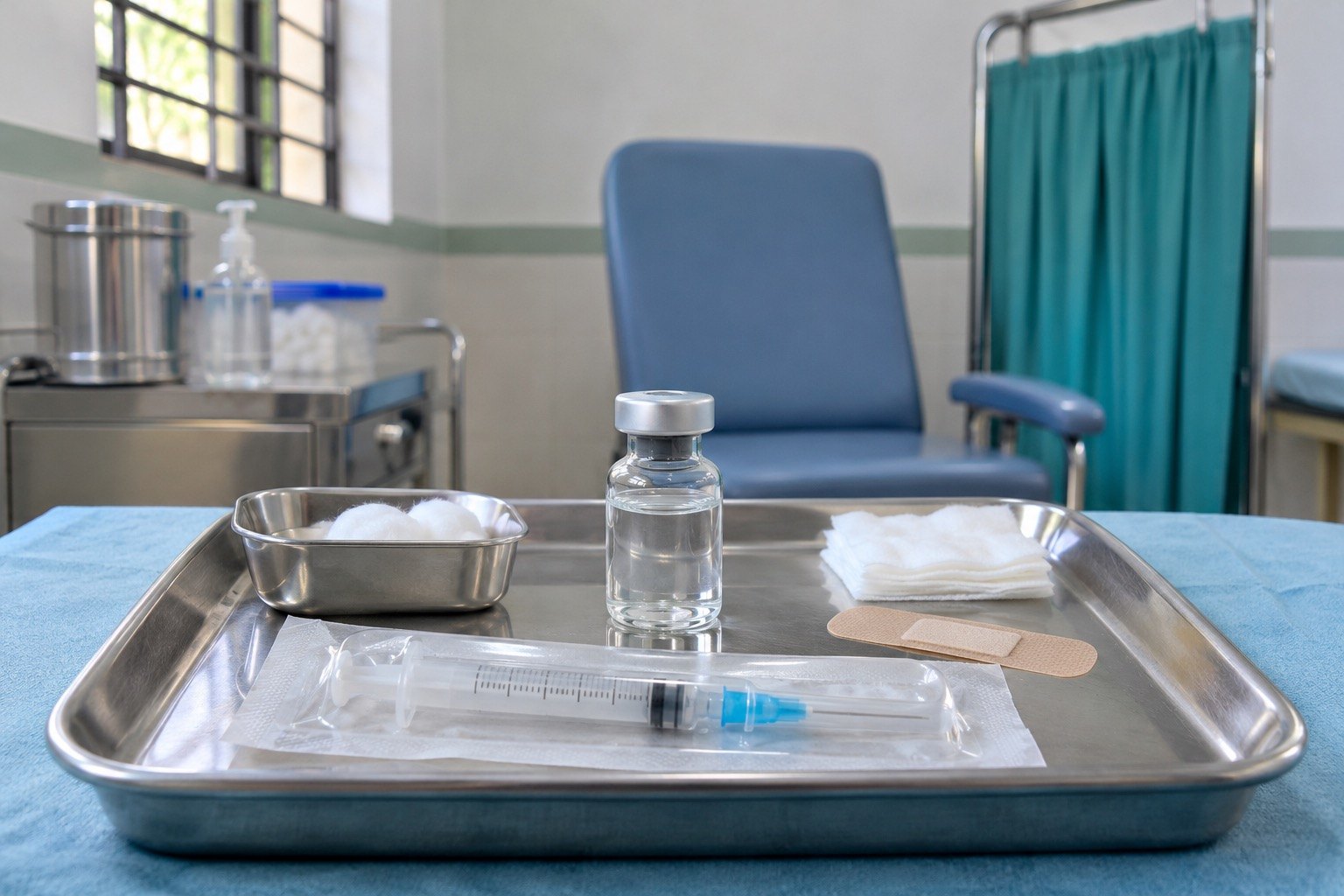
The National HPV Vaccination Campaign of the Ministry of Health and Family Welfare gives 14-year-old girls one free, voluntary dose of the Gardasil-4 vaccine, with parental consent, at government health facilities. Its aim is to prevent cervical cancer, which persistent high-risk HPV infection causes. PIB said on 21 November 2026 that over one crore doses had been given.
Syllabus: Prelims · Science & Technology; GS2 · Welfare of Vulnerable Sections; GS2 · Health, Education & Human Resources
Why this matters for UPSC
GS2 health and welfare schemes, and General Science on vaccines and cervical cancer. Prelims can ask the campaign's beneficiaries, vaccine types and WHO's 90-70-90 targets; Mains, cervical cancer elimination.
In short
The National HPV Vaccination Campaign, the Health Ministry's campaign launched in February 2026, uses one vaccine dose for 14-year-old girls to prevent cervical cancer before HPV exposure.
A single free dose is a strong first step, but elimination by WHO's measure needs equal effort on screening and early treatment of women.
Why it matters
A girl vaccinated at 14 is protected years before she could meet the virus, so a cancer that can take two decades to form may never start. Families are spared the cost and grief of a disease that falls hardest on younger women, and WHO notes that many children who lose their mother to cancer lose her to this one. Because the dose is free and given at public facilities, protection does not depend on what a household can pay. The larger question is whether India can pair vaccination with screening and treatment, since a vaccine given at 14 cannot reach women who are already adults.
Prelims pointers
- WHO's Global Strategy sets 90-70-90 targets for 2030: girls vaccinated by 15, women screened by 35 and 45, and diseased women treated.
- WHO advises HPV vaccination for girls aged 9 to 14 and cervical screening from age 30, or 25 for women living with HIV.
- As of 2025 there are eight licensed HPV vaccines, five of them WHO-prequalified; all protect against high-risk types 16 and 18.
- WHO's 2022 recommendations allow off-label single-dose use of those HPV vaccines whose data meet its criteria; more products first prequalified for two doses keep qualifying.
- U-WIN, launched in October 2024, keeps routine vaccination appointments and records; eVIN tracks vaccine stocks and storage temperatures; CoWIN served COVID-19 vaccination.
- The Universal Immunisation Programme protects against 12 diseases; Mission Indradhanush, from 2015, reaches unvaccinated and partly vaccinated children and pregnant women.
- World Cervical Cancer Elimination Day is observed on 17 November.
Practise a UPSC-style question
With reference to the National HPV Vaccination Campaign, consider the following statements:
1. It is run by the Ministry of Women and Child Development.
2. It covers girls who have completed 14 years of age but not yet 15 years.
3. The vaccine under it is free and given only after a parent's or guardian's consent.
Which of the statements given above are correct?
- (a) 1 and 2 only
- (b) 2 and 3 only
- (c) 1 and 3 only
- (d) 1, 2 and 3
Show the answer
Answer: (b) 2 and 3 only
Answer: (b) 2 and 3 only. The campaign belongs to the Health Ministry and serves 14-year-old girls with consent.
Statement 1: incorrect. The Ministry of Health and Family Welfare runs the campaign, launched on 28 February 2026.
Statement 2: correct. PIB defines the target as girls who have finished 14 years and not yet 15, about 1.2 crore a year.
Statement 3: correct. Vaccination is voluntary and free of cost, and parental or guardian consent is mandatory.
Eliminate: Statement 1 is the surest error, since the Health Ministry runs the campaign. Out: (a), (c), (d).
Trap: Swapped attribution. A scheme for girls sounds like the Women and Child Development Ministry's, but this one is a health programme.
Remember: HPV campaign: Health Ministry, girls aged 14, one free dose with consent.
More Explainers
- New START's end: strategic arms control and the NPT's disarmament duty World & IR
- Gyan Bharatam Mission and the National Mission for Manuscripts National
- The Ahom kingdom and the Battle of Saraighat National
- How a State is renamed: Articles 3 and 4 Polity
- Radiation fog over north India and how it differs from smog Environment
- Submarine cables to India's islands: CANI, KLI and a second route Sci-Tech
- Mercury in cosmetics and the Minamata Convention on Mercury Environment
- How a High Court gets a permanent bench Polity
- Tholpavakoothu: Kerala's leather shadow-puppet theatre Miscellany
- BioE3 Policy and the Biotechnology Research and Innovation Council (BRIC) Sci-Tech
- Alchi Chokhor, Ladakh: the Buddhist monastic complex and its protection National
- The four Labour Codes: what they merged and what they changed Economy