
Police reforms: the Supreme Court's seven Prakash Singh directions
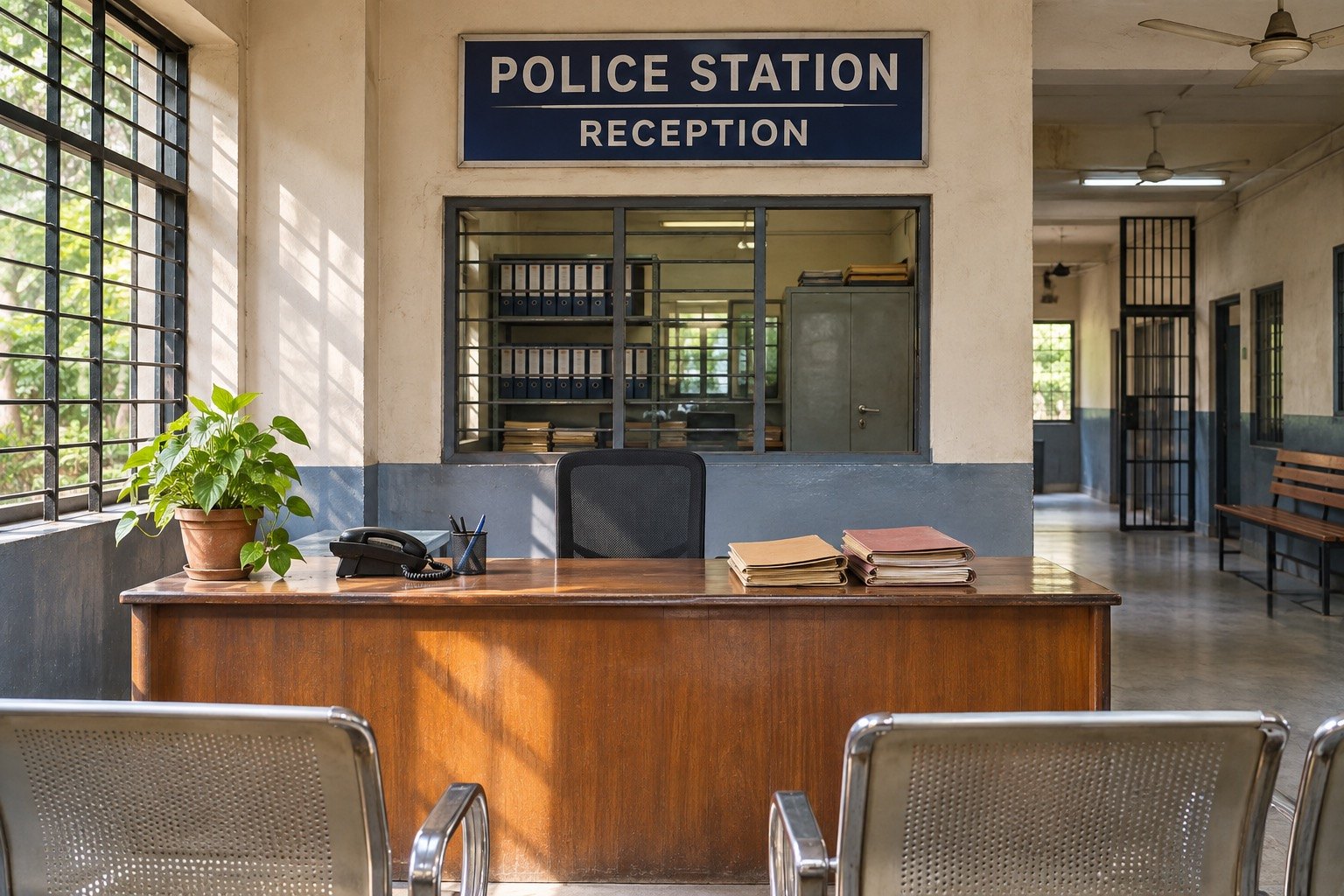
On 22 September 2006, the Supreme Court, in Prakash Singh v. Union of India, issued seven directions to free the police from undue pressure and make it answerable to the law. They reshape how police chiefs are chosen, how officers are posted and how complaints are heard. States have complied only in part, so they remain a live issue.
Syllabus: GS2 · Federalism & Local Government; GS2 · Executive & Judiciary; GS2 · Governance & e-Governance
Why this matters for UPSC
GS2 polity and governance: police as a State subject and court-led police reform. Prelims asks the bodies, tenures and List entries; Mains asks about accountability and political interference.
In short
Police is a State subject, but its reform rests on a 2006 Supreme Court judgment whose seven Prakash Singh directions shield police from pressure and bind it to law.
Two decades on, the directions remain a stopgap; lasting reform needs State laws that balance democratic oversight with an independent, accountable police.
Why it matters
A shopkeeper who complains that a station officer took a bribe needs someone outside the police chain of command to hear it. The complaints authorities were designed for that, with findings that bind the department. Fixed terms and a board that decides transfers aim to stop officers being shifted for displeasing the powerful, a pattern the National Police Commission had flagged. Where these bodies exist only on paper, an investigation can bend to pressure, and people lose faith that the law applies equally to all. The larger question is how an elected government can supervise its police without steering individual cases.
Prelims pointers
- In the Seventh Schedule, public order is entry 1 and police, including railway and village police, entry 2 of the State List.
- Union List entry 2A covers deploying the Union's armed forces in a State in aid of the civil power, and their powers while so deployed.
- The head of a State-level Police Complaints Authority is chosen by the State Government from a panel of names proposed by the Chief Justice.
- The National Police Commission's second report sought a statutory tenure for a State police chief and a panel of IPS officers for that post.
- The State Security Commission is chaired by the Chief Minister or Home Minister, with the DGP as ex-officio secretary; its recommendations bind the State.
- The Police Establishment Board, the DGP with four senior officers, decides transfers, postings and promotions of officers up to Deputy Superintendent rank.
- Look-alike: a State Security Commission oversees one State's police, while the National Security Commission panels chiefs of the Central Police Organisations.
- The Model Police Act, 2006 was drafted by an expert committee set up by the Ministry of Home Affairs in September 2005 to replace the Police Act, 1861.
Practise a UPSC-style question
With reference to the Seventh Schedule of the Constitution of India, consider the following statements:
1. Police, including railway and village police, is an entry in the State List.
2. Public order is an entry in the Concurrent List and can be legislated on by both Parliament and States.
3. Deployment of the Union's armed forces in a State in aid of the civil power is an entry in the Union List.
Which of the statements given above is/are correct?
- (a) 1 and 2 only
- (b) 2 and 3 only
- (c) 1 and 3 only
- (d) 1, 2 and 3
Show the answer
Answer: (c) 1 and 3 only
Answer: (c) 1 and 3 only. Police and public order are both State List subjects; Union forces aiding civil power sit in the Union List.
Statement 1: correct. Entry 2 of the State List reads police, including railway and village police, subject to Union List entry 2A.
Statement 2: incorrect. Public order is entry 1 of the State List, not the Concurrent List.
Statement 3: correct. Union List entry 2A covers deploying any armed force of the Union in a State in aid of the civil power.
Eliminate: statement 2 is wrong because public order sits in the State List. Out: (a), (b), (d).
Trap: Wrong scope. Public order is moved from the State List to the Concurrent List, a shift from State to shared power that sounds plausible.
Remember: Police and public order: State List entries 2 and 1. Union forces in aid of civil power: Union List 2A.
More Explainers
- New START's end: strategic arms control and the NPT's disarmament duty World & IR
- Gyan Bharatam Mission and the National Mission for Manuscripts National
- The Ahom kingdom and the Battle of Saraighat National
- How a State is renamed: Articles 3 and 4 Polity
- Radiation fog over north India and how it differs from smog Environment
- Submarine cables to India's islands: CANI, KLI and a second route Sci-Tech
- Mercury in cosmetics and the Minamata Convention on Mercury Environment
- How a High Court gets a permanent bench Polity
- Tholpavakoothu: Kerala's leather shadow-puppet theatre Miscellany
- BioE3 Policy and the Biotechnology Research and Innovation Council (BRIC) Sci-Tech
- Alchi Chokhor, Ladakh: the Buddhist monastic complex and its protection National
- The four Labour Codes: what they merged and what they changed Economy