
Global Stocktake: how the Paris Agreement checks its own progress
Why in news: On 18 November 2026, at COP31 in Antalya, India called for an open, transparent and equitable second Global Stocktake.
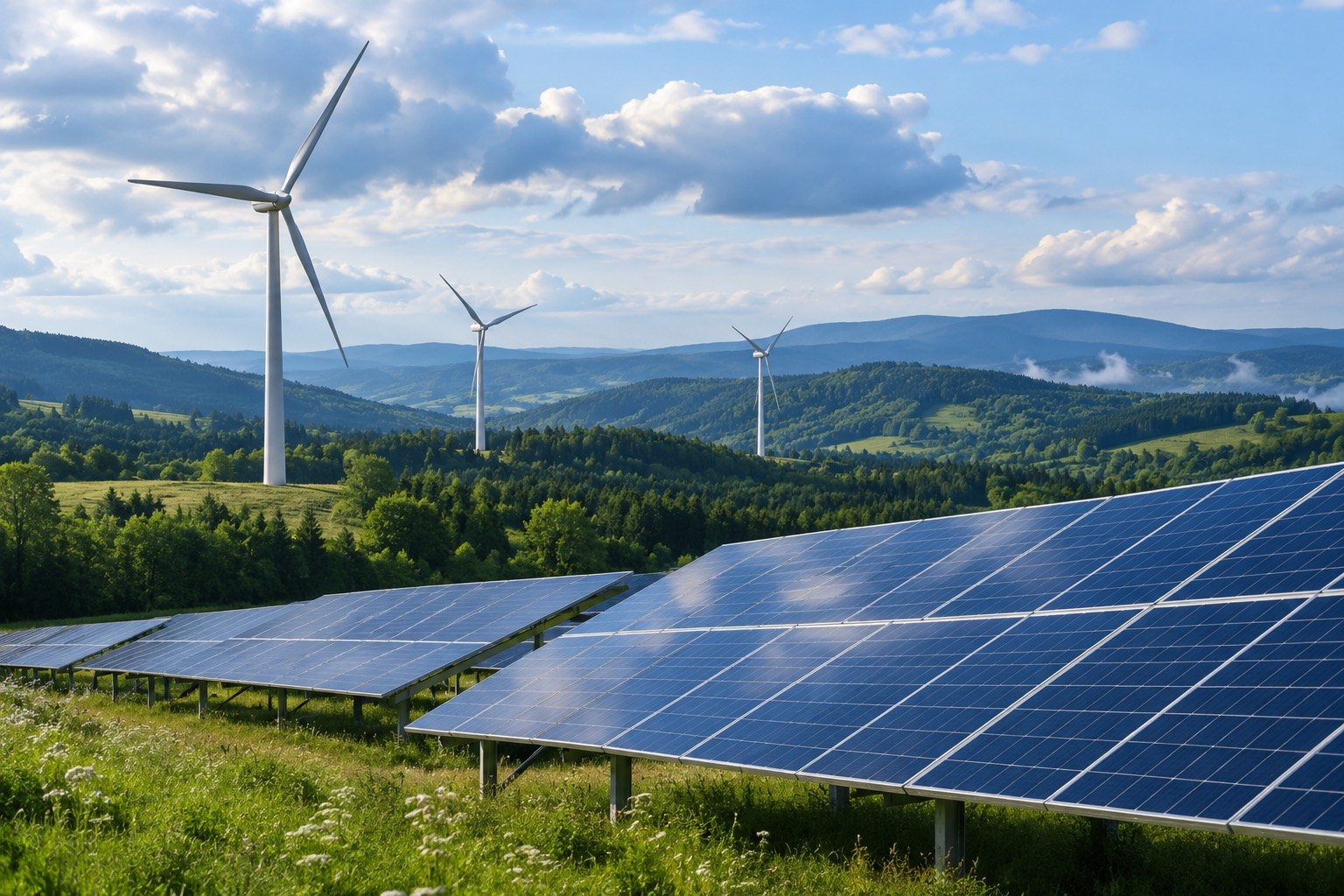
The Global Stocktake, set by Article 14 of the Paris Agreement, is a periodic review of collective progress towards the treaty's goals. The first round fell in 2023, with one every five years after. Its outcome informs each country's next climate pledge. On 18 November 2026, India asked COP31 for an open, transparent and equitable second stocktake.
Syllabus: Prelims · Environment & Ecology; GS3 · Environment & Conservation; GS2 · Groupings & Agreements
Why this matters for UPSC
GS3 environment and GS2 international agreements: the Paris Agreement's review mechanism. Prelims can ask Article 14, the five-year cycle and NDC link; Mains, equity in climate review.
In short
The Global Stocktake, under Article 14 of the Paris Agreement, is a periodic collective review of progress towards the treaty's goals, judged against equity and the best available science.
The stocktake earns trust only if it weighs support delivered as strictly as emissions cut; otherwise the next NDCs will not rise.
Why it matters
For a climate negotiator from a developing country, the stocktake is a moment when missing money and technology can be set beside missing emission cuts. Each country writes its own pledge, so the review cannot order anyone to do more. Its power is public judgement: it shows how far short the combined effort falls, and every government drafts its next pledge with that verdict in view. If the review looks only at emissions, poorer nations are judged without counting the help they were promised and did not get. That is why India wants fairness and the delivery of support built into the second round, so that the next pledges are judged against what each country could do.
Prelims pointers
- The stocktake covers three areas: mitigation, adaptation, and the means of implementation and support, judged in the light of equity and the best available science.
- Under Article 4 of the Paris Agreement, each Party communicates an NDC every five years, informed by the outcomes of the Global Stocktake.
- Look-alikes: the Global Stocktake reviews the combined progress of all Parties; an NDC is one country's own, nationally determined pledge.
- The first stocktake's outcome called for tripling global renewable energy capacity and doubling the average yearly rate of energy efficiency improvements by 2030.
- The same outcome sought a just, orderly and equitable shift away from fossil fuels in energy systems, and faster phase-down of unabated coal power.
- The United Arab Emirates dialogue on implementing the stocktake outcomes runs from the CMA's sixth session to its tenth, in 2028.
Practise a UPSC-style question
With reference to the Global Stocktake under the Paris Agreement, consider the following statements:
1. It is provided for in Article 14 of the Paris Agreement and is conducted by the CMA.
2. It rates each Party separately on how far it has met its own NDC.
3. It considers mitigation, adaptation and the means of implementation and support.
Which of the statements given above is/are correct?
- (a) 1 and 2 only
- (b) 2 and 3 only
- (c) 1 and 3 only
- (d) 1, 2 and 3
Show the answer
Answer: (c) 1 and 3 only
Answer: (c) 1 and 3 only. The stocktake is collective; it does not grade single countries.
Statement 1: correct. Article 14 of the Paris Agreement tasks the CMA with taking stock of the Agreement's implementation periodically.
Statement 2: incorrect. Article 14 has it assess the collective progress of all Parties towards the Agreement's purpose and long-term goals.
Statement 3: correct. Article 14 lists mitigation, adaptation and the means of implementation and support as what it considers.
Eliminate: statement 2 is surest wrong, because the review is collective by design. Out: (a), (b), (d).
Trap: Wrong scope. A collective review is narrowed to a country-by-country report card, which the stocktake is not.
Remember: Global Stocktake means collective progress, every five years, under Article 14.
More Explainers
- New START's end: strategic arms control and the NPT's disarmament duty World & IR
- Gyan Bharatam Mission and the National Mission for Manuscripts National
- The Ahom kingdom and the Battle of Saraighat National
- How a State is renamed: Articles 3 and 4 Polity
- Radiation fog over north India and how it differs from smog Environment
- Submarine cables to India's islands: CANI, KLI and a second route Sci-Tech
- Mercury in cosmetics and the Minamata Convention on Mercury Environment
- How a High Court gets a permanent bench Polity
- Tholpavakoothu: Kerala's leather shadow-puppet theatre Miscellany
- BioE3 Policy and the Biotechnology Research and Innovation Council (BRIC) Sci-Tech
- Alchi Chokhor, Ladakh: the Buddhist monastic complex and its protection National
- The four Labour Codes: what they merged and what they changed Economy