
Climate Risk Index: how Germanwatch measures who suffers most from extreme weather
Why in news: Germanwatch released the Climate Risk Index 2027 in November 2026; it ranks India 10th among countries most affected by extreme weather over 1996-2025.
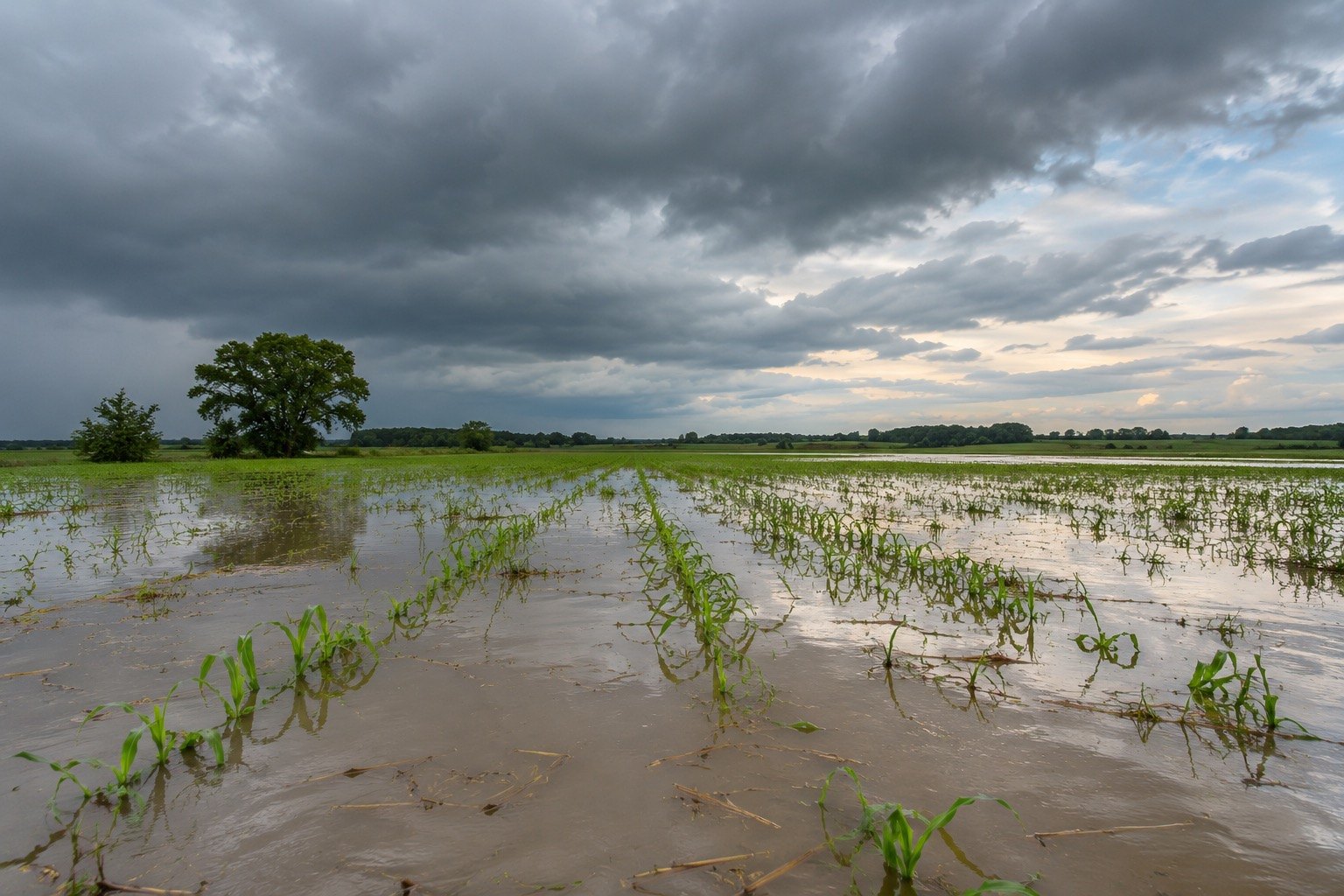
Germanwatch's Climate Risk Index (CRI), published since 2006, ranks countries by the deaths, people affected and economic losses that extreme weather has already caused. It looks backward, covering 178 countries through the EM-DAT disaster database. The 2027 edition, released in November 2026, places India 10th for 1996-2025.
Syllabus: Prelims · Environment & Ecology; GS1 · Geophysical Phenomena; GS3 · Disaster Management
Why this matters for UPSC
GS3 disaster management and climate change: how an index ranks extreme-weather harm. Prelims can ask the CRI's publisher, indicators and exclusions; Mains, its limits.
In short
The Climate Risk Index (CRI), published by Germanwatch since 2006, is a retrospective ranking of how severely extreme weather has already hit 178 countries in lives, people and money.
The CRI records past extreme-weather harm well; read it with forward-looking risk and slow-onset data before it guides adaptation spending.
Why it matters
A fisher on the Odisha coast who loses a boat to a cyclone appears in the CRI only as part of a national total. The index turns many such losses into one country score, so governments and climate negotiators can compare who has already borne the most harm from extreme weather. That record gives weight to the claims of hard-hit countries in climate talks. The score looks backward, though. It cannot warn a district of the next flood, it does not show who inside a country suffered most, and it misses slow harm such as a rising sea or spreading desert. Its own authors say it should not be the only basis for planning adaptation.
Prelims pointers
- The CRI is retrospective: it scores realised impacts and is not intended as a linear projection of future climate impacts.
- CRI hazard categories: hydrological (floods, wet mass movements), meteorological (storms, extreme temperatures), climatological (wildfires, drought, glacial lake outburst floods).
- Outside the CRI: slow-onset processes such as sea level rise, ocean acidification and desertification, and geological events such as earthquakes, volcanic eruptions and tsunamis.
- An event enters EM-DAT with any one of: 10 or more reported deaths, 100 or more affected, a declared state of emergency, or a call for international assistance.
- Within the CRI's human-loss measure, fatalities carry 3/5 of the weight and people affected 2/5.
- The CRI compares countries at national level only; it cannot show how damage is distributed within a country.
Practise a UPSC-style question
With reference to the Climate Risk Index (CRI), consider the following statements:
1. It projects how severely countries will be hit by climate change up to 2050.
2. It is published by the World Meteorological Organization using its own station records.
3. It ranks countries by the human and economic impacts of extreme weather that has already occurred.
Which of the statements given above is/are correct?
- (a) 1 only
- (b) 2 only
- (c) 3 only
- (d) 1, 2 and 3
Show the answer
Answer: (c) 3 only
Answer: (c) 3 only. The CRI looks back at realised harm and comes from Germanwatch, not a UN body.
Statement 1: incorrect. The CRI is retrospective; Germanwatch says it is not meant as a linear projection of future climate impacts.
Statement 2: incorrect. Germanwatch e.V. publishes the CRI, drawing on the EM-DAT database kept by the Centre for Research on the Epidemiology of Disasters (CRED).
Statement 3: correct. The index ranks countries by fatalities, people affected and economic losses from past extreme weather, the most affected ranked highest.
Eliminate: statement 1 is wrong because the index looks backward. Out: (a), (d).
Eliminate: statement 2 is wrong because the publisher is Germanwatch. Out: (b).
Trap: Swapped attribution. The question pins a real index on a well-known UN agency, and statement 1 dresses a past-loss ranking as a forecast.
Remember: CRI = Germanwatch, EM-DAT data, realised losses, no forecast.
More Explainers
- New START's end: strategic arms control and the NPT's disarmament duty World & IR
- Gyan Bharatam Mission and the National Mission for Manuscripts National
- The Ahom kingdom and the Battle of Saraighat National
- How a State is renamed: Articles 3 and 4 Polity
- Radiation fog over north India and how it differs from smog Environment
- Submarine cables to India's islands: CANI, KLI and a second route Sci-Tech
- Mercury in cosmetics and the Minamata Convention on Mercury Environment
- How a High Court gets a permanent bench Polity
- Tholpavakoothu: Kerala's leather shadow-puppet theatre Miscellany
- BioE3 Policy and the Biotechnology Research and Innovation Council (BRIC) Sci-Tech
- Alchi Chokhor, Ladakh: the Buddhist monastic complex and its protection National
- The four Labour Codes: what they merged and what they changed Economy