
Health Ministry launches JOSH youth teams for TB outreach in 55 districts
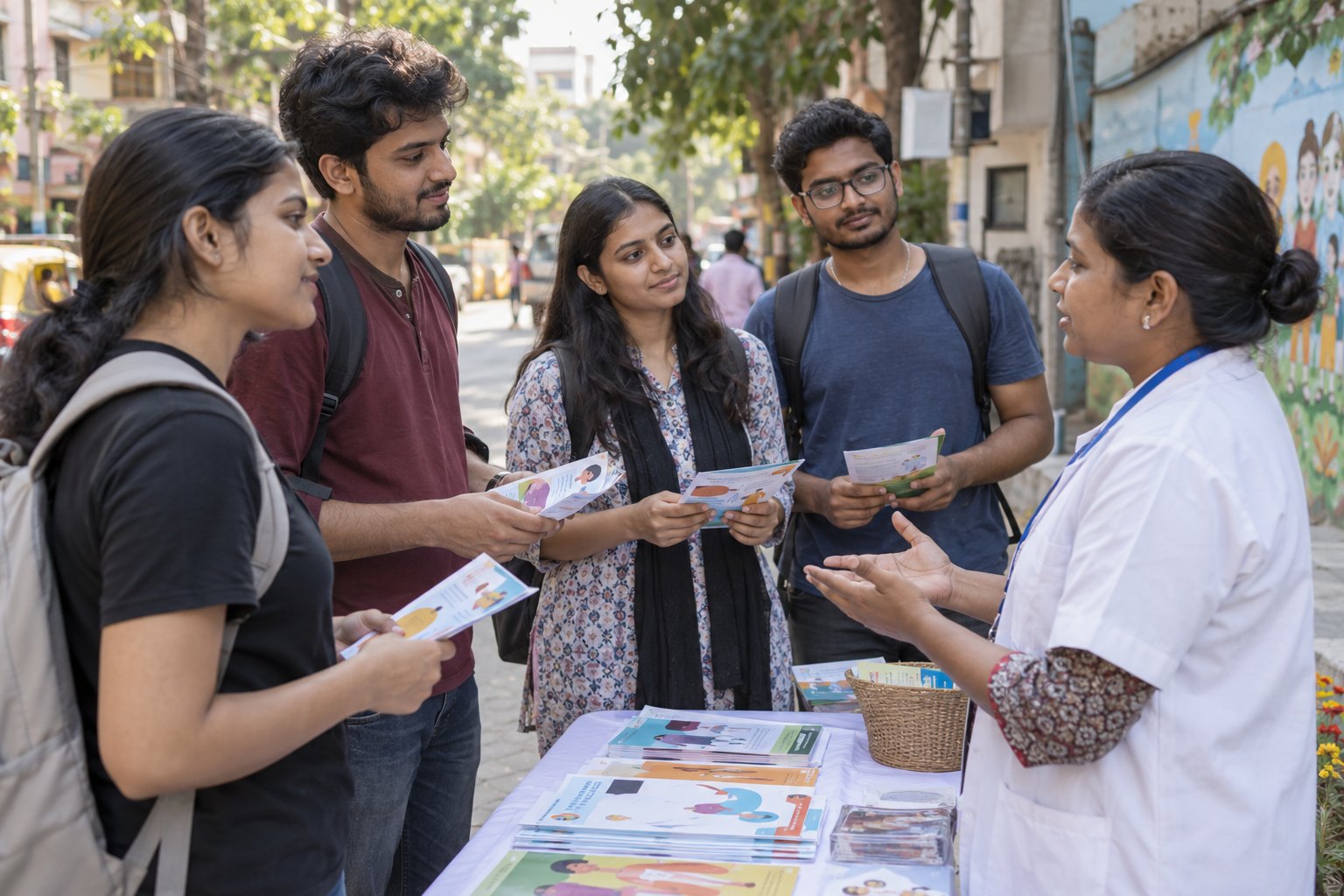
The Union Health Ministry launched JOSH (Joint Squad for Health) teams under the TB Mukt Bharat Abhiyaan on 8 October 2026. Each team of five NCC cadets and five MY Bharat volunteers, led by a Class-I officer, will urge people to get tested and help patients finish treatment. Phase one covers 55 districts in 11 States and Union Territories.
Syllabus: Prelims; GS2 · Health, Education & Human Resources; GS2 · Governance & e-Governance
Why it matters
A person with a cough that will not go away may stay away from a clinic out of fear of being shunned, or may not know the cough is TB at all. Untreated, that person can pass the disease to family and neighbours. JOSH sends young volunteers to such homes to explain the symptoms, urge a test and stand by the patient through a long course of medicines. Each case found early is a chain of infection cut short. Finishing treatment matters as much as the first test, which is why the volunteers' job runs from awareness to recovery. The larger question is whether youth outreach can reach the people the health system has been missing.
Prelims pointers
- Tuberculosis: caused by the bacterium Mycobacterium tuberculosis; spreads through the air; usually affects the lungs but can involve the kidneys, brain, spine and skin.
- Multidrug-resistant TB (MDR-TB): resistant to both rifampicin and isoniazid; a form of Antimicrobial Resistance (AMR), in which microbes stop responding to the medicines meant to kill them.
- BCG (Bacille Calmette-Guerin) vaccine: given at birth under India's National Immunization Schedule; it prevents deaths from TB and protects children from serious forms of the disease.
- Bacteriologically confirmed TB: found in a sample by smear microscopy, culture or a WHO-approved rapid test such as Xpert MTB/RIF. A screening test is not a diagnosis.
- NAAT (nucleic acid amplification test): WHO endorsed a fully automated NAAT in 2010; it speeds diagnosis of TB, MDR-TB and TB with HIV infection.
- Panchayats got constitutional status through the 73rd Amendment, 1992; the Eleventh Schedule lists health and sanitation among their 29 subjects.
- Ni-kshay Mitra: citizens and institutions give TB patients nutritional, psychosocial and social support; donations, including Corporate Social Responsibility funds, go to the TB Mukt Bharat Kosh.
- Sustainable Development Goals (SDGs): target 3.3 aims to end the epidemics of AIDS, tuberculosis, malaria and neglected tropical diseases by 2030.
Practise a UPSC-style question
With reference to tuberculosis (TB), consider the following statements:
1. TB is caused by a virus and most often affects the lungs.
2. TB spreads through the air when a person with infectious TB disease coughs, sneezes or spits.
3. People with TB infection but no TB disease usually do not feel sick and are not contagious.
Which of the statements given above is/are correct?
- (a) 1 and 2 only
- (b) 2 and 3 only
- (c) 1 and 3 only
- (d) 1, 2 and 3
Show the answer
Answer: (b) 2 and 3 only
1 is incorrect: TB is caused by a bacterium, Mycobacterium tuberculosis, though it does most often affect the lungs. 2 is correct: TB is airborne and spreads when a person with infectious disease coughs, sneezes or spits. 3 is correct: TB infection is a persistent immune response without active disease, and such people usually feel well and do not spread TB.
Explainers on this topic
More from the 9 October 2026 edition
- Article 21 speedy trial: victims may move High Court, Supreme Court rules Polity
- UNESCO GEM report puts rural India's upper-secondary gender parity at 0.59 National
- London Convention and Protocol parties adopt marine geoengineering assessment frameworks Environment
- Ravi Canal carries 400 cusecs; J&K seeks Rs 534 crore National
- Indian Railways electrifies 99.7% of broad gauge; 191 route km remain Economy
- Coral bleaching in 2024 hit Lakshadweep's reefs hardest, study finds Environment
- Gold imports by banks lose GST exemption, attract 3% IGST Economy
- Coal stock at domestic-coal power plants falls 66% in six months Economy
- Mines Ministry launches auction of two Andaman Sea offshore mineral blocks Economy
- Centre launches ₹23,731-crore GOBARdhan scheme for compressed biogas Economy
- Andhra Pradesh declares early Kharif drought in 388 mandals, 21 districts Environment
- BNSS does not define detention; Article 22 safeguards apply on arrest Polity