
RBI Governor sees no major impact on UPI volumes from MDR
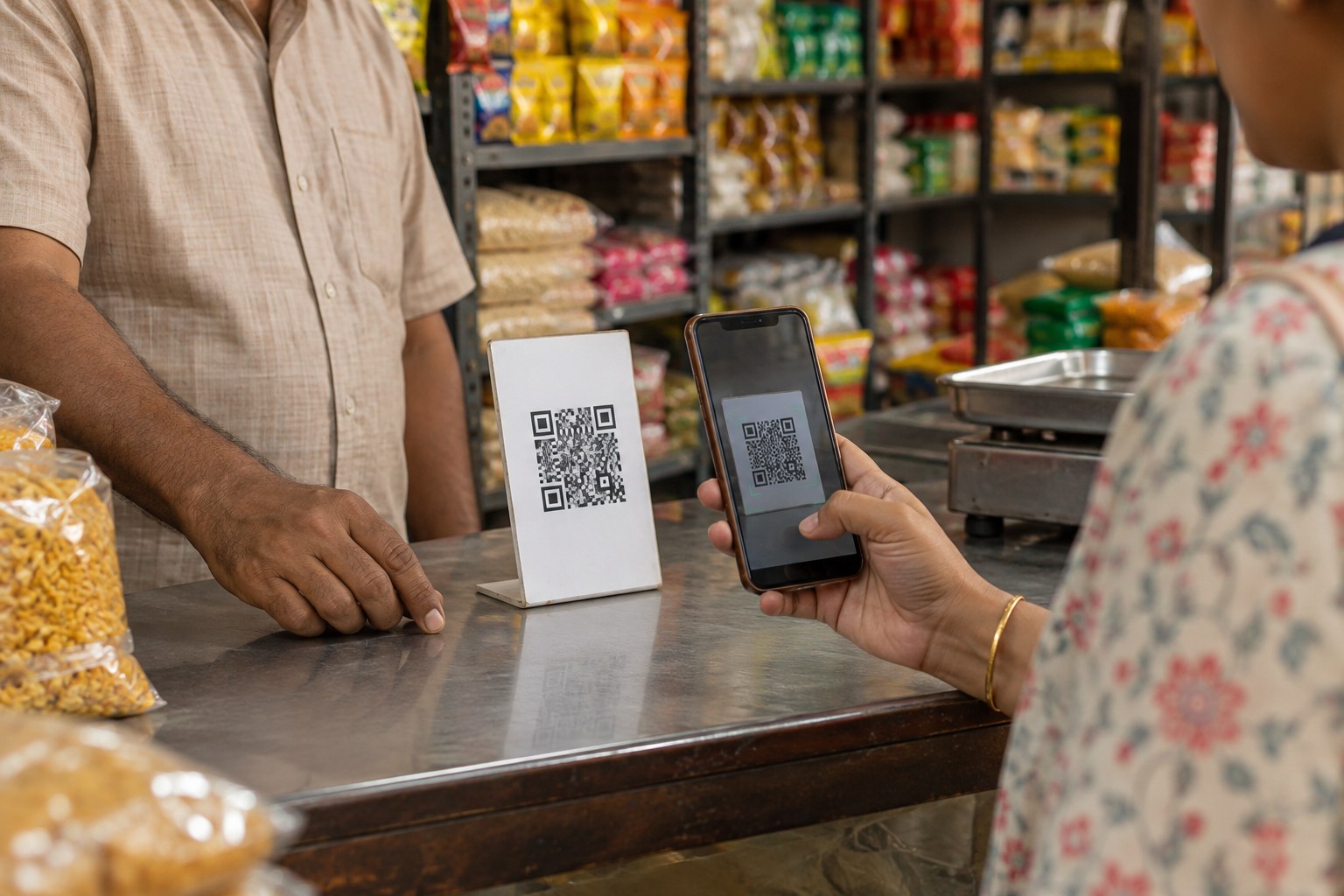
RBI Governor Sanjay Malhotra said on October 7 that a small fee, the Merchant Discount Rate (MDR), will not have a major impact on UPI volumes. A 0.4% MDR on specified UPI merchant payments above ₹2,000 applies from October 15. On September 28, the Supreme Court declined to stay it, seeking responses from the Centre, the RBI and NPCI.
Syllabus: GS3 · Indian Economy & Growth; GS2 · Governance & e-Governance
Why it matters
A shop that sells a ₹3,000 item and is paid through UPI will, from October 15, pay ₹12 of it to the banks and apps that process the payment; until now such a payment cost the shop nothing. Shoppers are not charged, and payments up to ₹2,000, transfers between people and small vendors taking up to ₹1 lakh a month stay free, so the fee falls on larger shops and bigger bills. The government says UPI needs steady money for cybersecurity, fraud prevention and infrastructure as volumes grow. The RBI Governor does not expect a small fee to have a major impact on UPI volumes; a petition in the Supreme Court argues that traders may refuse UPI, split bills or raise prices.
Prelims pointers
- Merchant Discount Rate (MDR): the fee a merchant pays, as a percentage of the payment, to the banks and payment firms that process a card or digital payment.
- NPCI: a not-for-profit company, not a statutory body, set up at the initiative of the RBI and the Indian Banks' Association; it runs UPI and RuPay.
- UPI, launched by NPCI in 2016, enables instant bank-to-bank payments by mobile phone, both between people and to merchants.
- Payment and Settlement Systems Act, 2007: gives the RBI oversight of payment systems; no one may operate a payment system without RBI authorisation (Section 4).
- Section 10A, Payment and Settlement Systems Act, 2007 (as amended): the Centre notifies payment modes that carry no charge; now UPI up to ₹2,000 and RuPay debit cards.
- UPI's zero-MDR regime began in January 2020; the new 0.4% MDR covers only specified merchant payments above ₹2,000, from October 15, 2026.
Practise a UPSC-style question
With reference to the Unified Payments Interface (UPI), consider the following statements:
1. UPI was developed by the National Payments Corporation of India and launched in 2016.
2. UPI can be used for transfers between persons but not for payments to merchants.
Which of the statements given above is/are correct?
- (a) 1 only
- (b) 2 only
- (c) Both 1 and 2
- (d) Neither 1 nor 2
Show the answer
Answer: (a) 1 only
1 is correct: UPI was launched by the National Payments Corporation of India (NPCI) in 2016 for instant bank-to-bank payments by mobile phone. 2 is incorrect: UPI serves both person-to-person transfers and payments to merchants, which is why a merchant charge on it matters.
Explainers on this topic
More from the 7 October 2026 edition
- NCAHP notifies autonomous boards, central assessment committee for allied health National
- India, EU formally launch Green Shipping Corridor industry coalition Environment
- First self-stabilising thorium-229 nuclear clock runs in Vienna Sci-Tech
- Defence Ministry eases industry access to DRDO and military test ranges Defence
- MoSPI releases 2026–2030 roadmap for environmental-economic accounting Environment
- Farm workers moving to cities land in low-productivity informal jobs: study Economy
- India readies NSAM 2.0 after 3D-printing push trains 1.54 lakh people Sci-Tech
- Navy's first Fleet Support Ship, FSS-1, launched at Visakhapatnam Defence
- Projectile strikes ship in Strait of Hormuz, injuring 11 Indian crew World & IR
- India, Switzerland sign mobility pacts, widen defence and nuclear cooperation World & IR
- MoSPI plans to widen monthly services index to 78.4% of services GVA Economy
- Seven-judge SC bench closes legislative privilege case, keeps free-speech questions open Polity