
Real Estate (Regulation and Development) Act, 2016: how it protects homebuyers
Why in news: Cabinet Secretariat officials met a homebuyers' forum on 12 November 2026 to discuss its suggested amendments to the Act, the forum said.
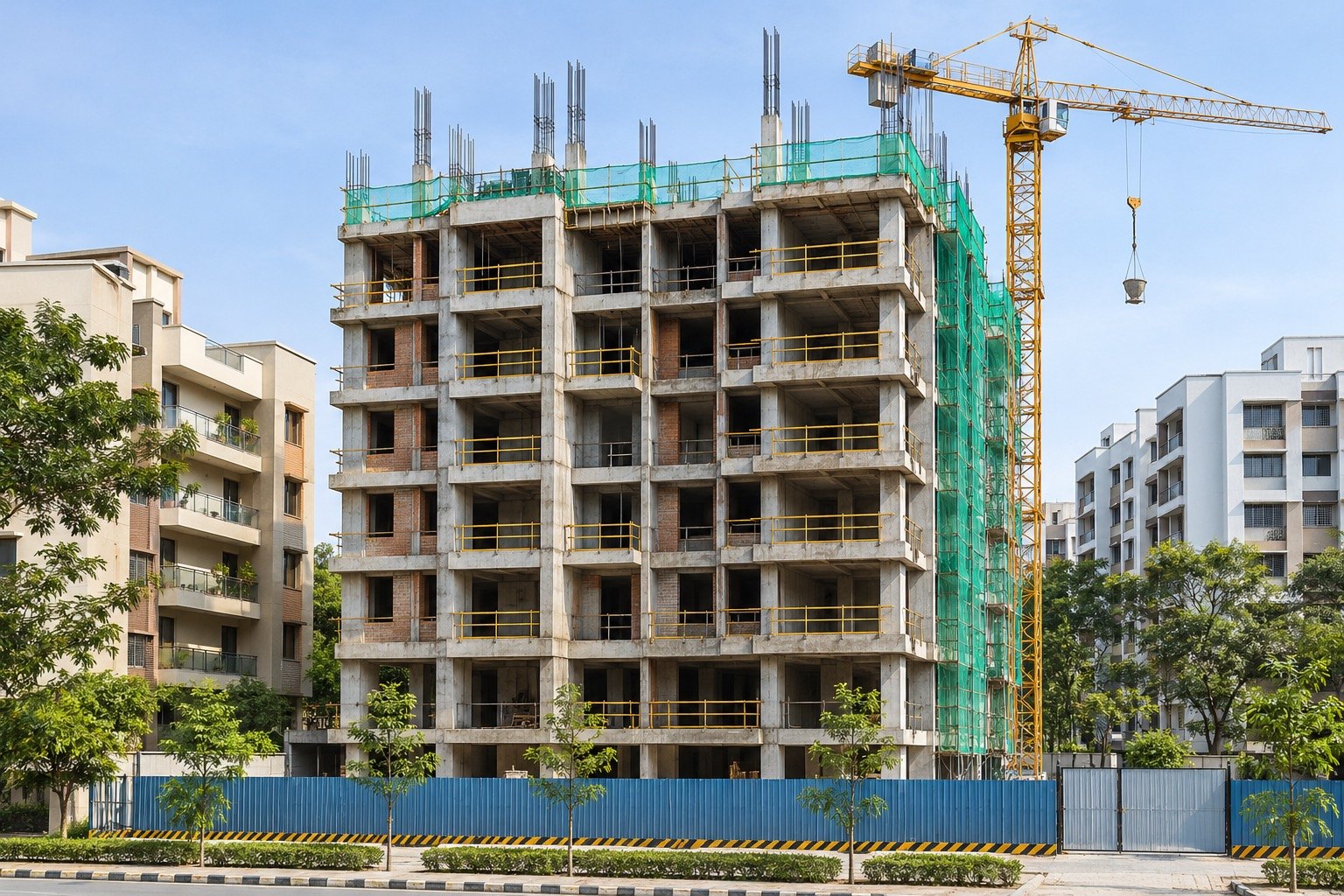
The Real Estate (Regulation and Development) Act, 2016 (RERA) makes builders register projects with a Real Estate Regulatory Authority before selling. They must keep 70% of buyers' money in a separate account and pay refunds or interest for delay. A homebuyers' forum has sought amendments, and Cabinet Secretariat officials met it on 12 November 2026.
Syllabus: GS2 · Federalism & Local Government; Prelims · Polity & Governance; GS2 · Statutory & Regulatory Bodies
Why this matters for UPSC
GS2 statutory and quasi-judicial bodies; GS3 housing and consumer protection. Prelims asks RERA's bodies, thresholds and appeals; Mains, its Centre-State design.
In short
The Real Estate (Regulation and Development) Act, 2016 (RERA) is a central law that regulates the sale of real estate projects and gives homebuyers preventive protection and quick redress.
RERA's design is sound; its promise now rests on faithful State rules, staffed tribunals and appeals that build one consistent body of homebuyer law.
Why it matters
A family that pays a builder for a flat years before it is ready carries most of the risk of that wait. RERA moves part of that risk back to the builder: most of buyers' money cannot be shifted to another project, a large advance cannot be demanded before a signed agreement, and delay has a price. Because each State writes its own rules and runs its own regulator and tribunal, a buyer's protection can depend on where the flat stands. The forum's call for a national appeal body and a separate guardian for buyers raises a wider question: whether a ministry that promotes an industry should also police it for its customers.
Prelims pointers
- For Delhi, RERA names the Central Ministry of Urban Development as the appropriate Government; for a Union territory without a legislature, it is the Central Government.
- The adjudicating officer is a judicial officer who is or has been a District Judge, appointed by the Authority in consultation with the appropriate Government.
- Each bench of a Real Estate Appellate Tribunal must include at least one Judicial Member and one Administrative or Technical Member.
- RERA has overriding effect: its provisions apply notwithstanding anything inconsistent in any other law in force.
- Under RERA, promoters include builders, colonisers, development authorities and housing co-operative societies; where the builder and seller differ, both are jointly liable.
- Real Estate Appellate Tribunals are created State by State, though States may share one; the NCLAT and the NGT are single national tribunals.
- A registered voluntary consumer association or an association of allottees may file a complaint under RERA, besides any individual aggrieved person.
Practise a UPSC-style question
With reference to the Real Estate (Regulation and Development) Act, 2016, consider the following statements:
1. The appropriate Government establishes the Real Estate Regulatory Authority, and two or more States may set up a single Authority.
2. An appeal against an order of a Real Estate Appellate Tribunal lies directly to the Supreme Court.
3. Every bench of a Real Estate Appellate Tribunal has at least one Judicial Member and one Administrative or Technical Member.
Which of the statements given above is/are correct?
- (a) 1 and 2 only
- (b) 2 and 3 only
- (c) 1 and 3 only
- (d) 1, 2 and 3
Show the answer
Answer: (c) 1 and 3 only
Answer: (c) 1 and 3 only. The Act gives the Tribunal's orders an appeal to the High Court, not the Supreme Court.
Statement 1: correct. The appropriate Government sets up the Authority by notification, and the Act lets two or more States or Union territories share one.
Statement 2: incorrect. Under the 2016 Act an appeal from the Appellate Tribunal goes to the High Court of the State or Union territory where the project is situated.
Statement 3: correct. The Act requires each bench of the Appellate Tribunal to have a Judicial Member and an Administrative or Technical Member.
Eliminate: statement 2 is the surest error, as the appeal route ends at the High Court. Out: (a), (b), (d).
Trap: Swapped attribution. The appeal is pinned on the Supreme Court because many tribunal laws send appeals there; RERA sends them to the High Court.
Remember: RERA appeals run Authority, then Appellate Tribunal, then High Court.
More Explainers
- CDRI: India's coalition for disaster-resilient infrastructure Environment
- Pichwai painting of Nathdwara, Rajasthan National
- Kerch Strait: the sea link between the Black Sea and Azov World & IR
- Wind energy in India: potential, offshore wind and the policy push Economy
- Pallikaranai marsh: a Chennai Ramsar site and its zone of influence Environment
- Andaman cobra: India's only island cobra, Endangered and endemic Environment
- International Coconut Community and India's Coconut Development Board World & IR
- Open correctional institutions and the Supreme Court's 2026 directions Polity
- ICTP, Trieste: the UNESCO-IAEA centre for physics and mathematics Sci-Tech
- PJ.2.1 and how new Covid variants are classified and tracked Sci-Tech
- Berlin Conference of 1884-85 and the rules for colonising Africa World & IR
- Voyager 1 at one light-day: heliosphere, interstellar space and light units Sci-Tech