
Berlin Conference of 1884-85 and the rules for colonising Africa
Why in news: The Berlin Conference opened on 15 November 1884; its 142nd anniversary fell on 15 November 2026.
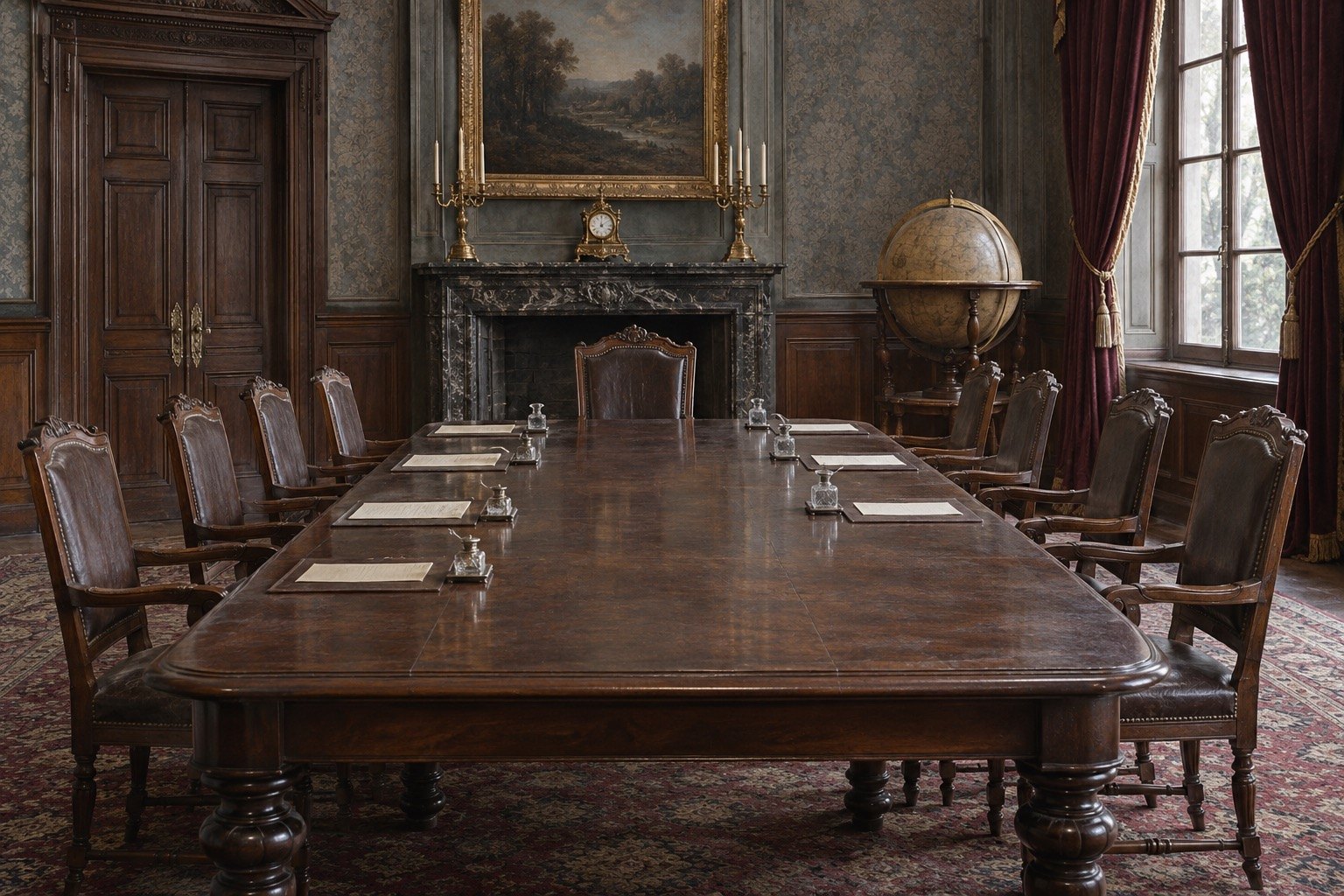
The Berlin Conference of 1884-85 gathered European powers and the United States to set rules for acquiring African territory. Its General Act internationalised navigation on the Congo and the Niger, declared the conventional basin of the Congo neutral, and made new coastal claims subject to notice. No African was invited. The conference opened on 15 November 1884.
Syllabus: Prelims · Current Affairs & IR; GS1 · World History
Why this matters for UPSC
GS1 world history: colonisation of Africa and the redrawal of boundaries. Prelims can ask the General Act's provisions; Mains, whether Berlin partitioned Africa.
In short
The Berlin Conference of 1884-85 gave European powers a common procedure for claiming African territory. Its General Act managed their rivalry, and no African had any say in it.
Berlin built a legal framework for empire, not a map; any judgement of it must weigh free-trade and humanitarian promises against the exclusion of Africans.
Why it matters
A trader or chief living along the Congo in 1885 had no part in deciding which European flag would claim his river: no African sat at the table in Berlin. The conference handed the powers a shared procedure for staking claims, so they could expand while avoiding war among themselves. The historian Trevor Getz reads the maps as showing almost the whole continent under European rule within a generation. Rules about African land were made by outsiders, and the conference promised welfare to people it never asked. That gap between promise and practice is why the conference remains central to any study of colonisation and of the states that later emerged.
Prelims pointers
- The Congress of Vienna (1814-15) set principles of free navigation on international rivers; the Berlin Act extended them to the Congo and the Niger.
- By 1880 France held Algeria, Portugal held Angola and Mozambique, and Britain ruled the Cape Colony and the Gold Coast, per historian Trevor Getz.
- France ratified the Brazza-Makoko treaty in 1882; Germany proclaimed protectorates over Togoland and Cameroon in July 1884, before the conference opened.
- On Getz's 1913 map, Ethiopia and Liberia were the two African states outside European colonial rule.
- In wartime, signatories promised their good offices to keep the neutral Congo basin regarded as non-belligerent territory.
Practise a UPSC-style question
With reference to the General Act of the Berlin Conference, 1885, consider the following statements:
1. It internationalised navigation on the Congo and the Niger rivers.
2. Its rule on new acquisitions applied to the whole African continent, interior as well as coast.
3. A power taking new coastal territory in Africa had to notify the other signatory powers.
Which of the statements given above is/are correct?
- (a) 1 and 2 only
- (b) 2 and 3 only
- (c) 1 and 3 only
- (d) 1, 2 and 3
Show the answer
Answer: (c) 1 and 3 only
Answer: (c) 1 and 3 only. The Act opened both rivers to international navigation and required notice of coastal claims, but its acquisition rule was written for the coast.
Statement 1: correct. The General Act threw both rivers open to international shipping, applying the Congress of Vienna's principles for international rivers.
Statement 2: incorrect. The Act set conditions for taking land on Africa's shores; its rule on new claims spoke of coastal territory, not the whole continent.
Statement 3: correct. Whoever claimed land on the coast had to inform the rest and set up authority enough to guard rights already held.
Eliminate: Statement 2 is the surest call, as the rule covered coastal claims. Out: (a), (b), (d).
Trap: Wrong scope. The idea of effective occupation is often taught as a rule for all of Africa, so a continent-wide version sounds right.
Remember: Berlin's occupation rule was coastal: notify the signatories and hold enough authority to protect rights.
More Explainers
- CDRI: India's coalition for disaster-resilient infrastructure Environment
- Pichwai painting of Nathdwara, Rajasthan National
- Kerch Strait: the sea link between the Black Sea and Azov World & IR
- Wind energy in India: potential, offshore wind and the policy push Economy
- Pallikaranai marsh: a Chennai Ramsar site and its zone of influence Environment
- Andaman cobra: India's only island cobra, Endangered and endemic Environment
- International Coconut Community and India's Coconut Development Board World & IR
- Real Estate (Regulation and Development) Act, 2016: how it protects homebuyers Polity
- Open correctional institutions and the Supreme Court's 2026 directions Polity
- ICTP, Trieste: the UNESCO-IAEA centre for physics and mathematics Sci-Tech
- PJ.2.1 and how new Covid variants are classified and tracked Sci-Tech
- Voyager 1 at one light-day: heliosphere, interstellar space and light units Sci-Tech