
PM-RAHAT: cashless treatment for road accident victims under the Motor Vehicles Act
Why in news: In November 2026, the National Medical Commission asked all government medical colleges and their attached hospitals to onboard PM-RAHAT.
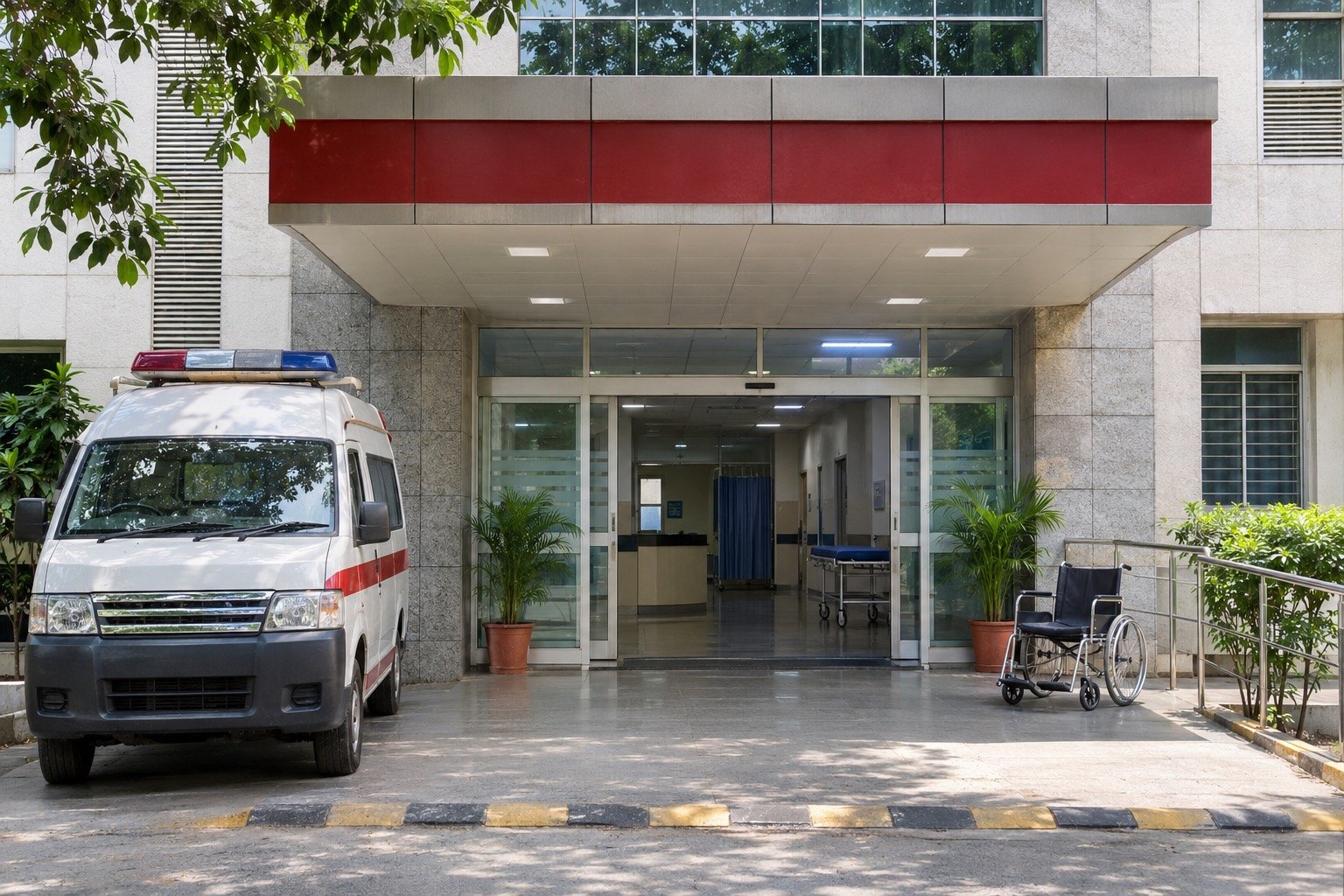
PM-RAHAT, run by the road transport ministry, pays hospitals to treat any motor-vehicle road accident victim without charge, up to ₹1.5 lakh for seven days from the crash. Hospitals are reimbursed from the Motor Vehicle Accident Fund. The National Medical Commission now wants government medical colleges inside the scheme's hospital network.
Syllabus: GS2 · Government Policies; GS2 · Welfare of Vulnerable Sections; GS2 · Health, Education & Human Resources
Why this matters for UPSC
GS2 welfare schemes and health: PM-RAHAT under the Motor Vehicles Act, 1988. Prelims can ask its ministry, cover and funding; Mains, golden-hour emergency care.
In short
PM-RAHAT is MoRTH's statutory scheme under the Motor Vehicles Act, 1988 that funds cashless treatment of road accident victims, so that money does not delay golden-hour care.
PM-RAHAT makes cost no excuse for delayed trauma care; its worth now rests on enrolling enough hospitals and prompt police authentication.
Why it matters
A motorcyclist hurt on a village road no longer needs cash, an insurance card or a place on a beneficiary list before a hospital starts treating the injuries. The hospital knows a public fund will pay it, so it has less reason to stall while relatives look for money. Bringing government medical colleges into the network adds more hospitals that a 112 operator can send an ambulance to. The larger issue is emergency care after road crashes: the first hour often decides whether a victim lives, and the scheme tries to take money out of that decision.
Prelims pointers
- The Compensation to Victims of Hit and Run Motor Accidents Scheme, in force since 1 April 2022, pays fixed sums: ₹2 lakh on death and ₹50,000 for grievous hurt.
- AB PM-JAY, a benefit-based insurance scheme, identifies its beneficiaries in advance; PM-RAHAT, a statutory scheme, takes precedence over other Central and State schemes.
- eDAR is the platform police use to report road accidents; it is integrated with the VAHAN portal, so it captures the offending vehicle's third-party insurance status.
- Hospitals record treatment, file claims and receive payment on the National Health Authority's TMS 2.0.
- Under PM-RAHAT, stabilisation care can run for up to a day when life is not at risk and up to two days when it is, subject to police response.
- Under PM-RAHAT, a District Road Safety Committee is chaired by the District Collector, District Magistrate or Deputy Commissioner.
Practise a UPSC-style question
With reference to the PM-RAHAT scheme, consider the following statements:
1. It is a statutory scheme framed under the Motor Vehicles Act, 1988.
2. It is framed and funded by the Ministry of Health and Family Welfare.
3. Being a statutory scheme, it takes precedence over any other Central or State-level scheme.
Which of the statements given above is/are correct?
- (a) 1 and 2 only
- (b) 2 and 3 only
- (c) 1 and 3 only
- (d) 1, 2 and 3
Show the answer
Answer: (c) 1 and 3 only
Answer: (c) 1 and 3 only. The scheme rests on the Motor Vehicles Act and overrides other schemes, but it belongs to MoRTH.
Statement 1: correct. PM-RAHAT is framed under Section 162 of the Motor Vehicles Act, 1988, which mandates it.
Statement 2: incorrect. The Ministry of Road Transport and Highways owns the scheme; the Health Ministry only sought the NMC's help to bring colleges in.
Statement 3: correct. MoRTH states that this statutory scheme takes precedence over any other Central or State-level scheme.
Eliminate: statement 2 is wrong, and options (a), (b) and (d) all contain it. Out: (a), (b), (d).
Trap: Swapped attribution. A health scheme looks like the Health Ministry's, but this one flows from transport law and sits with MoRTH.
Remember: PM-RAHAT = MoRTH + Motor Vehicles Act, 1988; NHA only runs the platform.
More Explainers
- New START's end: strategic arms control and the NPT's disarmament duty World & IR
- Gyan Bharatam Mission and the National Mission for Manuscripts National
- The Ahom kingdom and the Battle of Saraighat National
- How a State is renamed: Articles 3 and 4 Polity
- Radiation fog over north India and how it differs from smog Environment
- Submarine cables to India's islands: CANI, KLI and a second route Sci-Tech
- Mercury in cosmetics and the Minamata Convention on Mercury Environment
- How a High Court gets a permanent bench Polity
- Tholpavakoothu: Kerala's leather shadow-puppet theatre Miscellany
- BioE3 Policy and the Biotechnology Research and Innovation Council (BRIC) Sci-Tech
- Alchi Chokhor, Ladakh: the Buddhist monastic complex and its protection National
- The four Labour Codes: what they merged and what they changed Economy