
Left-Wing Extremism: the 2015 National Policy and Action Plan and its schemes
Why in news: A PIB explainer of 1 August 2026 says no district remains LWE-affected, after the 31 March 2026 target set in August 2024.
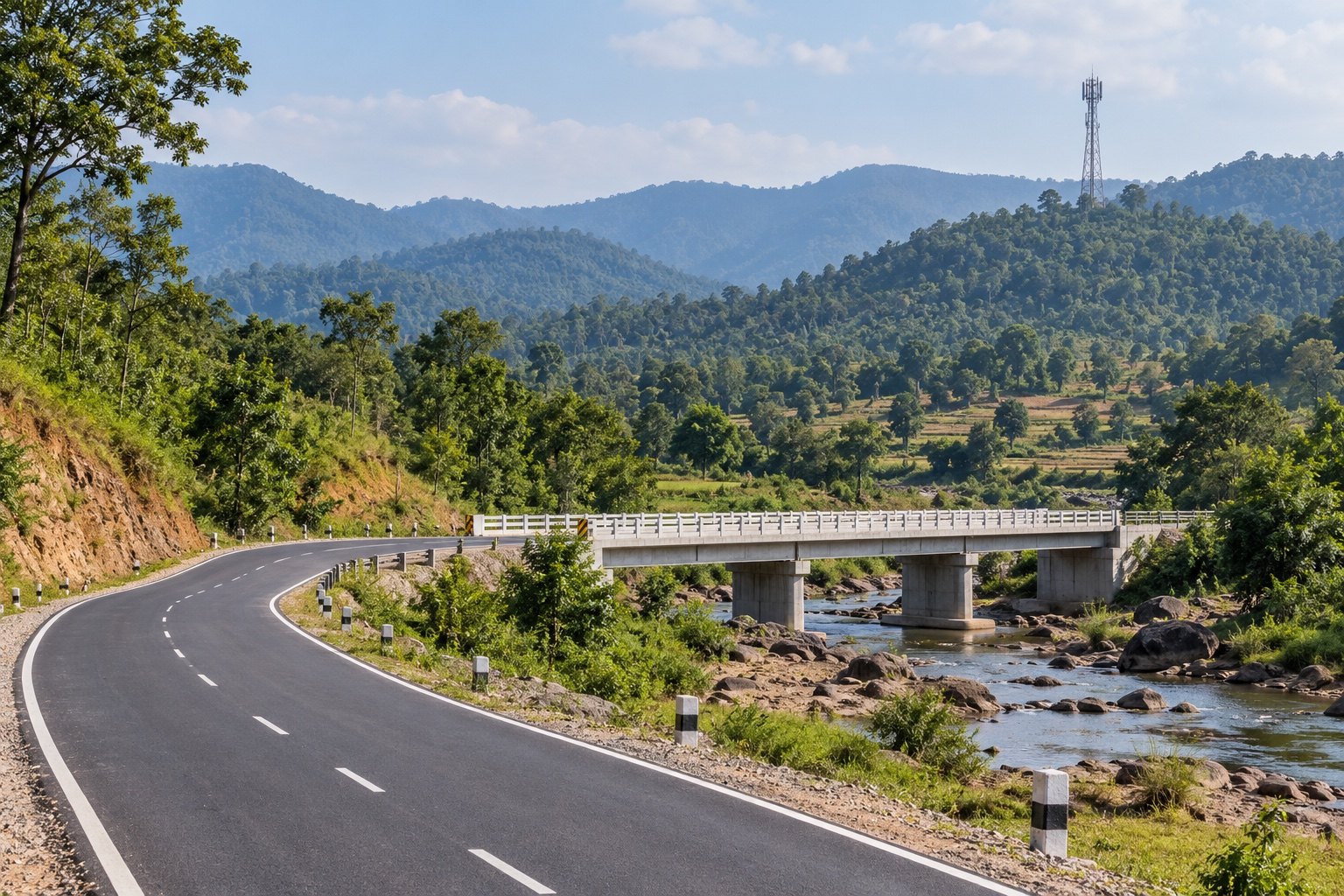
Left-Wing Extremism (LWE), or Naxalism, is an armed Maoist insurgency that began with the Naxalbari uprising in West Bengal in 1967. Since 2015, the National Policy and Action Plan has paired security operations with development and community rights. A PIB explainer of 1 August 2026 says no district now remains LWE-affected.
Syllabus: Prelims · Current Affairs & IR; GS2 · Federalism & Local Government; GS3 · Development & Extremism
Why this matters for UPSC
GS3 asks about linkages between development and the spread of extremism and the mandate of security forces. Prelims can ask what SRE, SIS and SCA fund and why policing is a State subject; Mains, whether security plus development ends an insurgency.
In short
Left-Wing Extremism (LWE) is an armed Maoist insurgency against the Indian state; the 2015 National Policy and Action Plan answers it with security, development and community rights together.
Security opened the door for roads and services; keeping freed districts at peace now rests on State policing, rights and services outlasting central funds.
Why it matters
For a family in a forest village of Bastar or West Singhbhum, the end of daily violence decides whether a road, a school, a bank or a mobile signal ever arrives. The policy's wager is that security forces clear the way for services, and that services then keep young people from joining armed groups. That is why districts freed of violence keep extra money and surveillance for some years instead of being dropped at once. The larger issue is federal: States run the police, yet central forces and money shaped the outcome. The test now is whether ordinary State administration can hold these areas once the special support ends.
Prelims pointers
- Public order (Entry 1) and police (Entry 2) are in List II, the State List, of the Seventh Schedule; the Union supplements, not replaces, State action against LWE.
- SRE, SIS, SCA, ACALWEMS and the Civic Action Programme run as sub-schemes of the umbrella scheme Modernisation of Police Forces (PIB document, April 2025).
- SRE also reimburses spending on community policing, village defence committees and publicity material in LWE-affected districts.
- Road Requirement Plan-I is implemented by the Ministry of Road Transport and Highways; RCPLWEA, launched in 2016, covers 44 worst-hit districts and some adjoining ones in 9 States.
- RCPLWEA has twin aims: smoother anti-LWE operations by security forces and socio-economic development of the area.
- The Tribal Youth Exchange Programme, run under the Media Plan, takes tribal youth from these districts on week-long visits across India.
- Under SCA, most affected districts and Districts of Concern got Rs 30 crore and Rs 10 crore respectively (PIB document, April 2025).
Practise a UPSC-style question
With reference to the schemes against Left-Wing Extremism, consider the following statements:
1. The Security Related Expenditure scheme reimburses States for the rehabilitation of surrendered LWE cadres.
2. Fortified police stations in LWE areas are built with funds from the Special Central Assistance scheme.
3. The Special Central Assistance scheme fills critical gaps in public infrastructure in the most LWE-affected districts.
Which of the statements given above is/are correct?
- (a) 1 and 2 only
- (b) 2 and 3 only
- (c) 1 and 3 only
- (d) 1, 2 and 3
Show the answer
Answer: (c) 1 and 3 only
Answer: (c) 1 and 3 only. Fortified police stations come under the Special Infrastructure Scheme, not SCA.
Statement 1: correct. Under SRE the Centre reimburses States' spending on surrendered cadres, along with training, operations and ex gratia payments.
Statement 2: incorrect. The Special Infrastructure Scheme funds fortified police stations, Special Forces and Special Intelligence Branches; SCA does not.
Statement 3: correct. SCA, approved in 2017, pays for urgent gaps in public infrastructure and services in the most affected districts.
Eliminate: Statement 2 pins police buildings on the development scheme, so it is wrong. Out: (a), (b), (d).
Trap: Swapped attribution. Both SIS and SCA are sub-schemes of Modernisation of Police Forces, so a student can mix up which one builds police stations.
Remember: SRE reimburses, SIS builds police strength, SCA fills development gaps.
More Explainers
- Who is an accredited journalist? PIB rules, Press Council, PRP Act Polity
- Financial Stability and Development Council: who sits on it, what it does Economy
- NATO: its 32 members, Articles 4 and 5, and the eastern flank World & IR
- Special Executive Magistrates under BNSS section 15: appointment and powers Polity
- Indo-Pacific Oceans Initiative (IPOI): India's seven-pillar plan for the Indo-Pacific World & IR
- Gig and platform workers under the Code on Social Security, 2020 Economy
- Bureau of Indian Standards Act, 2016: Standard Mark, QCOs and hallmarking Economy
- Kittur revolt of 1824: early resistance to the East India Company National
- Polio eradication: wild and vaccine-derived poliovirus, OPV and IPV, India's certification Sci-Tech
- International law and the UN Charter: sources, force and the ICJ World & IR
- Himalayan earthquakes and India's seismic zone map Environment
- Amur falcon: migration, protection and community conservation Environment