
LeadIT and the India-Sweden Industry Transition Partnership
Why in news: On 12 November 2026 the Environment Minister met Indian LeadIT members ahead of COP31, where LeadIT 3.0 is due on 17 November.
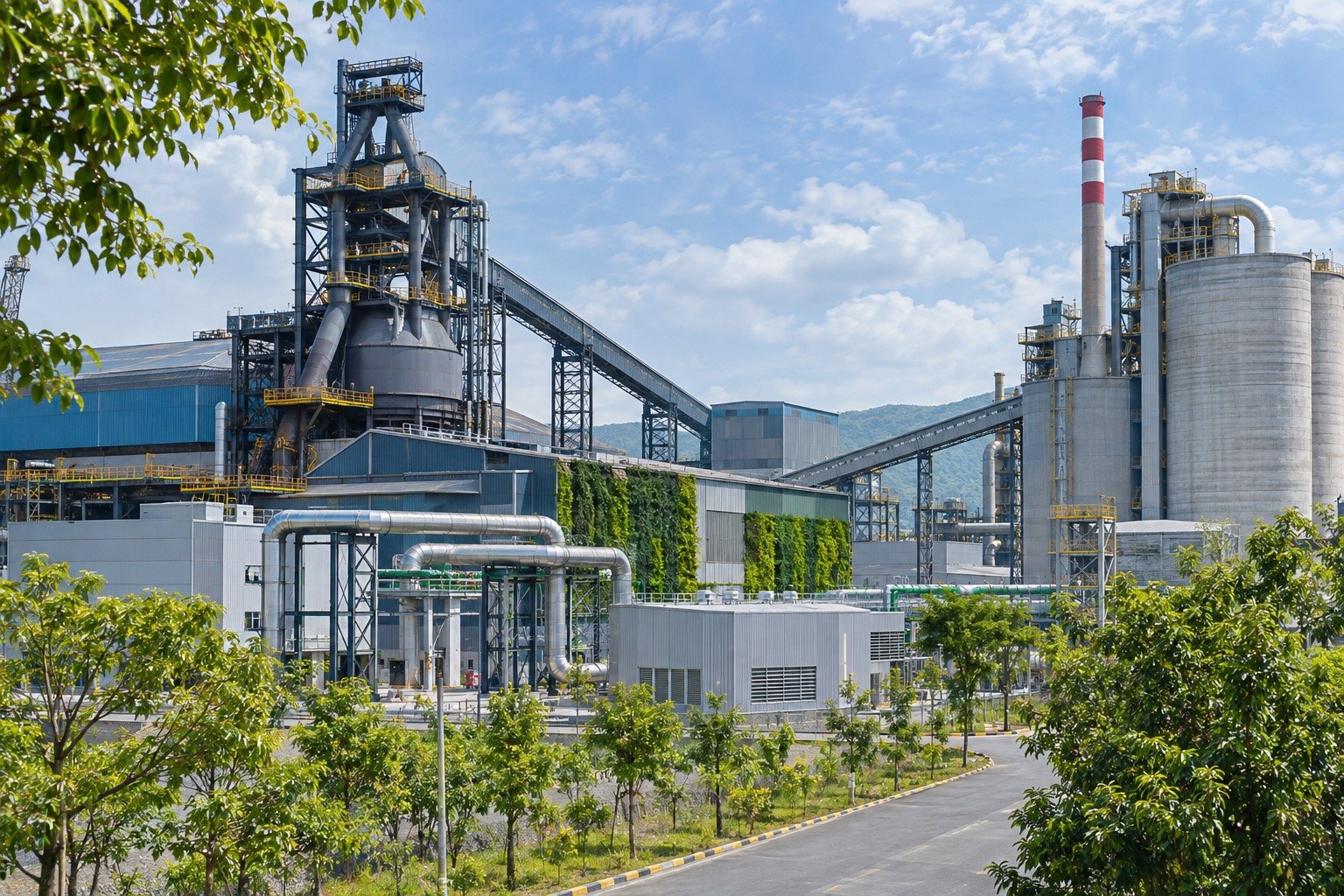
The Leadership Group for Industry Transition (LeadIT) is a public-private grouping that India and Sweden started in 2019 to cut emissions from heavy industry such as steel and cement. Its second phase runs from 2024 to 2026. The Union Environment Minister met its Indian members on 12 November 2026, before COP31 at Antalya.
Syllabus: Prelims · Environment & Ecology; GS3 · Environment & Conservation; GS2 · Groupings & Agreements
Why this matters for UPSC
GS3 environment and GS2 international groupings: LeadIT and India's climate commitments. Prelims can ask its founders, pillars and goal; Mains, decarbonising hard-to-abate industry.
In short
LeadIT is a public-private grouping, launched by India and Sweden in 2019, that helps governments and companies decarbonise heavy, hard-to-abate industry such as steel and cement.
LeadIT's worth will rest on turning dialogue into funded projects, so that India's steel and cement grow without locking in high emissions.
Why it matters
Steel, cement and aluminium plants supply the roads, homes and factories India is still building. When LeadIT began, cutting their emissions was widely thought unworkable, and cleaner processes still cost more than the old ones. A steel or cement company that wants to switch therefore needs partners to test whether a new process works, help to prepare early projects and money to cover the extra cost. LeadIT gives such firms a place to find that help. For India, this decides whether heavy industry can keep growing for jobs and housing while the country meets its climate promises. It also tests whether rich countries will share technology and money with developing ones, a long-running fight in climate talks.
Prelims pointers
- LeadIT's mission statement for 2024-26 aims at net-zero industry emissions by 2050, with industry aligned to the Paris Agreement by 2030.
- The three pillars of LeadIT 2.0 are a global forum for dialogue, technology transfer and co-development, and industry transition partnerships.
- LeadIT is a grouping of governments and companies on heavy industry; India's updated NDC is a national target filed with the UNFCCC.
- India submitted its Long-Term Low Emission Development Strategy (LT-LEDS) to the UNFCCC at COP27 at Sharm el-Sheikh, Egypt, in November 2022.
- For industry, the LT-LEDS relies on the Perform, Achieve and Trade (PAT) scheme, the National Hydrogen Mission, electrification and material efficiency.
- India's updated NDC, approved by the Union Cabinet in August 2022, aims to cut the emissions intensity of GDP by 45% by 2030 from 2005 levels.
- The updated NDC also seeks about 50% of installed electric power capacity from non-fossil sources by 2030; India's net-zero year is 2070.
Practise a UPSC-style question
With reference to the Leadership Group for Industry Transition (LeadIT), consider the following statements:
1. It was launched by India and Sweden at COP25 in Madrid in 2019.
2. The World Economic Forum supported its launch.
3. Its members include both national governments and private companies.
Which of the statements given above is/are correct?
- (a) 1 and 2 only
- (b) 2 and 3 only
- (c) 1 and 3 only
- (d) 1, 2 and 3
Show the answer
Answer: (b) 2 and 3 only
Answer: (b) 2 and 3 only. LeadIT began at a UN summit, not a COP, and it has company members.
Statement 1: incorrect. LeadIT began at the 2019 UN Climate Action Summit in New York; COP25 played no part in its launch.
Statement 2: correct. PIB records that the launch had the support of the World Economic Forum.
Statement 3: correct. It is a public-private partnership; PIB counted 19 countries and 33 companies as members in November 2026.
Eliminate: statement 1 names the wrong forum, while statements 2 and 3 hold. Out: (a), (c), (d).
Trap: Swapped attribution. The year 2019 is right, which makes a COP held that year look plausible as the launch venue.
Remember: LeadIT: India + Sweden, UN Climate Action Summit, New York, 2019.
More Explainers
- CDRI: India's coalition for disaster-resilient infrastructure Environment
- Pichwai painting of Nathdwara, Rajasthan National
- Kerch Strait: the sea link between the Black Sea and Azov World & IR
- Wind energy in India: potential, offshore wind and the policy push Economy
- Pallikaranai marsh: a Chennai Ramsar site and its zone of influence Environment
- Andaman cobra: India's only island cobra, Endangered and endemic Environment
- International Coconut Community and India's Coconut Development Board World & IR
- Real Estate (Regulation and Development) Act, 2016: how it protects homebuyers Polity
- Open correctional institutions and the Supreme Court's 2026 directions Polity
- ICTP, Trieste: the UNESCO-IAEA centre for physics and mathematics Sci-Tech
- PJ.2.1 and how new Covid variants are classified and tracked Sci-Tech
- Berlin Conference of 1884-85 and the rules for colonising Africa World & IR