
Maharashtra Uniform Civil Code committee opens district-wise public hearings
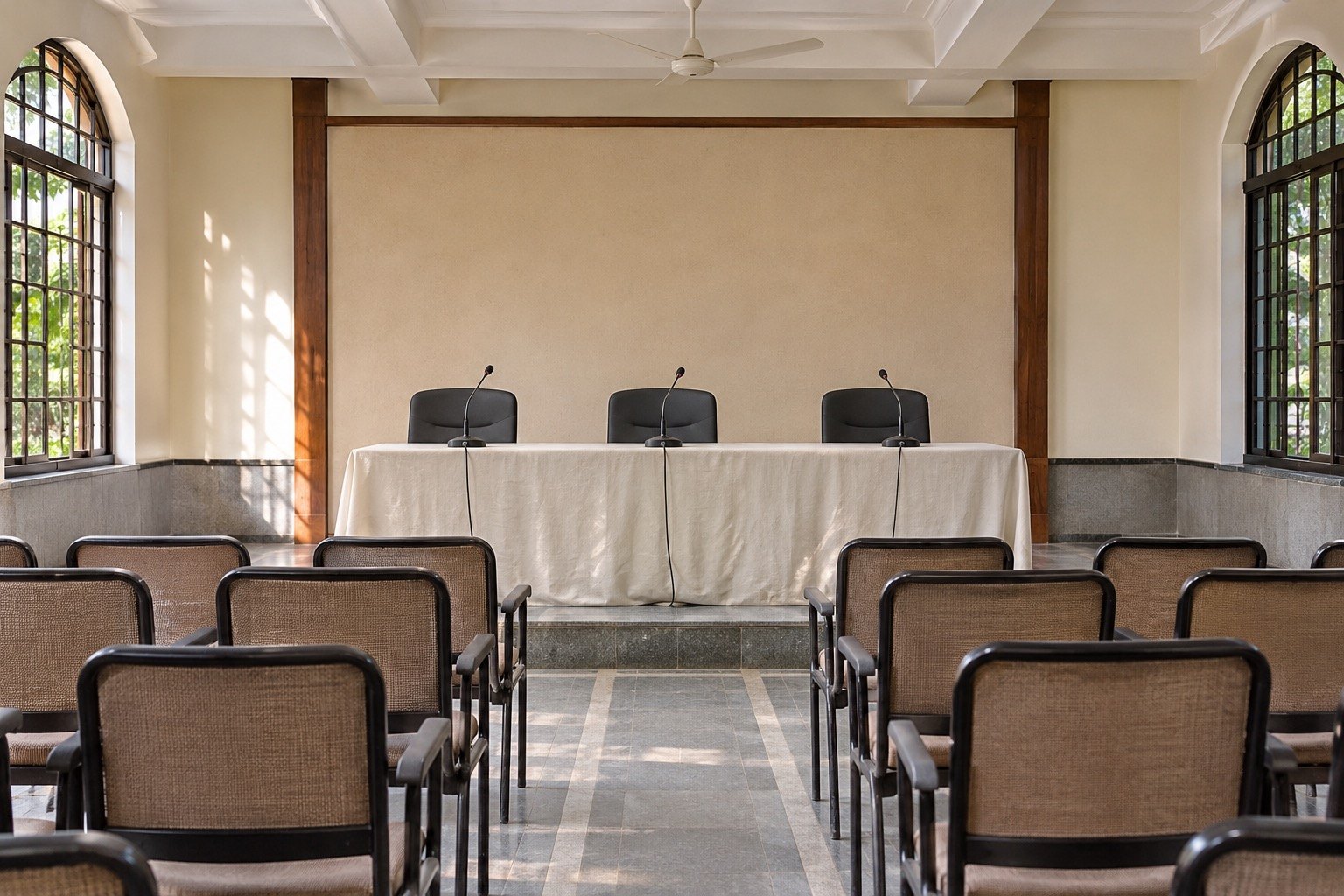
Maharashtra's committee on a proposed Uniform Civil Code, chaired by Justice Ranjana Prakash Desai, a retired Supreme Court judge, opened public hearings at Konkan Bhavan, Navi Mumbai, on 21 November. Its district-wise consultations seek suggestions and objections on marriage, divorce, live-in relationships, maintenance, guardianship and inheritance. Views ranged from calls for one common law to objections on religious grounds.
Syllabus: GS2 · Constitution; GS2 · Federalism & Local Government; Prelims · Polity & Governance
Why this matters for UPSC
GS2 polity: Article 44, the Directive Principles and State family laws. Prelims can ask justiciability and Uttarakhand's Code; Mains, uniformity against religious and tribal diversity.
Why it matters
A Banjara woman married by community custom, a couple sharing a home without marrying, or a transgender person looked after by friends could each find their legal standing changed by a State family code. Such a code decides who counts as a spouse or an heir, who may claim support after a break-up, and whether a relationship must be reported to an official. Public hearings are the stage at which these groups can press their case, and several asked for a separate study, a separate hearing or a published draft. The larger question is how far a State can pursue equal family rights without overriding religious freedom and tribal custom.
Prelims pointers
- Article 44 directs the State to endeavour to secure a uniform civil code for citizens throughout the territory of India.
- Part III holds the Fundamental Rights; the Directive Principles of Part IV are not enforceable by any court, though Article 37 makes applying them a duty in law-making.
- Article 36 gives 'the State' in Part IV the same meaning as in Part III, so the directive addresses State governments too.
- The Uniform Civil Code, Uttarakhand, 2024 does not apply to Scheduled Tribes or to groups whose customary rights Part XXI of the Constitution protects.
- Under Uttarakhand's Code, a child of a live-in relationship is legitimate, and live-in registration is only for record.
- Uttarakhand's Code extends to the State's residents living outside it and makes marriage registration compulsory after its commencement.
Practise a UPSC-style question
With reference to the Constitution of India, consider the following statements:
1. Article 44 asks the State to endeavour to secure a uniform civil code for citizens throughout the territory of India.
2. Article 37 declares the principles of Part IV fundamental in the governance of the country.
Which of the statements given above is/are correct?
- (a) 1 only
- (b) 2 only
- (c) Both 1 and 2
- (d) Neither 1 nor 2
Show the answer
Answer: (c) Both 1 and 2
Answer: (c) Both 1 and 2. Article 44 sets the goal and Article 37 sets the status of all Part IV principles.
Statement 1: correct. Article 44 says the State shall endeavour to secure a uniform civil code for citizens throughout the territory of India.
Statement 2: correct. Article 37 calls these principles fundamental in governance, though no court can enforce them, and makes it the State's duty to apply them in making laws.
Eliminate: statement 1 is the text of Article 44 itself, so it stands. Out: (b), (d).
Eliminate: statement 2 restates Article 37's own words. Out: (a).
Trap: Wrong scope. A student who knows Directive Principles are non-justiciable may wrongly think the Constitution calls them unimportant; Article 37 says the opposite.
Remember: Directive Principles are non-justiciable yet fundamental in governance (Article 37).
More from the 22 November 2026 edition
- Himachal Assembly passes Bill: 80% industry jobs for residents, single window Polity
- India joins OceanEye alliance for GOOS, pledges to double Indian Ocean network Environment
- NCB and US DEA disrupt transnational drug network in Operation Monsoon Thunder National
- Karnataka to renew ST bid for Kadugolla, Hattigolla after five RGI rejections Polity
- IRDAI fines Star Health Rs 2 crore for breaking claim-settlement rules Economy
- Manipur's Chandel liquor deaths: district advisory, State announces enquiry Polity
- NMCG approves two Yamuna sewage plants in Delhi under Namami Gange Environment
- US, China, Russia Shenzhen declaration: ICC limits, nuclear-risk dialogue, UN reform World & IR