
US, China, Russia Shenzhen declaration: ICC limits, nuclear-risk dialogue, UN reform
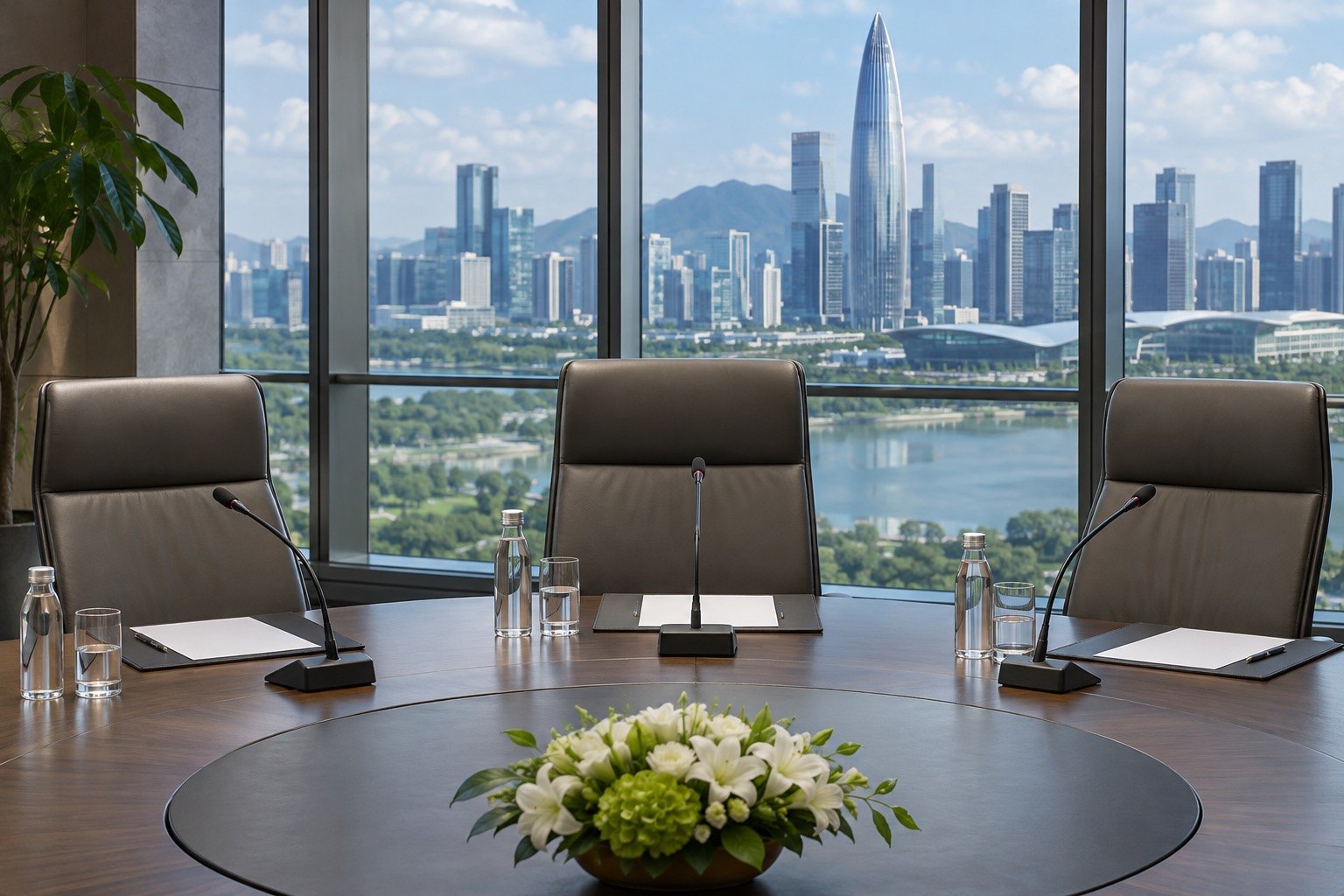
The leaders of the United States, China and Russia met together for the first time on 19 November 2026, at Shenzhen in China. Their joint declaration pledges UN reform and more refined-oil output. It backs immunity for State officials against the International Criminal Court (ICC). The three will talk on cutting nuclear risks. They signed no arms-control deal.
Syllabus: Prelims · Current Affairs & IR; GS2 · Groupings & Agreements; GS2 · International Institutions
Why this matters for UPSC
GS2 international relations: global groupings, the ICC and the UN Security Council. Prelims can ask Rome Statute rules and the P5; Mains, immunity against accountability.
Why it matters
Think of a minister accused of war crimes who travels abroad. Under the ICC's rule, his office gives him no cover. Three of the most powerful States now say such officials deserve immunity and that the Court should hold back. If big powers press that view, victims of mass crimes may find fewer doors open to justice, and the Court may lose cooperation from countries it needs. The nuclear pledge points the other way: a dialogue on nuclear dangers, once it begins, could lower the chance of an accident turning into war. For oil-importing countries such as India, a promise of more refined fuel and steady energy flows bears on fuel prices at home.
Prelims pointers
- Article 27 of the Rome Statute: holding office as Head of State, minister, legislator or official exempts no one from criminal responsibility, and immunities do not bar the Court.
- Under Article 13 of the Rome Statute, a case reaches the ICC through a State Party's referral, a UN Security Council referral under Chapter VII, or the Prosecutor's own investigation.
- Under Article 12, joining the Rome Statute means accepting the Court's jurisdiction; a non-party State can accept it for a particular crime by a declaration lodged with the Registrar.
- Article 3 places the ICC's seat at The Hague in the Netherlands, though the Court may sit elsewhere when it considers it desirable.
- The Statute enters into force after the 60th instrument of ratification, acceptance, approval or accession is deposited with the UN Secretary-General (Article 126).
- The ICC tries persons for the gravest international crimes; the International Court of Justice, the UN's principal judicial organ, hears cases in which only States are parties.
- In the 2022 P5 statement, China, France, Russia, the UK and the US recommitted to Article VI of the Nuclear Non-Proliferation Treaty (NPT) on disarmament negotiations.
Practise a UPSC-style question
With reference to the Rome Statute of the International Criminal Court, consider the following statements:
1. It was adopted in 1998 and places the seat of the Court at The Hague in the Netherlands.
2. It shields a serving Head of State from the Court's jurisdiction for as long as that person holds office.
3. It makes the Court complementary to national criminal jurisdictions.
Which of the statements given above is/are correct?
- (a) 1 and 2 only
- (b) 2 and 3 only
- (c) 1 and 3 only
- (d) 1, 2 and 3
Show the answer
Answer: (c) 1 and 3 only
Answer: (c) 1 and 3 only. The Statute denies any immunity based on official post.
Statement 1: correct. The Rome Statute was done at Rome on 17 July 1998, and its Article 3 fixes the seat at The Hague.
Statement 2: incorrect. Article 27 says official capacity as a Head of State never exempts a person from criminal responsibility, and immunities do not bar the Court.
Statement 3: correct. Article 1 makes the ICC a permanent institution, complementary to national criminal jurisdictions.
Eliminate: Statement 2 is false under Article 27. Out: (a), (b), (d).
Trap: Sounds right. Heads of State do enjoy immunities in many settings, so a shield before the ICC feels plausible; the Statute removes it.
Remember: Rome Statute, 1998; seat The Hague; Article 27 removes official-capacity immunity.
More from the 22 November 2026 edition
- Himachal Assembly passes Bill: 80% industry jobs for residents, single window Polity
- India joins OceanEye alliance for GOOS, pledges to double Indian Ocean network Environment
- NCB and US DEA disrupt transnational drug network in Operation Monsoon Thunder National
- Karnataka to renew ST bid for Kadugolla, Hattigolla after five RGI rejections Polity
- Maharashtra Uniform Civil Code committee opens district-wise public hearings Polity
- IRDAI fines Star Health Rs 2 crore for breaking claim-settlement rules Economy
- Manipur's Chandel liquor deaths: district advisory, State announces enquiry Polity
- NMCG approves two Yamuna sewage plants in Delhi under Namami Gange Environment