
Himachal Assembly passes Bill: 80% industry jobs for residents, single window
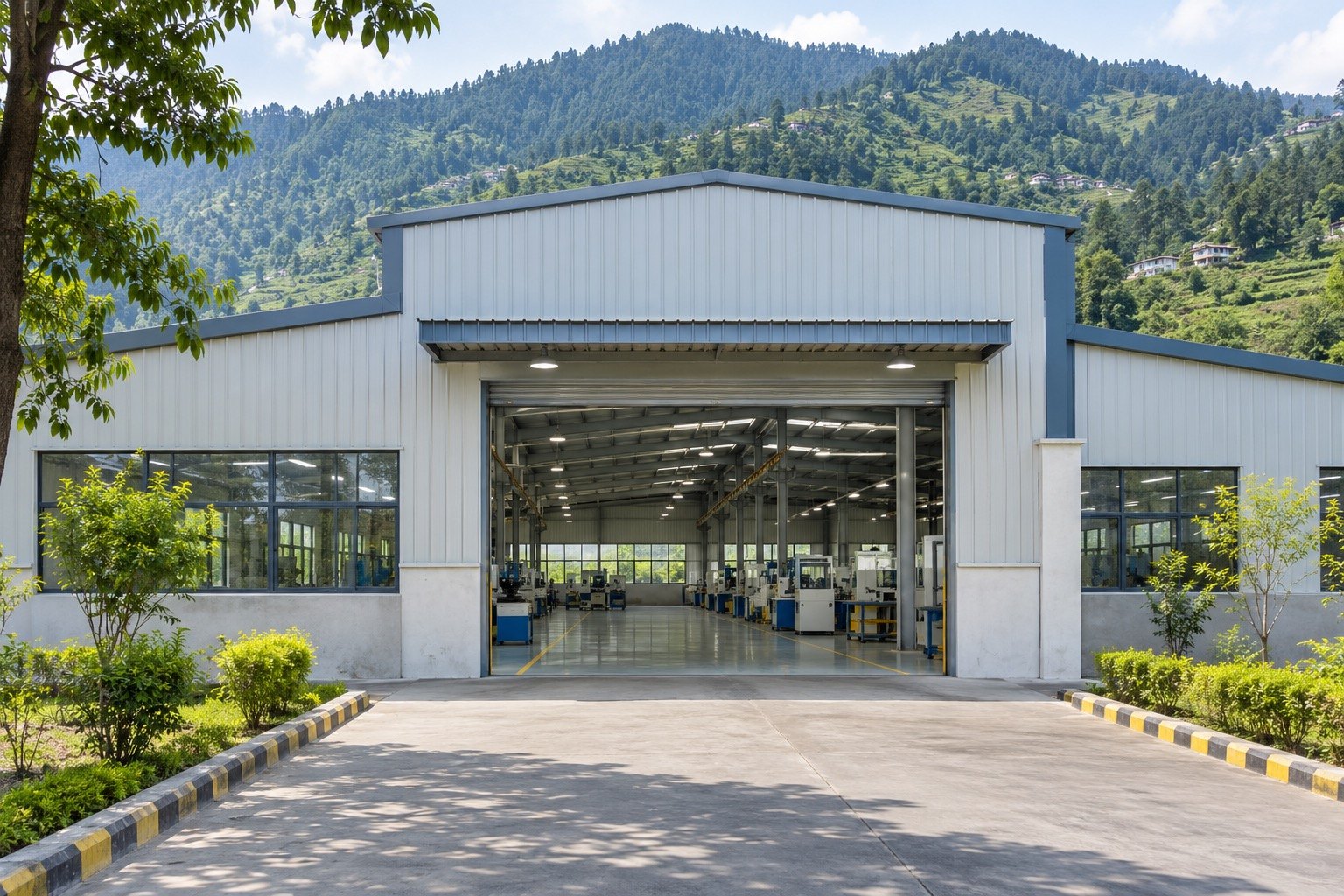
The Himachal Pradesh Legislative Assembly on 21 November 2026 passed a Bill requiring industries in the State to reserve 80% of jobs for residents. The Himachal Pradesh Investment Promotion and Facilitation Bill, 2026 also creates a single-window clearance authority. The Chief Minister will head it. The Bill now needs the Governor's assent.
Syllabus: GS2 · Constitution; GS2 · Federalism & Local Government; GS2 · Parliament & State Legislatures
Why this matters for UPSC
GS2 polity: Article 16, Article 35, Article 200 and State Bills. Prelims can ask who may prescribe residence for jobs; Mains, local quotas in private industry.
Why it matters
A young job-seeker in Himachal Pradesh could gain first claim on factory jobs near home if the Bill becomes law. An investor weighing a plant in the State would face a hiring rule alongside faster, time-bound clearances, and may compare that cost with States that set no such rule. The larger question is whether a State may steer private hiring by where a person lives. Public jobs carry a clear constitutional limit on residence conditions; private jobs are outside that limit, so any challenge would turn on other rights, such as the freedom to carry on business. The answer will shape how far States can use hiring rules to keep the gains of industry at home.
Prelims pointers
- Article 16(2) bars making a citizen ineligible for State employment on grounds only of religion, race, caste, sex, descent, place of birth or residence.
- Article 16(3) lets Parliament prescribe a residence requirement for classes of posts under a State or Union territory Government or a local or other authority within it.
- Under Article 35, Parliament has, and a State Legislature does not have, power to make laws on matters covered by Article 16(3).
- Article 16(3) lets Parliament alone set residence conditions; Article 16(4) lets the State reserve posts for a backward class not adequately represented in its services.
- Article 19(1)(g) gives all citizens the right to practise any profession or to carry on any occupation, trade or business.
- Under Article 200, a Governor may not return a Money Bill for reconsideration, and must reserve for the President a Bill endangering the High Court's position.
Practise a UPSC-style question
With reference to residence requirements for public employment under the Constitution of India, consider the following statements:
1. Parliament may by law prescribe residence within a State as a condition for a class of posts under that State's Government.
2. A State Legislature may by law prescribe residence within the State as a condition for posts under its own Government.
Which of the statements given above is/are correct?
- (a) 1 only
- (b) 2 only
- (c) Both 1 and 2
- (d) Neither 1 nor 2
Show the answer
Answer: (a) 1 only
Answer: (a) 1 only. Article 16(3) gives the residence power to Parliament, and Article 35 keeps it from State Legislatures.
Statement 1: correct. Article 16(3) allows Parliament to set a residence condition, within a State or Union territory, for classes of posts under its Government or local authorities.
Statement 2: incorrect. Article 35 vests in Parliament, and withholds from a State Legislature, the power to make laws on matters under Article 16(3).
Eliminate: statement 2 gives a State Legislature a power that Article 35 denies it. Out: (b), (c).
Eliminate: statement 1 is what Article 16(3) provides. Out: (d).
Trap: Swapped attribution. The residence power exists, but statement 2 pins it on the State Legislature in place of Parliament.
Remember: Residence conditions for public jobs: Parliament alone, under Article 16(3) read with Article 35.
More from the 22 November 2026 edition
- India joins OceanEye alliance for GOOS, pledges to double Indian Ocean network Environment
- NCB and US DEA disrupt transnational drug network in Operation Monsoon Thunder National
- Karnataka to renew ST bid for Kadugolla, Hattigolla after five RGI rejections Polity
- Maharashtra Uniform Civil Code committee opens district-wise public hearings Polity
- IRDAI fines Star Health Rs 2 crore for breaking claim-settlement rules Economy
- Manipur's Chandel liquor deaths: district advisory, State announces enquiry Polity
- NMCG approves two Yamuna sewage plants in Delhi under Namami Gange Environment
- US, China, Russia Shenzhen declaration: ICC limits, nuclear-risk dialogue, UN reform World & IR