
Karnataka to renew ST bid for Kadugolla, Hattigolla after five RGI rejections
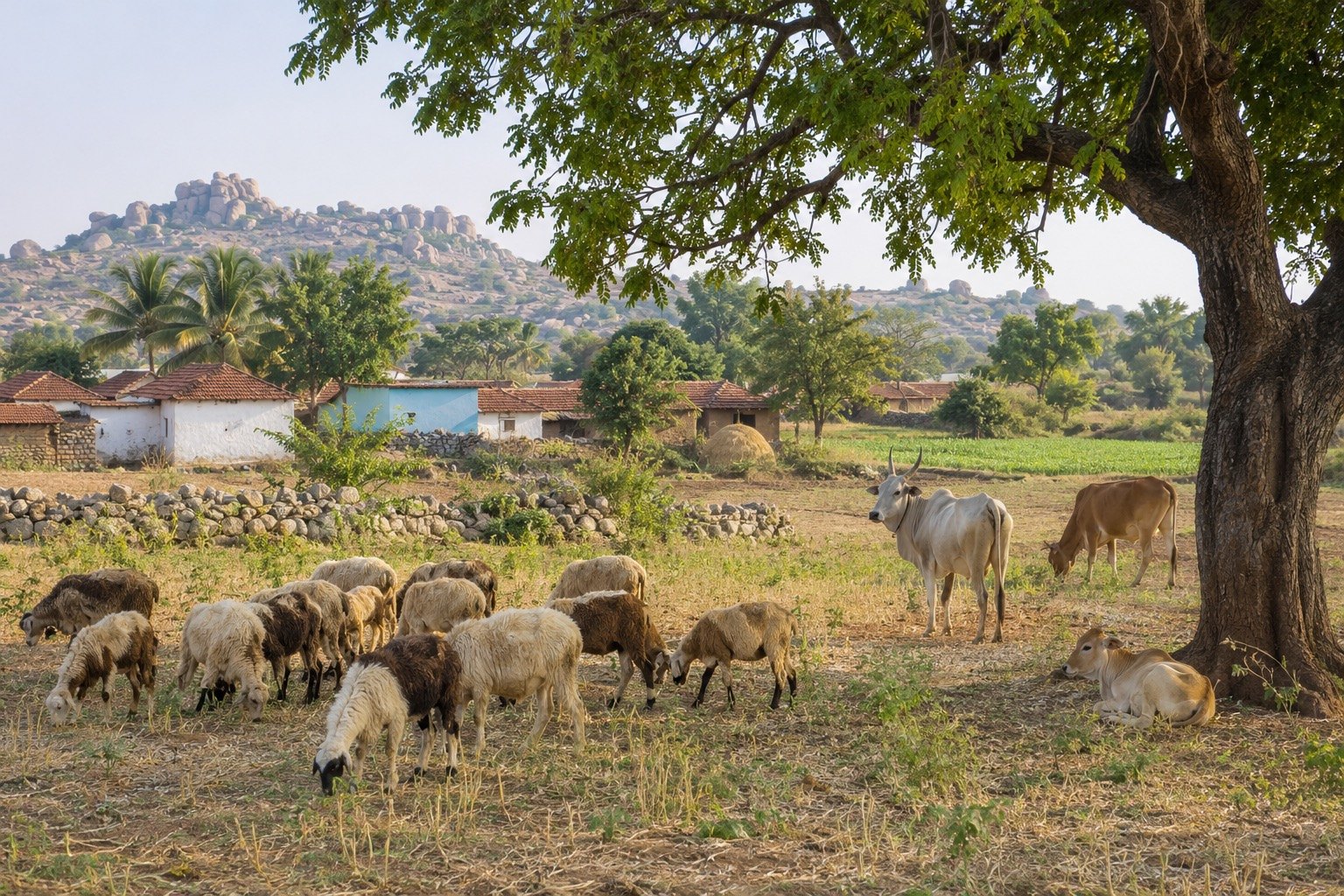
Karnataka's Cabinet decided on 19 November 2026 to renew its bid to have the Kadugolla (Adavigolla) and Hattigolla communities listed as Scheduled Tribes (STs). The Office of the Registrar General of India has declined the proposal five times since 2017. The main objection was a lack of new evidence, an official statement says. CMDR Dharwad will run an ethnographic study.
Syllabus: GS2 · Constitution; Prelims · Polity & Governance; GS1 · Indian Society & Diversity
Why this matters for UPSC
GS2 polity: Article 342 and the Scheduled Tribes list. Prelims can ask who notifies and who amends it; Mains, the RGI's gatekeeping role.
Why it matters
A Kadugolla student in Karnataka gains nothing from the Cabinet's decision until Parliament passes a law. If the community is listed, its members can use central schemes meant for tribes, such as post-matric scholarships and hostels, and claim reserved seats in jobs and colleges. Each rejection keeps that door shut, so the quality of the evidence decides the outcome. The State has now chosen to gather fresh field research instead of resending old papers. The larger question is how India decides who counts as a tribe: through a central, expert-led test, with the final say left to Parliament, while States carry the burden of proof.
Prelims pointers
- Article 342(1): the President, after consulting the Governor, specifies a State's Scheduled Tribes by public notification.
- Article 342(2): only a law of Parliament can include or exclude a community; a notified list cannot be varied by a later notification.
- Article 341 covers Scheduled Castes and can include races or tribes; Article 342 covers only tribes or tribal communities, or groups within them.
- The modalities need concurrence of the State Government or UT Administration, the RGI and the NCST; a case any of them does not support is rejected.
- The Lokur Committee (1965) looked for primitive traits, distinctive culture, geographical isolation, shyness of contact with the community at large, and backwardness.
Practise a UPSC-style question
With reference to the Scheduled Tribes under the Constitution of India, consider the following statements:
1. Under Article 342, the President specifies a State's Scheduled Tribes after consultation with the Legislative Assembly of that State.
2. Article 366(25) defines Scheduled Tribes as the communities deemed to be Scheduled Tribes under Article 341.
Which of the statements given above is/are correct?
- (a) 1 only
- (b) 2 only
- (c) Both 1 and 2
- (d) Neither 1 nor 2
Show the answer
Answer: (d) Neither 1 nor 2
Answer: (d) Neither 1 nor 2. Both statements pin the right provision on the wrong body or Article.
Statement 1: incorrect. Article 342(1) requires the President to consult the Governor of the State, not its Legislative Assembly, before notifying the Scheduled Tribes.
Statement 2: incorrect. Article 366(25) refers to Article 342; Article 341 is the provision for Scheduled Castes.
Eliminate: statement 1 is wrong because the Governor is the one consulted. Out: (a), (c).
Eliminate: statement 2 is wrong because the definition points to Article 342. Out: (b).
Trap: Swapped attribution. Each statement keeps the real mechanism but swaps the Governor for the Assembly, and Article 342 for its neighbour Article 341.
Remember: Article 342 for Scheduled Tribes, Article 341 for Scheduled Castes; the Governor is consulted.
More from the 22 November 2026 edition
- Himachal Assembly passes Bill: 80% industry jobs for residents, single window Polity
- India joins OceanEye alliance for GOOS, pledges to double Indian Ocean network Environment
- NCB and US DEA disrupt transnational drug network in Operation Monsoon Thunder National
- Maharashtra Uniform Civil Code committee opens district-wise public hearings Polity
- IRDAI fines Star Health Rs 2 crore for breaking claim-settlement rules Economy
- Manipur's Chandel liquor deaths: district advisory, State announces enquiry Polity
- NMCG approves two Yamuna sewage plants in Delhi under Namami Gange Environment
- US, China, Russia Shenzhen declaration: ICC limits, nuclear-risk dialogue, UN reform World & IR