
India joins OceanEye alliance for GOOS, pledges to double Indian Ocean network
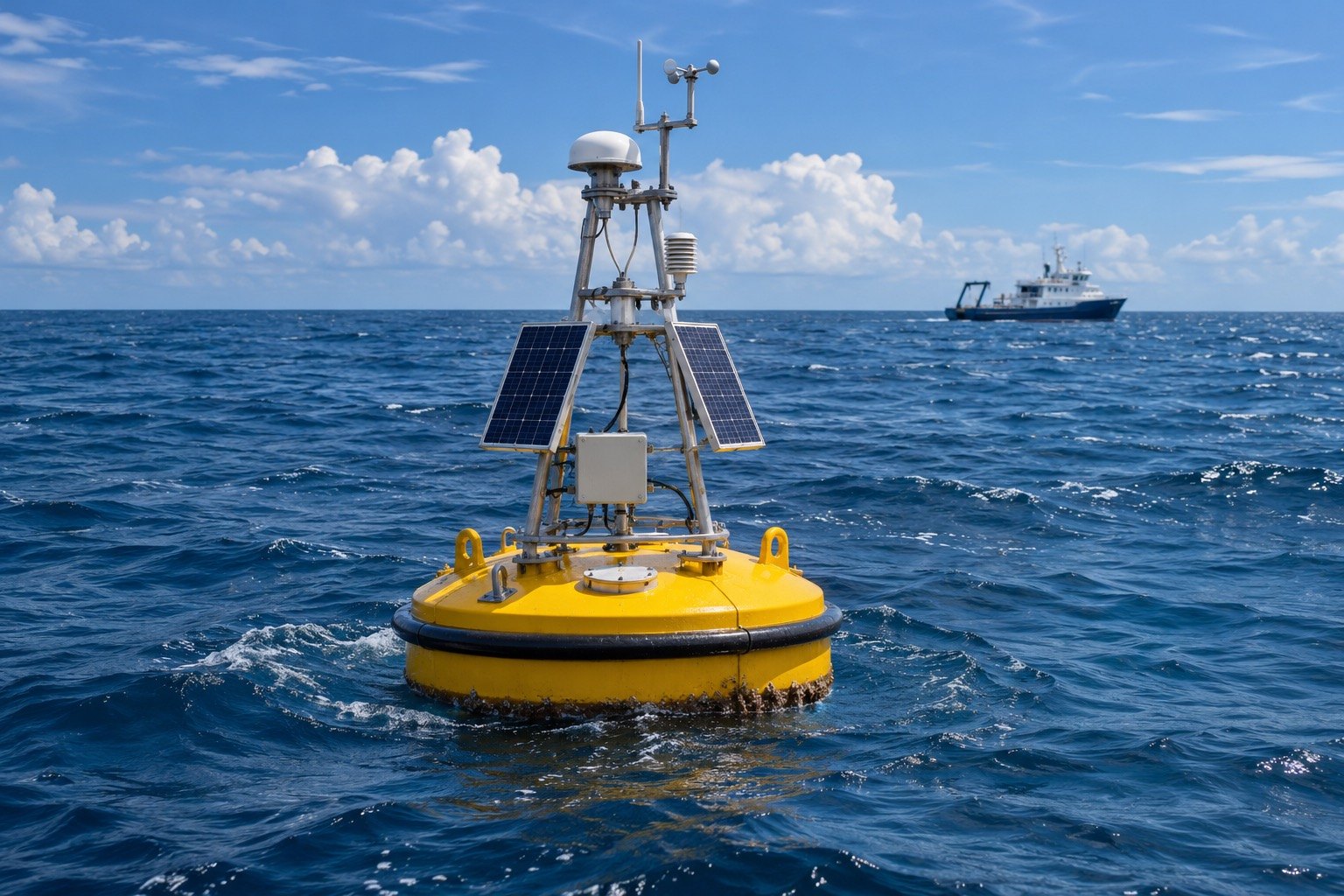
India joined the OceanEye International Alliance for GOOS, the Global Ocean Observing System, on 21 November 2026. The step came at a COP31 side event in Antalya, Turkiye. The Indian National Centre for Ocean Information Services (INCOIS) announced it with a pledge to double India's ocean observation network across the Indian Ocean region. Albania and MBARI also joined.
Syllabus: Prelims · Environment & Ecology; GS3 · Disaster Management; GS2 · International Institutions
Why this matters for UPSC
GS3 disaster management and GS2 international bodies: GOOS, UNESCO's IOC and INCOIS. Prelims can ask who leads GOOS and INCOIS's Ministry; Mains, ocean data in early warning.
Why it matters
A fisher leaving the Indian coast relies on INCOIS for forecasts of waves and currents and for advice on where fish gather. Those forecasts are only as good as the readings of the sea behind them. More observations in thinly measured parts of the Indian Ocean can make forecasts, storm-surge alerts and tsunami warnings sharper. Membership of the alliance ties India to a pooled global system meant to keep ocean data open, so readings taken by other countries also reach Indian forecasters. India, in turn, has offered to help poorer and small island states build their own observation and warning systems, which widens its role as a regional provider of ocean services.
Prelims pointers
- GOOS is led by UNESCO's Intergovernmental Oceanographic Commission (IOC); the World Meteorological Organization, UNEP and the International Science Council are co-sponsors, not leads.
- INCOIS, a unit of the Ministry of Earth Sciences' Earth System Science Organisation (ESSO), was set up in 1999 as an autonomous body.
- The IOC of UNESCO designated INCOIS's Indian Tsunami Early Warning Centre a Regional Tsunami Service Provider for countries of the Indian Ocean Rim.
- INCOIS serves as the Indian Ocean's Regional Argo Data Centre and is the National Oceanographic Data Centre designated by UNESCO's IOC/IODE.
- INCOIS issues short-term (3 to 7 day) Ocean State Forecasts of waves, currents and sea surface temperature to fishers, shipping, the Navy and the Coast Guard.
- INCOIS supplies ocean forecasts and information to member countries of RIMES, a multi-hazard early warning system serving Africa and Asia.
Practise a UPSC-style question
With reference to the Global Ocean Observing System (GOOS), consider the following statements:
1. It is led by the United Nations Environment Programme, with UNESCO as a co-sponsoring organization.
2. The World Meteorological Organization and the International Science Council are among its co-sponsors.
Which of the statements given above is/are correct?
- (a) 1 only
- (b) 2 only
- (c) Both 1 and 2
- (d) Neither 1 nor 2
Show the answer
Answer: (b) 2 only
Answer: (b) 2 only. GOOS is led by UNESCO's IOC; UNEP is a co-sponsor, not the lead.
Statement 1: incorrect. The Intergovernmental Oceanographic Commission (IOC) of UNESCO leads GOOS; UNEP is one of its co-sponsors.
Statement 2: correct. IOC-UNESCO lists the WMO, UNEP and the International Science Council as the co-sponsors of GOOS.
Eliminate: statement 1 swaps the lead body with a co-sponsor. Out: (a), (c).
Eliminate: statement 2 names two real co-sponsors. Out: (d).
Trap: Swapped attribution. UNEP is linked to GOOS, so a student who knows the link may accept it as the lead body.
Remember: GOOS is led by UNESCO's IOC; WMO, UNEP and ISC co-sponsor it.
More from the 22 November 2026 edition
- Himachal Assembly passes Bill: 80% industry jobs for residents, single window Polity
- NCB and US DEA disrupt transnational drug network in Operation Monsoon Thunder National
- Karnataka to renew ST bid for Kadugolla, Hattigolla after five RGI rejections Polity
- Maharashtra Uniform Civil Code committee opens district-wise public hearings Polity
- IRDAI fines Star Health Rs 2 crore for breaking claim-settlement rules Economy
- Manipur's Chandel liquor deaths: district advisory, State announces enquiry Polity
- NMCG approves two Yamuna sewage plants in Delhi under Namami Gange Environment
- US, China, Russia Shenzhen declaration: ICC limits, nuclear-risk dialogue, UN reform World & IR