
Karnataka's final electoral roll after SIR: 4.55 crore electors, 17.92% fewer
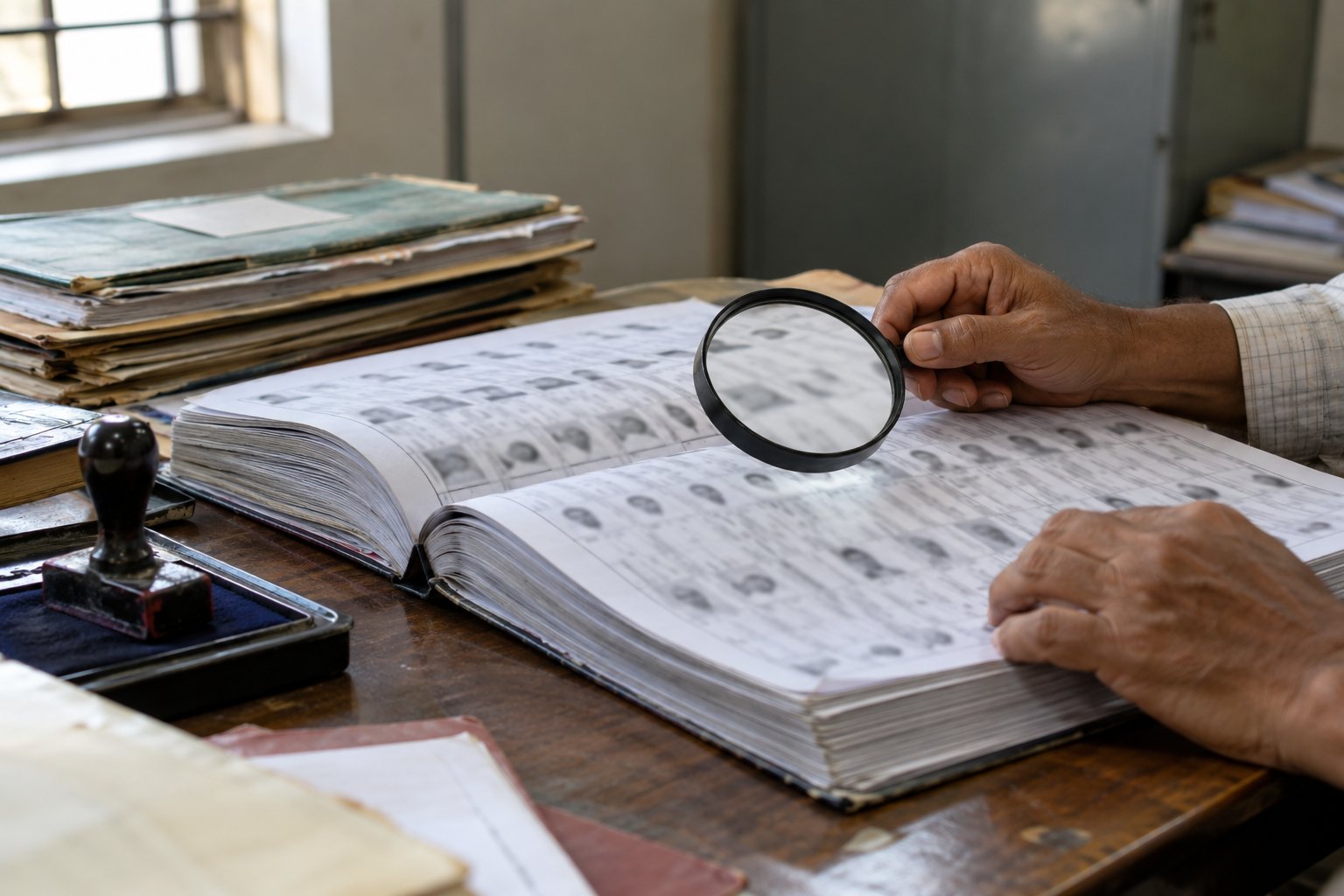
Karnataka's final electoral roll after the Special Intensive Revision (SIR), published on 27 October 2026, has 4,55,00,011 electors, according to the State's Chief Electoral Officer (CEO). That is 99.32 lakh, or a reported 17.92%, below the 5,54,32,314 electors on the roll of 16 June 2026. The total includes 44,322 service electors.
Syllabus: Prelims · Polity & Governance; GS2 · Representation of the People Act; GS2 · Constitutional Bodies
Why this matters for UPSC
GS2, the Representation of the People Act and the Election Commission. Prelims can ask about Article 324, section 21(3), qualifying dates, Forms 6, 6A, 7 and 8, and section 24 appeals; Mains, about rolls that are both accurate and inclusive.
Why it matters
A voter in Karnataka who moved house, or was away when officials called, may now find no name on the roll and must apply again to vote. Clearing out the dead, the shifted and the doubled entries makes the roll cleaner and leaves less room for a false vote in someone else's name. The same sweep can also drop genuine electors, and the published totals do not show how many wrongly left out came back during the claims stage. People who apply late wait for a supplementary list, published every quarter. In big cities, where tenants move often, keeping a roll both accurate and complete is hardest. That balance between a clean roll and an inclusive one runs through every revision.
Prelims pointers
- Article 326: elections to the Lok Sabha and State Legislative Assemblies are on adult suffrage, open to citizens aged at least 18 who are not otherwise disqualified.
- Section 14(b), RP Act, 1950: four qualifying dates a year (1 January, 1 April, 1 July, 1 October), in force since 1 August 2022.
- Section 16, RP Act, 1950: non-citizens and persons declared of unsound mind by a competent court, among others, are disqualified from registration on an electoral roll.
- Sections 17 and 18, RP Act, 1950: no person may be registered in more than one constituency, or more than once in the same constituency.
- Section 21(2), RP Act, 1950: a roll is revised before each general election and bye-election unless the ECI directs otherwise in writing; an unrevised roll stays valid.
- Section 24, RP Act, 1950: appeal from an ERO's order lies to the district magistrate or equivalent within 15 days, then to the CEO within 30 days (Rule 27).
- Forms under the 1960 Rules: Form 6 for inclusion, Form 6A for overseas electors, Form 7 for objection or deletion, Form 8 for correction or shifting of residence.
Practise a UPSC-style question
With reference to the preparation of electoral rolls in India, consider the following statements:
1. Under the Representation of the People Act, 1950, the roll of each Assembly constituency is prepared and revised by an Electoral Registration Officer.
2. A special revision of a constituency's roll can be directed by the State's Chief Electoral Officer, for reasons to be recorded.
3. While a special revision is under way, the roll in force when it was directed continues in force.
Which of the statements given above is/are correct?
- (a) 1 and 2 only
- (b) 2 and 3 only
- (c) 1 and 3 only
- (d) 1, 2 and 3
Show the answer
Answer: (c) 1 and 3 only
Answer: (c) 1 and 3 only. The power to direct a special revision belongs to the Election Commission, not the State's Chief Electoral Officer.
Statement 1: correct. Section 13B of the RP Act, 1950: each constituency's roll is prepared and revised by an Electoral Registration Officer designated or nominated by the Election Commission.
Statement 2: incorrect. Section 21(3) gives the Election Commission, not the Chief Electoral Officer, the power to direct a special revision at any time, for reasons to be recorded.
Statement 3: correct. The proviso to section 21(3) keeps the roll in force at the time of the direction until the special revision is complete.
Eliminate: Statement 2 pins the Election Commission's power on the Chief Electoral Officer, so it is wrong. Out: (a), (b), (d).
Trap: Swapped attribution. The Chief Electoral Officer supervises roll work in the State, so a student may credit that office with the power to order a special revision.
Remember: The Election Commission directs a special revision; the old roll stays in force until it ends.
More from the 29 October 2026 edition
- Cabinet approves Khelo India Sports Goods Manufacturing Scheme with manufacturing zones Economy
- Cabinet approves PM Viksit Gram Swaraj Yojana to strengthen Panchayat governance Polity
- Cabinet approves Rs 10,000 crore Container Manufacturing Promotion Scheme Economy
- DRI seizes 55,000 e-cigarettes banned under 2019 Act at Kolkata port National
- India, Mexico sign Terms of Reference launching Preferential Trade Agreement talks World & IR
- CAQM direction: buses entering Delhi must be BS-VI, CNG or electric Environment
- Lancet Countdown finds climate's health harms outpacing action, urges emergency declaration Environment
- Central Empowered Committee seeks carrying capacity studies for Himachal's tourist hubs Environment