
India, Mexico sign Terms of Reference launching Preferential Trade Agreement talks
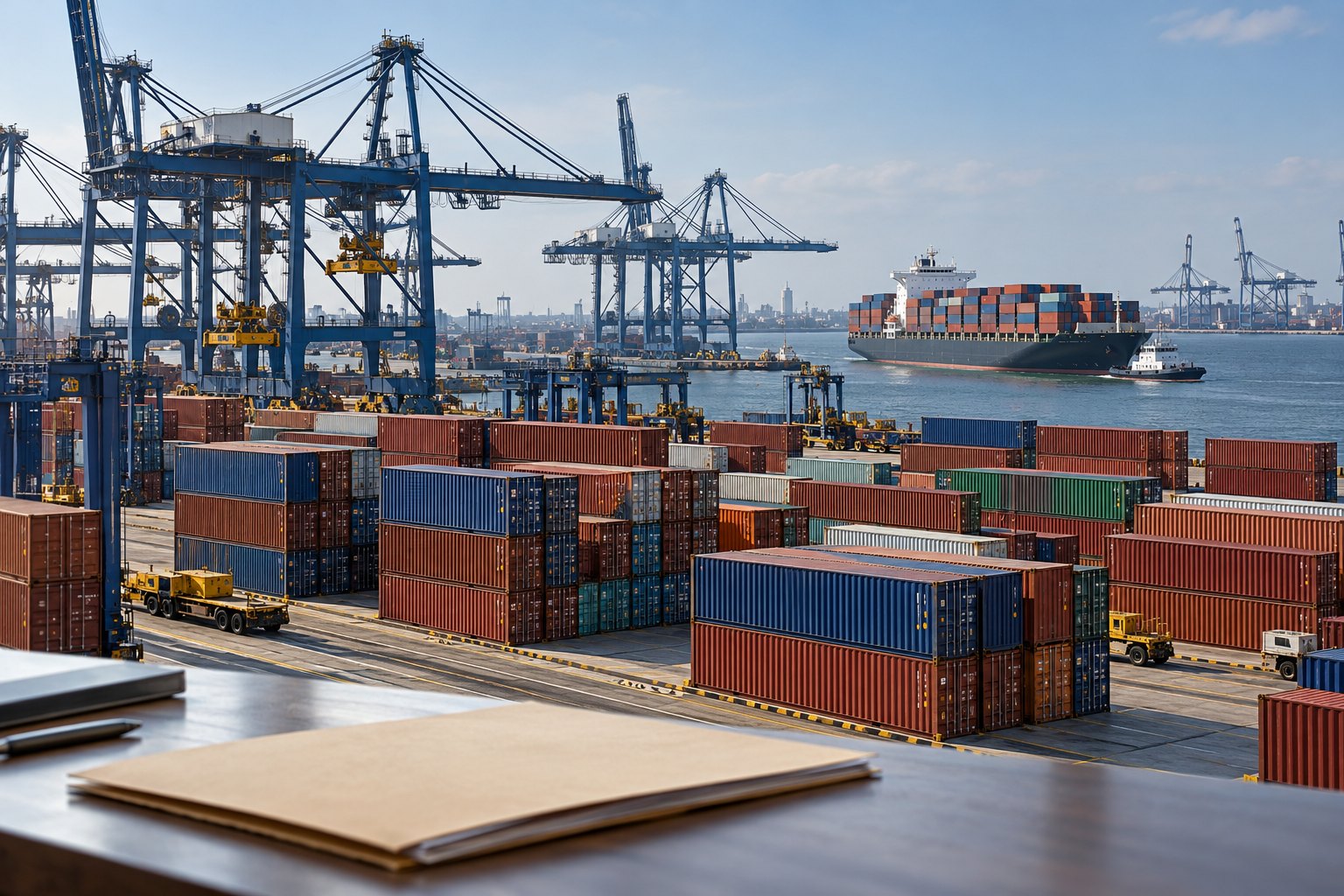
India and Mexico have signed Terms of Reference for negotiating a Preferential Trade Agreement (PTA), the Commerce Ministry announced on 28 October 2026. The document fixes the framework, scope, modalities and roadmap of the talks, formally opening them. Its agenda spans goods market access, rules of origin, customs, dispute settlement, health and technical standards and trade remedies.
Syllabus: GS3 · Indian Economy & Growth; Prelims · Current Affairs & IR; GS2 · Groupings & Agreements
Why this matters for UPSC
GS2 bilateral and regional agreements and GS3 trade policy. Prelims can ask how a Preferential Trade Agreement differs from a free-trade area under GATT Article XXIV, or what the SPS and TBT rules cover; Mains, India's trade strategy in Latin America.
Why it matters
An Indian drug maker or auto-parts supplier selling to Mexico pays import duty on what it ships there. If the talks succeed, part of that duty could fall for an agreed list of goods, so Indian products would become cheaper for Mexican buyers and easier to sell against foreign rivals. Clear rules of origin and quicker customs would also cut paperwork and delays at the port. Mexican firms would gain easier entry to Indian buyers in return. If concluded, the pact would give Indian goods preferential entry to a Latin American market. Mexico, a neighbour of the United States, also offers a way into North American supply chains.
Prelims pointers
- GATT Article XXIV, paragraph 8(b), defines a free-trade area as customs territories that remove duties and restrictive rules on substantially all trade in originating products.
- A customs union under GATT Article XXIV goes further than a free-trade area: its members apply substantially the same duties to outside countries.
- The Enabling Clause was adopted by the GATT contracting parties on 28 November 1979 for differential treatment of developing countries.
- The WTO's SPS Agreement and TBT Agreement both entered into force on 1 January 1995, when the WTO was set up.
- Whether a measure falls under the SPS Agreement depends on its purpose, health protection; under the TBT Agreement, on its type.
- Anti-dumping duties, countervailing duties and safeguard measures are the three trade remedies the WTO agreements permit.
Practise a UPSC-style question
With reference to the trade talks recently launched by India and Mexico, consider the following statements:
1. The Terms of Reference signed by the two countries formally open negotiations on a Preferential Trade Agreement.
2. The negotiations launched are for a comprehensive agreement covering goods, services and investment.
Which of the statements given above is/are correct?
- (a) 1 only
- (b) 2 only
- (c) Both 1 and 2
- (d) Neither 1 nor 2
Show the answer
Answer: (a) 1 only
Answer: (a) 1 only. The signed document opens talks on a Preferential Trade Agreement, not a comprehensive pact.
Statement 1: correct. The Ministry of Commerce and Industry said in October 2026 that signing the Terms of Reference formally launches negotiations on a PTA.
Statement 2: incorrect. The release names the pact a Preferential Trade Agreement, a narrower deal than a comprehensive agreement; its listed areas, from goods market access to trade remedies, centre on trade in goods.
Eliminate: statement 2 is wrong, as the pact is a PTA. Out: (b), (c).
Eliminate: statement 1 is correct, so a code without it cannot be right. Out: (d).
Trap: Wrong scope. The statement widens a preferential pact into a comprehensive agreement on goods, services and investment.
Remember: India-Mexico talks are for a PTA, a narrower pact than a comprehensive agreement.
More from the 29 October 2026 edition
- Cabinet approves Khelo India Sports Goods Manufacturing Scheme with manufacturing zones Economy
- Cabinet approves PM Viksit Gram Swaraj Yojana to strengthen Panchayat governance Polity
- Cabinet approves Rs 10,000 crore Container Manufacturing Promotion Scheme Economy
- DRI seizes 55,000 e-cigarettes banned under 2019 Act at Kolkata port National
- CAQM direction: buses entering Delhi must be BS-VI, CNG or electric Environment
- Lancet Countdown finds climate's health harms outpacing action, urges emergency declaration Environment
- Central Empowered Committee seeks carrying capacity studies for Himachal's tourist hubs Environment
- Karnataka's final electoral roll after SIR: 4.55 crore electors, 17.92% fewer Polity