
DRI seizes 55,000 e-cigarettes banned under 2019 Act at Kolkata port
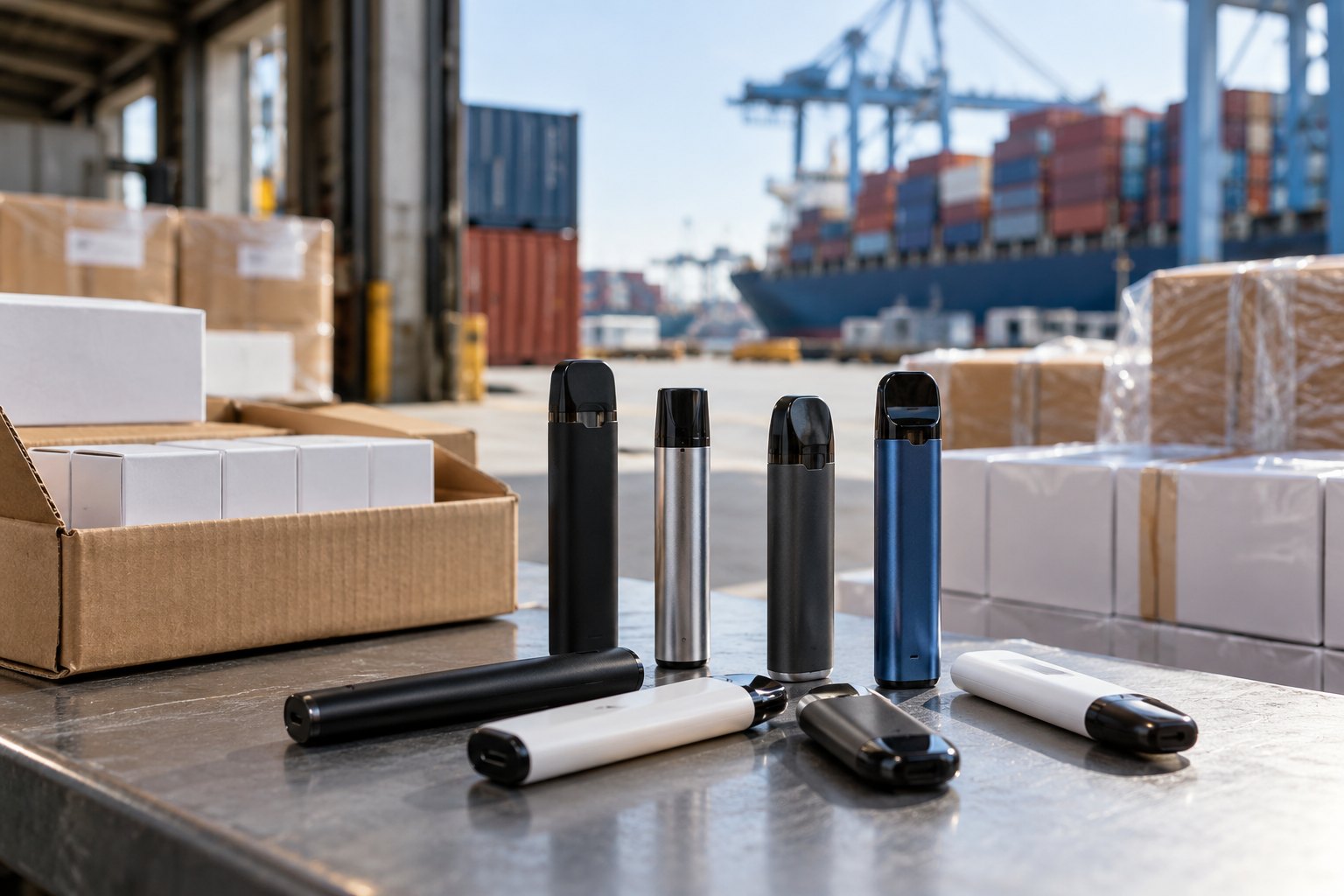
The Directorate of Revenue Intelligence (DRI) seized about 55,000 e-cigarettes worth Rs 13.50 crore at Syama Prasad Mookerjee Port, Kolkata, on 24 October 2026. The devices were hidden in two Nepal-bound containers declared as water glass and ceramic mugs. Electronic cigarettes are banned in India under the Prohibition of Electronic Cigarettes Act, 2019.
Syllabus: Prelims · Current Affairs & IR; GS2 · Health, Education & Human Resources; GS3 · Border Security & Organised Crime
Why this matters for UPSC
GS2 health policy and GS3 security agencies and smuggling. Prelims can ask what the Prohibition of Electronic Cigarettes Act, 2019 bans and how it is enforced; Mains, about ban versus regulation and the DRI's anti-smuggling role.
Why it matters
A parent who finds a flavoured vape in a teenager's bag is looking at a product that no shop in India may legally sell. Seizures like this show that the ban has not ended supply. Devices still arrive by sea, tucked inside ordinary cargo or booked as transit goods for a neighbour, and then feed an underground retail trade that pays no duty and answers to no regulator. The case also tests customs checks on transit containers: goods declared for another country still cross Indian ports and roads, so a weak check lets banned products leak into Indian markets.
Prelims pointers
- Section 7: first Section 4 offence, up to one year, Rs 1 lakh fine, or both; repeat offence, up to three years and Rs 5 lakh fine.
- Section 8: breaching the storage ban in Section 5 carries up to six months in prison, a fine up to Rs 50,000, or both.
- Section 13 makes Section 4 offences cognizable, yet under Section 12 a court acts only on an authorised officer's written complaint.
- Section 9: all offences under the Act are tried by a Court of Judicial Magistrate of the first class.
- Section 2 declares Union control of the e-cigarette industry expedient in the public interest; Section 14 gives the Act overriding effect.
- Section 11: when a company offends, the company and every person in charge of its business are deemed guilty, unless due diligence is shown.
Practise a UPSC-style question
With reference to the Prohibition of Electronic Cigarettes Act, 2019, consider the following statements:
1. Its definition of an electronic cigarette covers heat-not-burn products and e-hookah.
2. Its definition requires the device to heat a substance that contains nicotine.
3. Products licensed under the Drugs and Cosmetics Act, 1940 fall outside its definition.
Which of the statements given above is/are correct?
- (a) 1 and 2 only
- (b) 2 and 3 only
- (c) 1 and 3 only
- (d) 1, 2 and 3
Show the answer
Answer: (c) 1 and 3 only
Answer: (c) 1 and 3 only. The definition is wide but leaves out licensed drug products, and nicotine is not required.
Statement 1: correct. Section 3(d) names every form of ENDS, along with heat-not-burn products, e-hookah and similar devices.
Statement 2: incorrect. Section 3(d) covers a heating device making an inhalable aerosol whether or not the substance holds nicotine.
Statement 3: correct. Section 3(d) leaves out products holding a licence under the Drugs and Cosmetics Act, 1940.
Eliminate: statement 2 is wrong, as nicotine-free devices are covered too, so every option holding 2 goes. Out: (a), (b), (d).
Trap: Wrong scope. The definition is narrowed to nicotine devices, though the Act says with or without nicotine.
Remember: e-cigarette under the 2019 Act: any heated aerosol device, nicotine or not, unless licensed as a drug.
More from the 29 October 2026 edition
- Cabinet approves Khelo India Sports Goods Manufacturing Scheme with manufacturing zones Economy
- Cabinet approves PM Viksit Gram Swaraj Yojana to strengthen Panchayat governance Polity
- Cabinet approves Rs 10,000 crore Container Manufacturing Promotion Scheme Economy
- India, Mexico sign Terms of Reference launching Preferential Trade Agreement talks World & IR
- CAQM direction: buses entering Delhi must be BS-VI, CNG or electric Environment
- Lancet Countdown finds climate's health harms outpacing action, urges emergency declaration Environment
- Central Empowered Committee seeks carrying capacity studies for Himachal's tourist hubs Environment
- Karnataka's final electoral roll after SIR: 4.55 crore electors, 17.92% fewer Polity