
Cabinet approves Khelo India Sports Goods Manufacturing Scheme with manufacturing zones
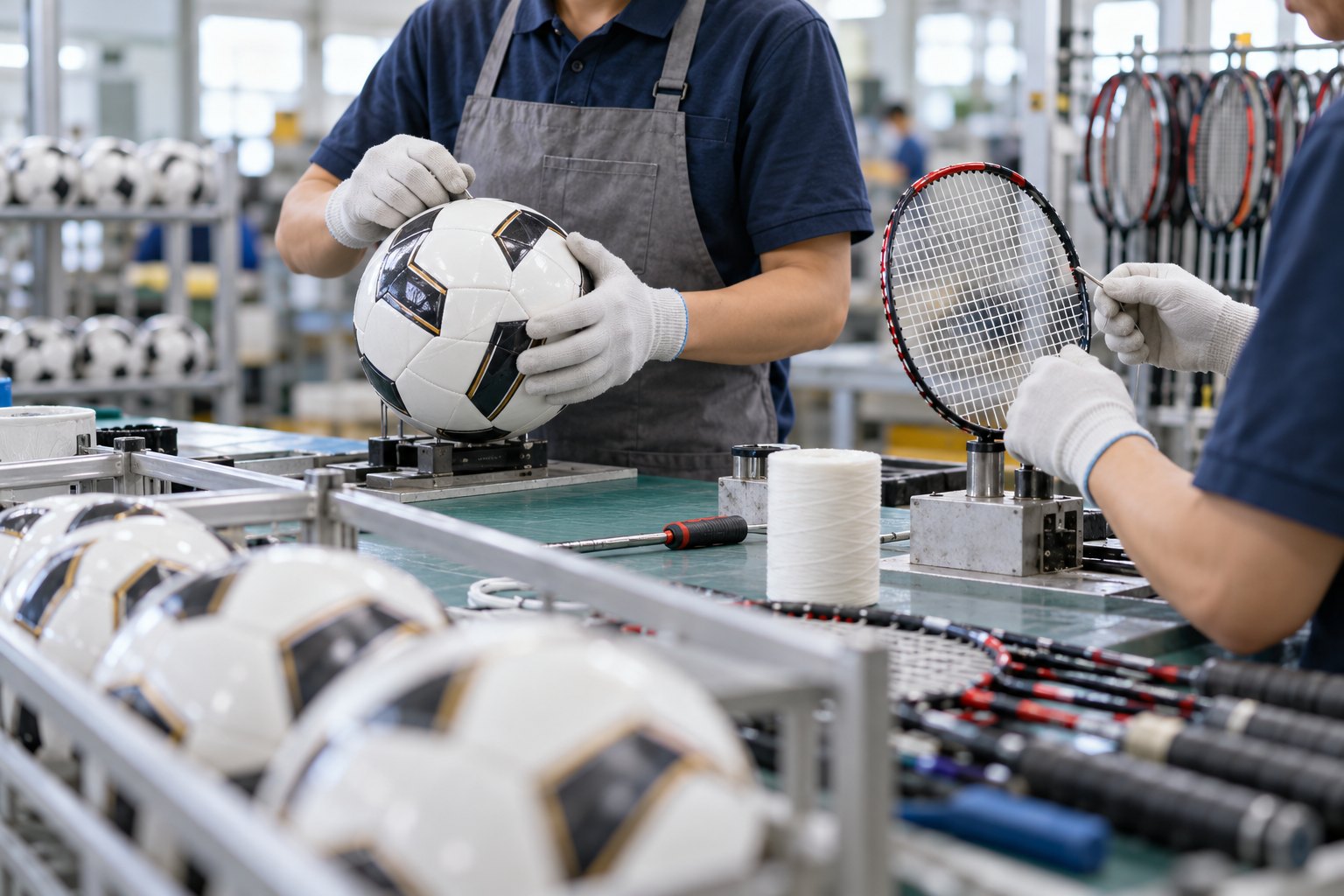
The Union Cabinet on 28 October 2026 approved the Khelo India Sports Goods Manufacturing Scheme, with an outlay of Rs 1,856.67 crore for 2026 to 2033-34. It will set up Sports Goods Manufacturing Zones for cluster-based production. Makers, suppliers and testing centres will work side by side there. The scheme also funds research, skilling and export branding.
Syllabus: GS3 · Indian Economy & Growth; Prelims · Economy & Social Development; GS3 · Liberalisation & Industry
Why this matters for UPSC
GS3 industrial policy and manufacturing (GS2 government schemes). Prelims can ask the scheme's aim, components and the bodies it converges with; Mains, how clusters and turnover-linked support can grow labour-intensive exports.
Why it matters
A small maker of footballs or cricket gear often cannot pay alone for a testing laboratory, a design studio or an international certificate. Without that certificate, its products cannot easily enter tournaments or foreign stores, so it stays in low-price local markets. When such units sit in one zone beside large buyers and shared laboratories, each can reach better standards at lower cost. Sports goods work also employs many hands, so steadier orders mean more jobs for semi-skilled workers in small towns. The larger question is whether India can turn labour-intensive industries into a source of exports, as other Asian economies did.
Prelims pointers
- The Make in India action plan aimed to raise manufacturing's share of GDP to 25% by 2020.
- Start-ups recognised by DPIIT under Startup India can apply for income-tax exemption.
- MSMEs are classified as micro, small or medium on a composite test of investment and turnover; registration is on the Udyam portal.
- Viksit Bharat@2047 is the goal of a developed India by 2047, the centenary of Independence.
Practise a UPSC-style question
With reference to the sports goods manufacturing scheme approved by the Union Cabinet in 2026, consider the following statements:
1. Its Sports Goods Manufacturing Zones are to be built by convergence with PM MITRA Parks.
2. Its research support is also to flow via the ANRF, the national research funding body.
3. It funds makers seeking or renewing certification by International Sports Federations.
Which of the statements given above is/are correct?
- (a) 1 and 2 only
- (b) 2 and 3 only
- (c) 1 and 3 only
- (d) 1, 2 and 3
Show the answer
Answer: (b) 2 and 3 only
Answer: (b) 2 and 3 only. The zones converge with BHAVYA and NICDC parks, not PM MITRA Parks.
Statement 1: incorrect. The Cabinet release ties the zones to NICDC Industrial Parks and the BHAVYA Scheme.
Statement 2: correct. Besides Centres of Excellence, research is to draw on the ANRF by convergence.
Statement 3: correct. Rs 105 crore is earmarked for certification by International Sports Federations, both new and renewed.
Eliminate: statement 1 is wrong, since the release names BHAVYA and NICDC. Out: (a), (c), (d).
Trap: Swapped attribution. PM MITRA Parks are real industrial parks for textiles, so swapping them in for the BHAVYA and NICDC convergence sounds believable.
Remember: Sports goods zones = BHAVYA Scheme + NICDC Industrial Parks.
More from the 29 October 2026 edition
- Cabinet approves PM Viksit Gram Swaraj Yojana to strengthen Panchayat governance Polity
- Cabinet approves Rs 10,000 crore Container Manufacturing Promotion Scheme Economy
- DRI seizes 55,000 e-cigarettes banned under 2019 Act at Kolkata port National
- India, Mexico sign Terms of Reference launching Preferential Trade Agreement talks World & IR
- CAQM direction: buses entering Delhi must be BS-VI, CNG or electric Environment
- Lancet Countdown finds climate's health harms outpacing action, urges emergency declaration Environment
- Central Empowered Committee seeks carrying capacity studies for Himachal's tourist hubs Environment
- Karnataka's final electoral roll after SIR: 4.55 crore electors, 17.92% fewer Polity