
Supreme Court widens wetland ground-truthing to all water bodies
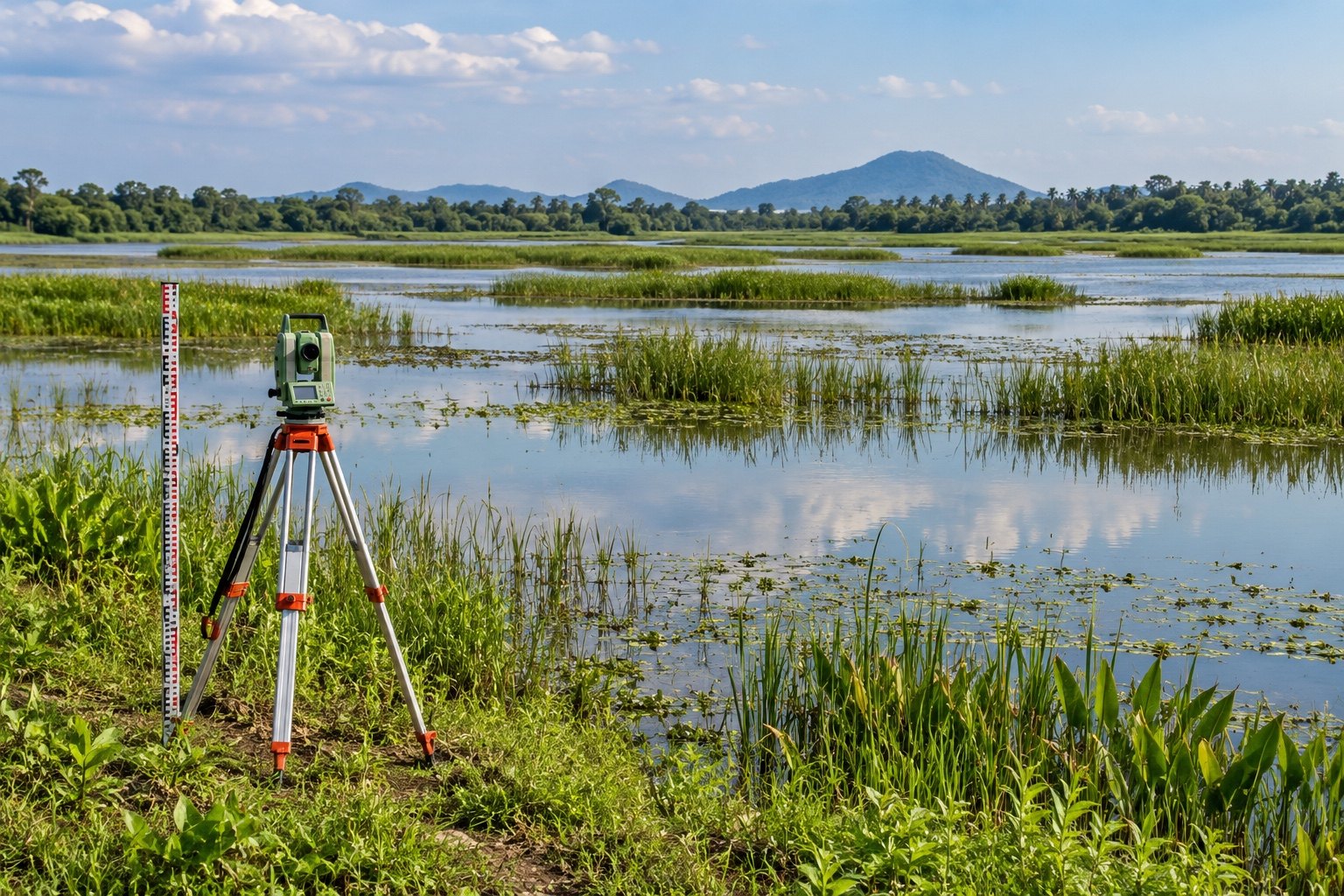
The Supreme Court, in an order dated 12 October 2026, extended the ground-truthing and demarcation required under the Wetlands (Conservation and Management) Rules, 2017 to other water bodies as well. States must file affidavits on their progress within four weeks. The bench observed that water bodies supplying drinking water fall within the right to life under Article 21.
Syllabus: GS2 · Separation of Powers; Prelims · Environment & Ecology; GS3 · Environment & Conservation
Why this matters for UPSC
GS3 conservation: Prelims can ask what the Wetlands (Conservation and Management) Rules, 2017 define, exclude and prohibit, and who chairs each wetland body. GS2 and GS3 Mains can ask about Article 21 and weak enforcement.
Why it matters
A village pond, a temple tank or a marsh on a city's edge can store rain, recharge wells and soften floods. Yet it can be filled in and built over if no map shows where it begins and ends. Until a boundary is checked on the ground and written down, officials have no line to enforce, and a builder or a dumping contractor faces little risk. By pulling other water bodies into the exercise and tying drinking water to the right to life, the court has made the survey a matter of citizens' rights, not paperwork. Families that depend on a local pond or lake for water stand to gain most.
Prelims pointers
- Rule 2(g), Wetlands Rules, 2017: a wetland may be natural or artificial, permanent or temporary, and includes marine water up to six metres deep at low tide.
- Rule 2(g) excludes river channels, paddy fields, drinking-water tanks and structures built for aquaculture, salt production, recreation or irrigation.
- Rule 3: the 2017 Rules apply to Ramsar sites and to wetlands notified by the Centre, a State or a Union Territory.
- Rule 3 proviso: the Rules do not apply to wetlands in areas under the Indian Forest Act, 1927, Wild Life (Protection) Act, 1972 or Forest (Conservation) Act, 1980.
- Rule 4 prohibits encroachment, new or expanded industry, solid waste dumping, untreated effluents, poaching and permanent construction (boat jetties excepted) within 50 m of mean high flood level.
- Rule 5: a State Wetlands Authority is chaired by the State's minister for environment or forests; the Chief Secretary is vice-chairperson.
- Rule 6: the National Wetlands Committee is chaired by the Secretary, Ministry of Environment, Forest and Climate Change, and meets at least once in six months.
- Article 51A(g) of the Constitution: every citizen has a duty to protect and improve the natural environment, including forests, lakes, rivers and wildlife.
Practise a UPSC-style question
With reference to the definition of 'wetland' in the Wetlands (Conservation and Management) Rules, 2017, consider the following statements:
1. It includes areas of marine water whose depth at low tide does not exceed six metres.
2. It includes river channels and paddy fields that hold water for part of the year.
3. It covers areas that are natural or artificial, and permanent or temporary.
Which of the statements given above is/are correct?
- (a) 1 and 2 only
- (b) 2 and 3 only
- (c) 1 and 3 only
- (d) 1, 2 and 3
Show the answer
Answer: (c) 1 and 3 only
Answer: (c) 1 and 3 only. Rule 2(g) is broad, but it expressly leaves river channels and paddy fields out.
Statement 1: correct. Rule 2(g) counts marine water up to six metres deep at low tide as wetland.
Statement 2: incorrect. Rule 2(g) excludes river channels, paddy fields and tanks built for drinking water.
Statement 3: correct. Rule 2(g) covers marsh, fen, peatland or water, natural or artificial, permanent or temporary.
Eliminate: Statement 2 is the surest: the exclusion of paddy fields is the best-known part of the definition. Out: (a), (b), (d).
Trap: Wrong scope. Statement 2 sounds right because paddy fields and rivers hold water, but the Rules narrow the legal definition.
Remember: Wetland under Rule 2(g): up to 6 m at low tide; not rivers, paddy fields or drinking-water tanks.
More from the 24 October 2026 edition
- IAEA tells UN General Assembly nuclear power could triple by 2060 World & IR
- Haryana directs HERC under Section 108 to halt parallel power licence Polity
- NSO proposes PLFS redesign from 2027 to count platform workers Economy
- Karnataka HC: six guidelines curb mechanical FIRs, arrests over social-media posts Polity
- IMD forecasts Bay of Bengal cyclone heading for north Andhra, south Odisha Environment
- NMC withdraws 2023 medical education standards regulations, ends annual renewal Polity
- Orissa High Court: road pandals may stand if movement stays open Polity
- MHA tells Supreme Court of over 21,900 digital arrest complaints in 2026 National
- Jharkhand HC quashes Sentence Review Board's 'preordained' refusal of premature release Polity
- Allahabad HC: POCSO compensation cannot be refused for lack of injury Polity
- MoRTH draft proposes mandatory emergency braking (AEBS) in cars from 2030 National
- Kerala HC: State liable for wild-animal attacks despite not owning animals Environment