
Haryana directs HERC under Section 108 to halt parallel power licence
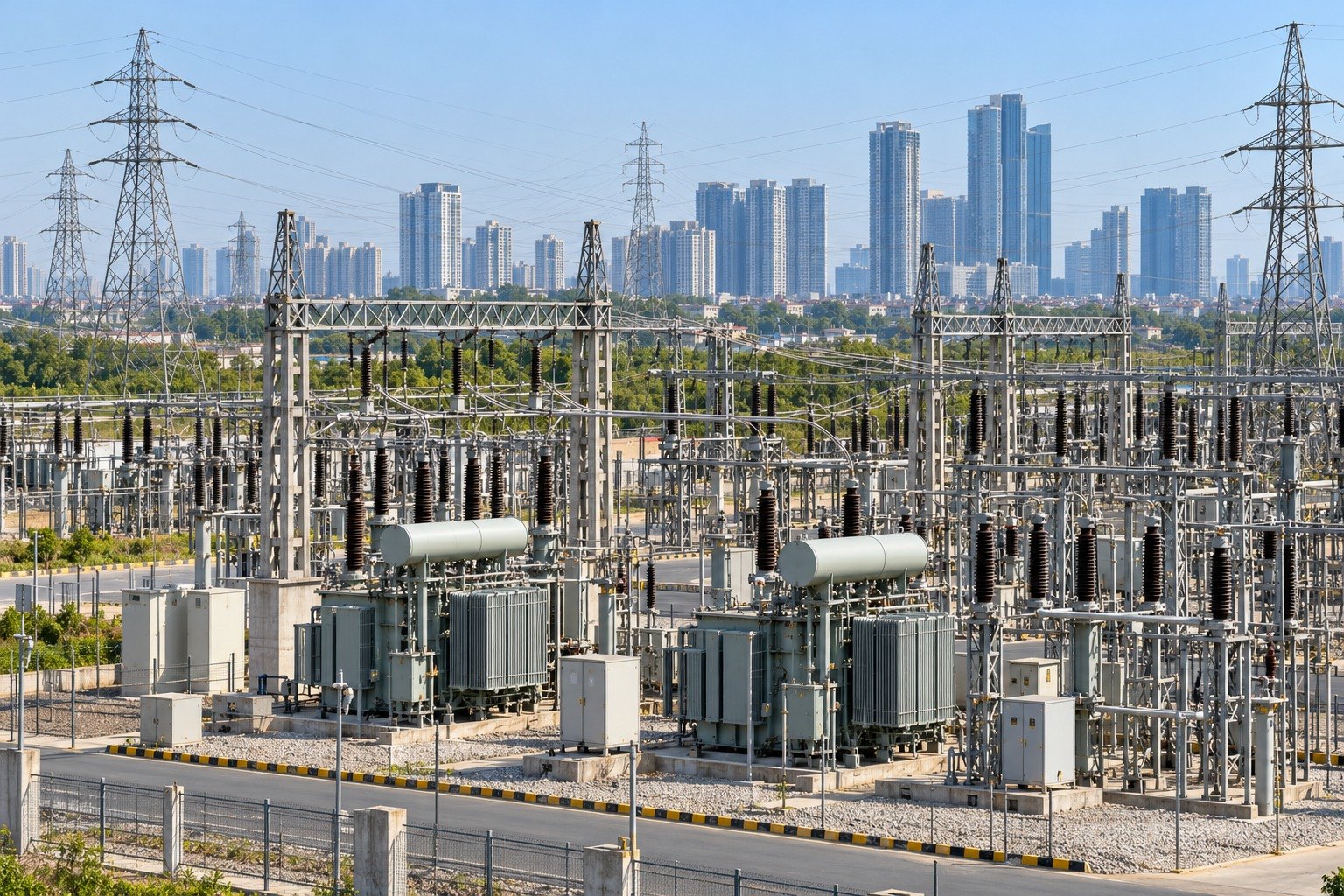
Haryana's Energy Department on 23 October 2026 used Section 108 of the Electricity Act, 2003 to direct the Haryana Electricity Regulatory Commission (HERC). It told HERC not to "create, operationalise or effectuate any parallel distribution licence" in the State. The target is HERC's 19 October licence to Eleven Power Pvt Ltd for Gurugram and Nuh. HERC has not responded.
Syllabus: GS2 · Federalism & Local Government; Prelims · Polity & Governance; GS2 · Statutory & Regulatory Bodies
Why this matters for UPSC
GS2 (quasi-judicial bodies) and GS3 (energy infrastructure). Prelims can ask what Sections 14 and 108 of the Electricity Act, 2003 provide; Mains, how independent power regulators are.
Why it matters
For households and factories in Gurugram and Nuh, a second distributor offers a choice of supplier and, its backers hope, faster connections and fewer cuts that now force many to run diesel generators. For the State-owned distributor, losing high-paying urban and industrial customers would leave less money to keep power cheap for farmers and rural homes, which is why the government and unions resisted. The larger issue is who decides: a regulator built to stand apart from politics, or an elected government that answers for the cost to its budget and its consumers.
Prelims pointers
- Section 14 of the Electricity Act, 2003: applicants for a second licence in one area must meet extra capital adequacy, credit-worthiness or code-of-conduct requirements prescribed by the Central Government.
- Under Section 14, an applicant meeting every requirement cannot be refused a licence merely because a licensee already serves that area.
- Section 108(2): the State Government's decision is final on whether a direction concerns policy involving public interest; Section 107 gives the Centre the same power over CERC.
- Section 62(1)(d) proviso: where two or more distribution licensees serve one area, the Commission may fix only a maximum ceiling of retail tariff to promote competition.
- Section 43 (duty to supply on request): a distribution licensee must supply premises within one month of application, or later if new mains or substations are needed.
- Appeals against a Commission's order go to APTEL within 45 days (Section 111); appeals from APTEL go to the Supreme Court within 60 days (Section 125).
- Section 86 also makes a State Commission adjudicate disputes between licensees and generating companies, specify the State Grid Code and fix intra-State trading margins.
- A June 2025 trade report noted that in Mumbai's island city consumers can choose between BEST and Tata Power, and in the suburbs between Tata Power and Adani Electricity Mumbai.
Practise a UPSC-style question
With reference to licensing of electricity distribution under the Electricity Act, 2003, consider the following statements:
1. The additional capital adequacy and credit-worthiness requirements for a second licensee in an area are prescribed by the State Electricity Regulatory Commission.
2. A Commission may grant licences to two or more persons to distribute electricity in the same area through their own distribution systems.
3. An applicant meeting all requirements cannot be refused a licence merely because a licensee already exists in that area.
Which of the statements given above is/are correct?
- (a) 1 and 2 only
- (b) 2 and 3 only
- (c) 1 and 3 only
- (d) 1, 2 and 3
Show the answer
Answer: (b) 2 and 3 only
Answer: (b) 2 and 3 only. Section 14 allows parallel licences, but the Centre sets the extra requirements.
Statement 1: incorrect. Section 14 says the additional capital adequacy, credit-worthiness or code-of-conduct requirements are prescribed by the Central Government.
Statement 2: correct. A proviso to Section 14 lets the Appropriate Commission license two or more persons in one area, each on its own distribution system.
Statement 3: correct. The same proviso bars refusing a qualified applicant on the ground that a licensee already serves the area.
Eliminate: Statement 1 is wrong because the Central Government, not the State Commission, prescribes the requirements. Out: (a), (c), (d).
Trap: Swapped attribution. The rule-maker is moved from the Central Government to the State regulator that grants the licence.
Remember: Section 14 proviso: Commission grants parallel licences; Centre prescribes the extra eligibility tests.
More from the 24 October 2026 edition
- IAEA tells UN General Assembly nuclear power could triple by 2060 World & IR
- NSO proposes PLFS redesign from 2027 to count platform workers Economy
- Karnataka HC: six guidelines curb mechanical FIRs, arrests over social-media posts Polity
- IMD forecasts Bay of Bengal cyclone heading for north Andhra, south Odisha Environment
- NMC withdraws 2023 medical education standards regulations, ends annual renewal Polity
- Orissa High Court: road pandals may stand if movement stays open Polity
- MHA tells Supreme Court of over 21,900 digital arrest complaints in 2026 National
- Jharkhand HC quashes Sentence Review Board's 'preordained' refusal of premature release Polity
- Allahabad HC: POCSO compensation cannot be refused for lack of injury Polity
- MoRTH draft proposes mandatory emergency braking (AEBS) in cars from 2030 National
- Kerala HC: State liable for wild-animal attacks despite not owning animals Environment
- Supreme Court: public property may be re-auctioned before a contract binds Polity