
Karnataka HC: six guidelines curb mechanical FIRs, arrests over social-media posts
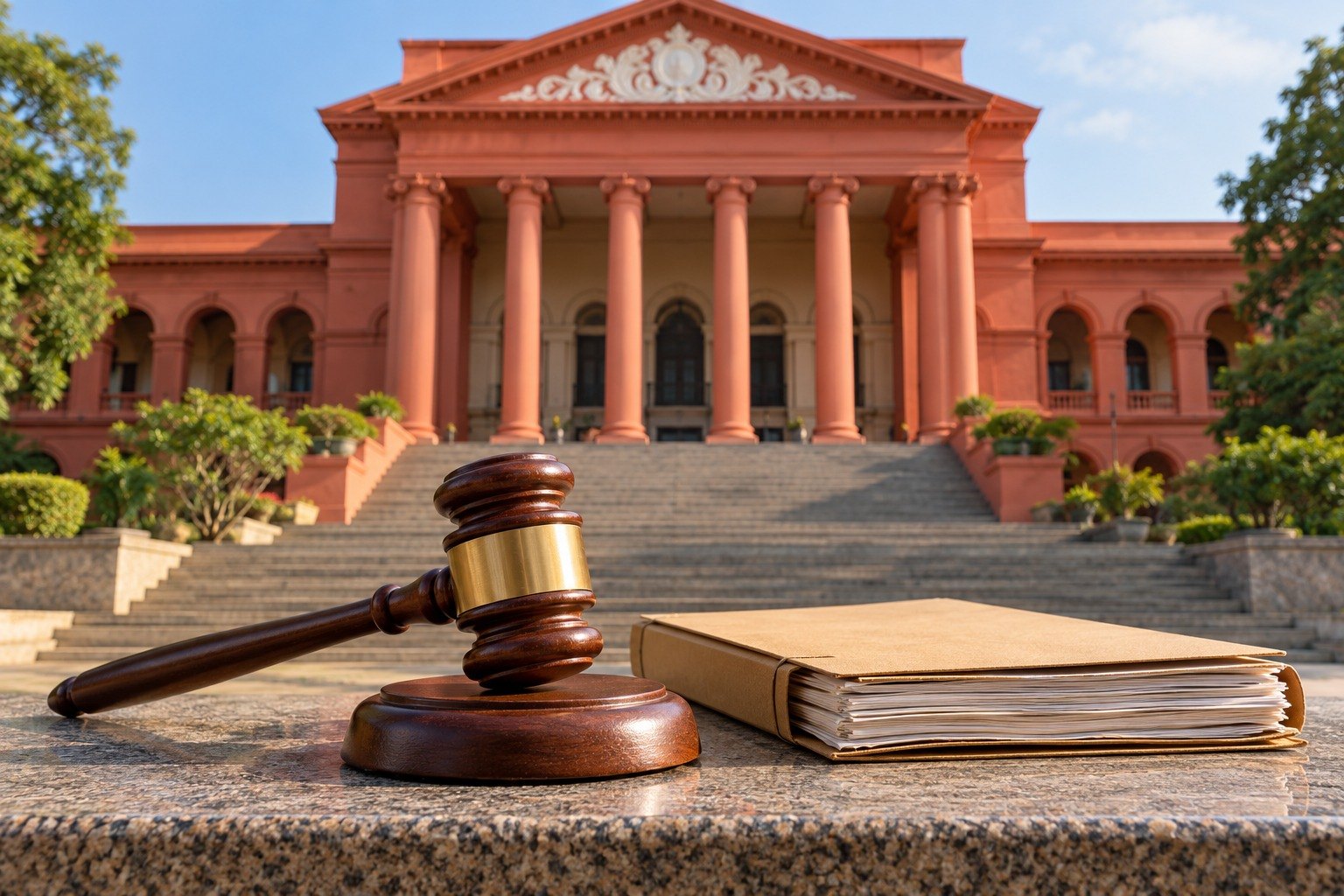
The Karnataka High Court on 16 October 2026 issued six guidelines to the State's police against mechanical FIRs and arrests over social-media posts. It quashed an FIR under Section 353(2) of the Bharatiya Nyaya Sanhita, 2023. Reposting an already reported incident, targeting no community, made out no such offence, it found. Arrest must follow Section 35 of the BNSS.
Syllabus: GS2 · Constitution; Prelims · Polity & Governance; GS2 · Governance & e-Governance
Why this matters for UPSC
GS2 polity and governance: free speech, police powers and personal liberty. Prelims can ask what Article 19(2), Section 353(2) of the BNS and Section 35 and Section 173(3) of the BNSS provide; GS2 Mains, about police reform and online speech.
Why it matters
Anyone who shares a news report or criticises the government online can face a police case. Here a man who reposted a news item faced a criminal case, and the same station opened seven cases over one incident. Each case can mean a summons, travel, legal fees and the fear of arrest, even when no crime is made out. The guidelines tell Karnataka's police to check the facts before registering a case and to use a notice, not handcuffs, where the law allows. They bind only Karnataka, but they follow a Telangana model that the Supreme Court left in place. The larger question is how India protects free speech online without letting the criminal process become the punishment.
Prelims pointers
- Article 19(2): free speech may be reasonably restricted for sovereignty and integrity, State security, friendly relations, public order, decency or morality, contempt of court, defamation or incitement to an offence.
- Section 173(3), BNSS: for cognizable offences punishable for three years or more but under seven, a preliminary enquiry within 14 days needs a Deputy Superintendent of Police's prior permission.
- Section 35(6), BNSS: if a person fails to comply with a notice to appear or will not identify himself, police may arrest him, subject to any court order.
- Article 21: no person shall be deprived of life or personal liberty except according to procedure established by law; the Supreme Court reads arrest safeguards against it.
- Section 174(2), BNSS: police may investigate a non-cognizable case only on a Magistrate's order; defamation (Section 356, BNS) is non-cognizable.
- Section 196, BNS (old Section 153A IPC): punishes promoting enmity between groups on grounds such as religion, race, place of birth, residence or language.
- Seventh Schedule: police and public order are in the State List; criminal law and criminal procedure are in the Concurrent List.
Practise a UPSC-style question
With reference to Article 19(2) of the Constitution of India, consider the following statements:
1. Defamation and incitement to an offence are among the grounds for reasonable restrictions on freedom of speech.
2. The words "sovereignty and integrity of India" were inserted into it by the Constitution (Sixteenth Amendment) Act, 1963.
Which of the statements given above is/are correct?
- (a) 1 only
- (b) 2 only
- (c) Both 1 and 2
- (d) Neither 1 nor 2
Show the answer
Answer: (c) Both 1 and 2
Answer: (c) Both 1 and 2. Both grounds are in Article 19(2), and the sovereignty words came in 1963.
Statement 1: correct. Article 19(2) lists defamation and incitement to an offence beside public order, decency or morality and contempt of court.
Statement 2: correct. The Constitution (Sixteenth Amendment) Act, 1963 inserted "the sovereignty and integrity of India" into Article 19(2).
Eliminate: statement 1 is the text of Article 19(2). Out: (b), (d).
Eliminate: statement 2 matches the Sixteenth Amendment. Out: (a).
Trap: Swapped attribution. Students who link sovereignty wording to a later amendment reject statement 2, though the Sixteenth Amendment of 1963 inserted it.
Remember: Article 19(2): eight grounds; sovereignty and integrity added in 1963 by the Sixteenth Amendment.
More from the 24 October 2026 edition
- IAEA tells UN General Assembly nuclear power could triple by 2060 World & IR
- Haryana directs HERC under Section 108 to halt parallel power licence Polity
- NSO proposes PLFS redesign from 2027 to count platform workers Economy
- IMD forecasts Bay of Bengal cyclone heading for north Andhra, south Odisha Environment
- NMC withdraws 2023 medical education standards regulations, ends annual renewal Polity
- Orissa High Court: road pandals may stand if movement stays open Polity
- MHA tells Supreme Court of over 21,900 digital arrest complaints in 2026 National
- Jharkhand HC quashes Sentence Review Board's 'preordained' refusal of premature release Polity
- Allahabad HC: POCSO compensation cannot be refused for lack of injury Polity
- MoRTH draft proposes mandatory emergency braking (AEBS) in cars from 2030 National
- Kerala HC: State liable for wild-animal attacks despite not owning animals Environment
- Supreme Court: public property may be re-auctioned before a contract binds Polity