
MHA and Army to train 600 Civil Defence Master Trainers
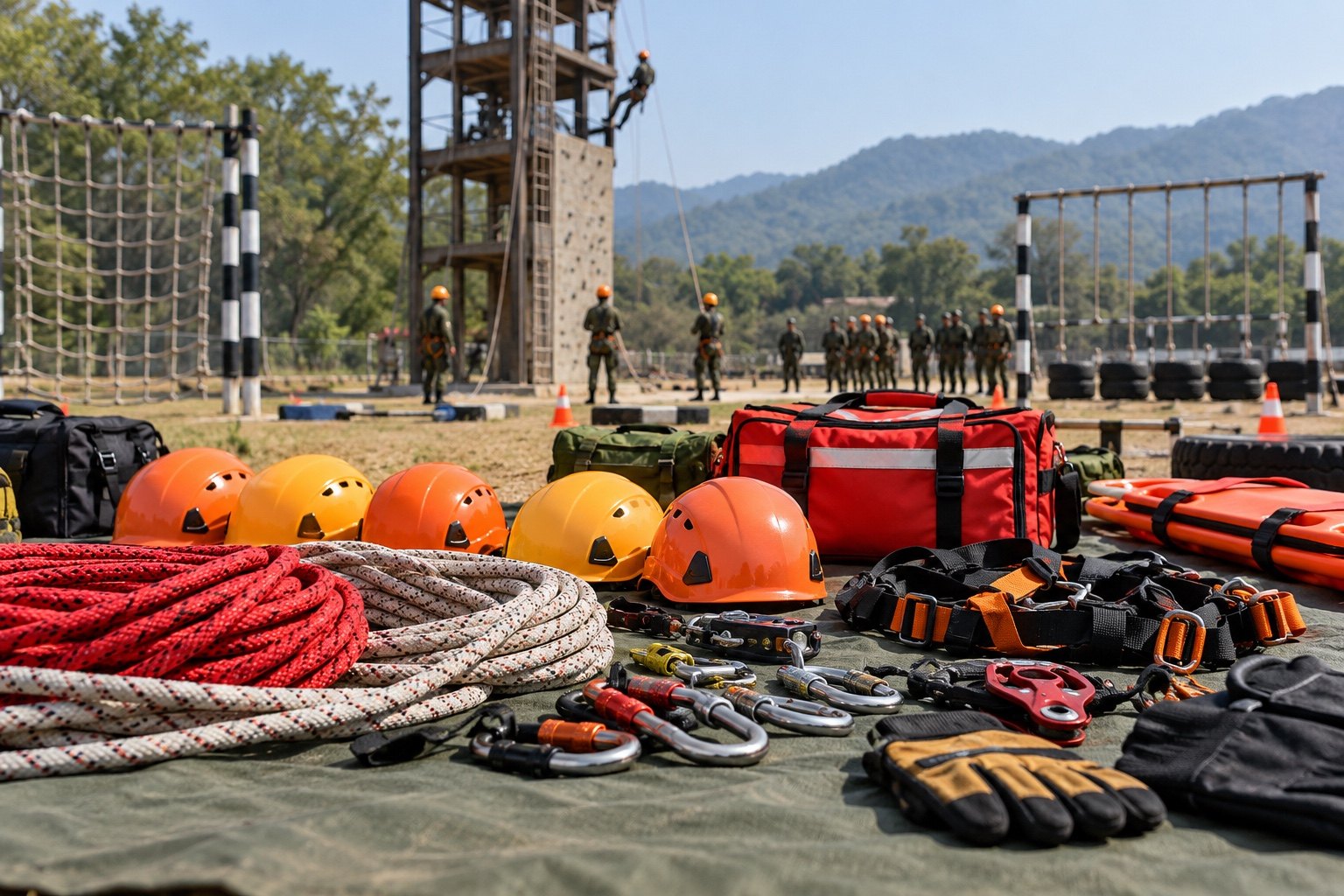
The Union Home Ministry and the Indian Army are starting a pilot to train Civil Defence Master Trainers. In the first phase, 600 trainers from 12 States and UTs are proposed for Army courses by the second week of November 2026. Each trained trainer is then to teach 100 Civil Defence Volunteers in their own State or UT.
Syllabus: Prelims · Current Affairs & IR; GS3 · Disaster Management; GS3 · Cyber Security & Money Laundering
Why this matters for UPSC
GS3 internal security and disaster management: Prelims can ask what the Civil Defence Act, 1968 provides and how its 2009 amendment widened the Corps' role; Mains, civil-military coordination, hybrid warfare and cyber hygiene.
Why it matters
Think of a schoolteacher in a Punjab border district or a shopkeeper in Guwahati who signs up as a Civil Defence volunteer. Today such a volunteer may know first aid and fire drills. After this course, a local trainer could teach the volunteer what to do when drones appear overhead, when sirens warn of an air raid, or when a chemical leak spreads near a factory. In the first minutes of an attack or disaster, before soldiers or fire engines arrive, neighbours depend on such people. The larger issue is that war is no longer fought only at the border: power grids, phone networks and crowded cities can be targets, so the whole society needs to be ready.
Prelims pointers
- Civil Defence Act, 1968 extends to the whole of India, yet Civil Defence units are raised only in areas judged tactically and strategically vulnerable to enemy attack.
- Civil Defence objectives: save life, minimise loss of property, maintain continuity of production and keep up public morale.
- The Civil Defence (Amendment) Act, 2009 (Notification No. 3 of 2010) kept protection against hostile attack as the primary role.
- Civil Defence's wartime role: guarding the hinterland, supporting the Armed Forces, mobilising citizens and helping the civil administration.
- The national Civil Defence advisory committee is headed by the Union Home Minister; members include the Finance and Defence Ministers and the NDMA.
- Civil Defence volunteers serve voluntarily but may draw a duty or training allowance; paid Deputy Controllers, Medical Officers and instructors run training.
Practise a UPSC-style question
With reference to the Civil Defence Act, 1968, consider the following statements:
1. It defines civil defence to include measures, not amounting to actual combat, that protect people and property against hostile attack.
2. Disaster management was added as a role of the Civil Defence Corps by the Civil Defence (Amendment) Act, 2009.
3. Although the Act extends to the whole of India, the Civil Defence organisation is raised in areas considered vulnerable to enemy attack.
Which of the statements given above is/are correct?
- (a) 1 and 2 only
- (b) 2 and 3 only
- (c) 1 and 3 only
- (d) 1, 2 and 3
Show the answer
Answer: (d) 1, 2 and 3
Answer: (d) 1, 2 and 3. All three statements match the Act and the Directorate General's account of it.
Statement 1: correct. The Act's definition covers protective measures short of actual combat against attack from air, land, sea or other places.
Statement 2: correct. The Civil Defence (Amendment) Act, 2009, brought in by Notification No. 3 of 2010, added disaster management while keeping the primary role.
Statement 3: correct. The Act applies across India, but the organisation is raised in areas and zones judged tactically and strategically vulnerable to enemy attack.
Eliminate: Statement 2 is correct, as the 2009 amendment is the one that added disaster management. Out: (c).
Eliminate: Statement 3 is correct, since application of the Act and raising of the organisation are different things. Out: (a).
Eliminate: Statement 1 is the Act's own definition, so it is correct. Out: (b).
Trap: Wrong scope. Statement 3 tempts a student to think an Act that extends to the whole of India must have Civil Defence units raised everywhere.
Remember: Civil Defence Act, 1968 (Act 27 of 1968): non-combat protection against hostile attack; disaster management added in 2009.
Explainers on this topic
More from the 24 October 2026 edition
- IAEA tells UN General Assembly nuclear power could triple by 2060 World & IR
- Haryana directs HERC under Section 108 to halt parallel power licence Polity
- NSO proposes PLFS redesign from 2027 to count platform workers Economy
- Karnataka HC: six guidelines curb mechanical FIRs, arrests over social-media posts Polity
- IMD forecasts Bay of Bengal cyclone heading for north Andhra, south Odisha Environment
- NMC withdraws 2023 medical education standards regulations, ends annual renewal Polity
- Orissa High Court: road pandals may stand if movement stays open Polity
- MHA tells Supreme Court of over 21,900 digital arrest complaints in 2026 National
- Jharkhand HC quashes Sentence Review Board's 'preordained' refusal of premature release Polity
- Allahabad HC: POCSO compensation cannot be refused for lack of injury Polity
- MoRTH draft proposes mandatory emergency braking (AEBS) in cars from 2030 National
- Kerala HC: State liable for wild-animal attacks despite not owning animals Environment